- | 6:00 pm
From Russian oil to American steel, Essar’s global journey
Essar's investment in American steelmaking places the Indian conglomerate at the center of Trump's industrial revival, nearly a decade after a landmark transaction with Russia's state-controlled oil producer
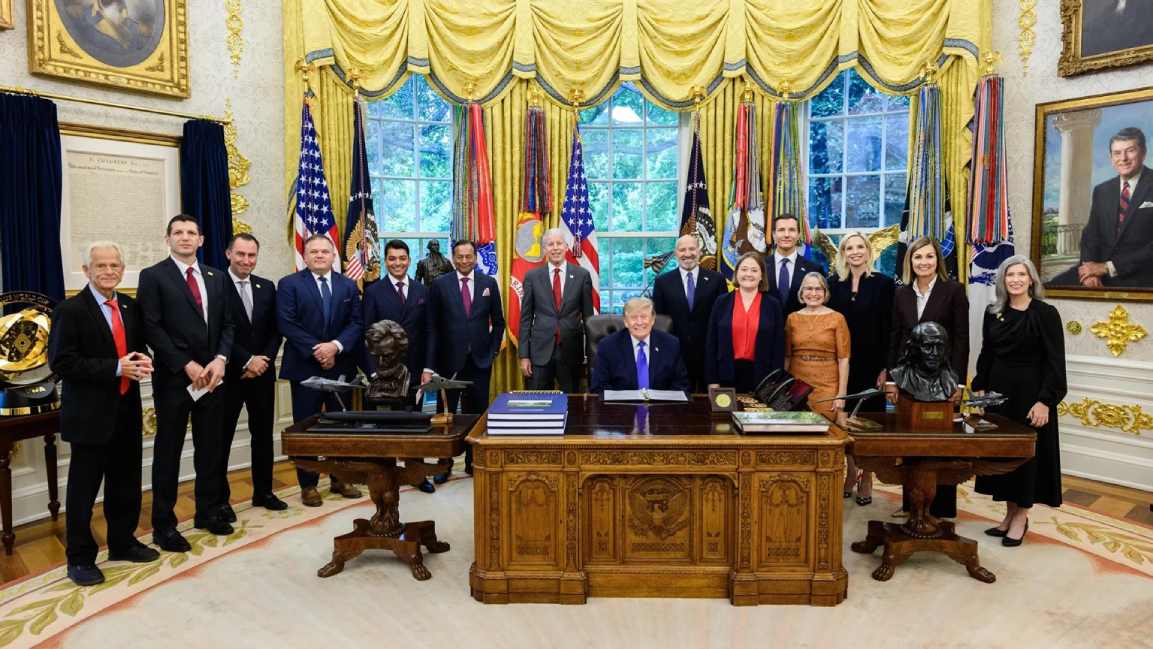


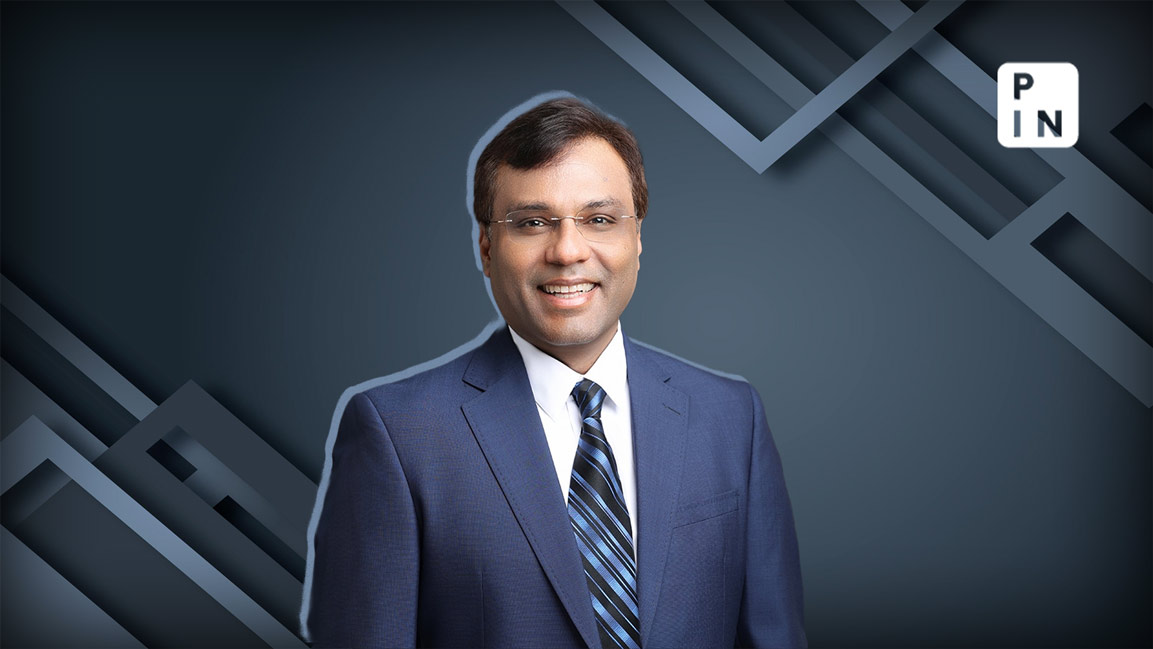
When US President Donald Trump unveiled plans for a $15 billion steel complex in Iowa this week, Ravi Ruia, co-founder of India’s Essar Group, was among the executives standing beside him at the White House.
The announcement also puts the spotlight on the Ruia family’s international business dealings, including the $12.9 billion sale of Essar Oil to a consortium that included Russia’s Rosneft in 2017.
The new investment program, announced at the White House on Monday, 28 September, combines a proposed $15 billion steel complex in Iowa with about $3 billion already invested in an iron-ore mining and pelletizing operation in Minnesota.
The company describes the combined $18 billion investment as an effort to establish a fully integrated American steel business.
Mesabi Metallics will supply iron-ore pellets from its Minnesota operation to the proposed Iowa complex. The project is intended to create a domestic supply chain extending from raw-material extraction to finished steel production.
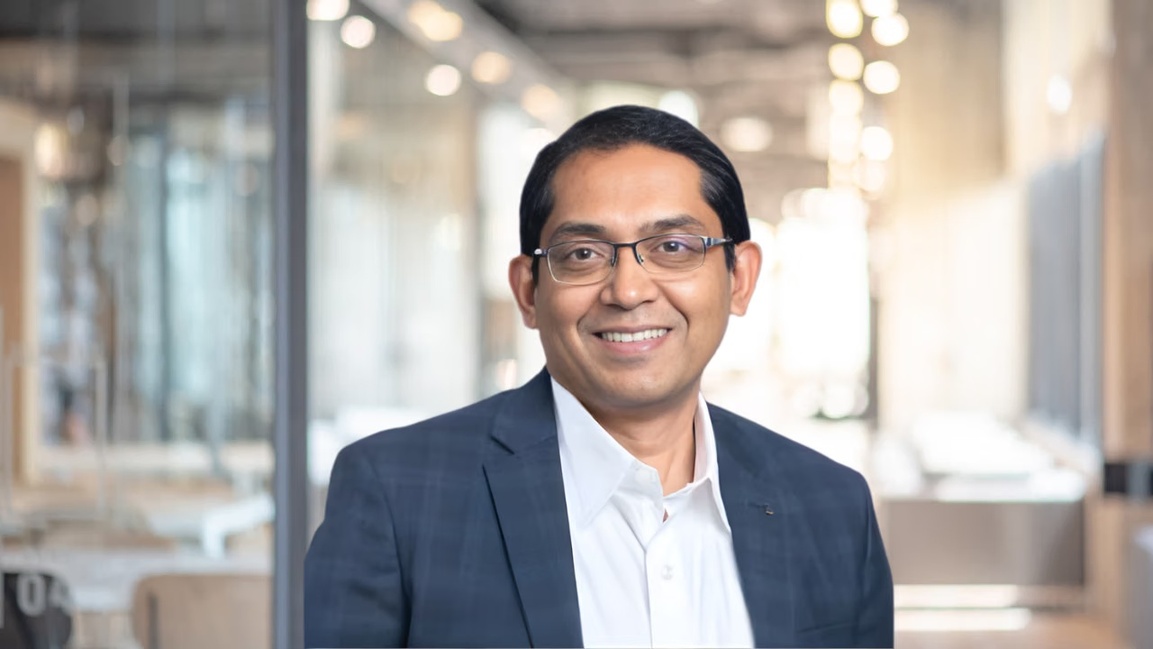
Ravi Ruia attended the White House announcement alongside Rewant Ruia, chairman of Mesabi Metallics. US commerce secretary Howard Lutnick, energy secretary Chris Wright and Export-Import Bank chairman John Jovanovic were also present, according to Essar’s announcement.
The proposed Iowa facility is expected to begin production around 2030. The complex would initially produce 7.5 million tons of steel annually, with eventual capacity reaching 10 million tons. The investment is expected to support more than 8,000 construction jobs and at least 1,750 permanent positions.
From a construction deal to a conglomerate
Essar was founded in 1969 by brothers Shashi and Ravi Ruia, who started with a construction business. One of their early projects was a ₹2.5 crore contract to build an outer breakwater at Chennai port. The company’s name, Essar, comes from the initials of the two brothers, S and R.
Over subsequent decades, the company expanded into shipping, steel, oil refining, power generation, telecommunications, ports and infrastructure. The group developed major industrial assets in India while establishing operations and investment relationships overseas.
That expansion required substantial capital. As Essar entered increasingly capital-intensive sectors, its borrowings grew, eventually forcing a restructuring of parts of the business. The sale of Essar Oil became one of the largest transactions in that process.
In October 2016, Rosneft announced an agreement to acquire a 49.13% stake in Essar Oil. A separate consortium comprising Trafigura and Russian investment group UCP agreed to acquire another 49.13%. The combined transaction valued the acquisition of Essar Oil’s business at $12.9 billion.
The deal included the Vadinar refinery in Gujarat, which had annual processing capacity of about 20 million metric tons, along with associated infrastructure and fuel-retailing operations. Rosneft said the acquisition would provide access to India’s growing petroleum market.
The transaction was completed in August 2017.
The deal provided Essar with funds to repay debt and support its restructuring, while giving Rosneft a substantial presence in one of the world’s largest energy-consuming economies.
The transaction also brought a Russian state-controlled company into a major Indian refining business. Essar Oil was subsequently renamed Nayara Energy in 2018. Rosneft retained its 49.13% stake in the renamed company, according to its disclosures.
Why the Russian link draws attention
Essar’s historical business dealings with Russia have attracted greater scrutiny since Moscow’s invasion of Ukraine in February 2022 and the subsequent expansion of Western sanctions. Nayara Energy, formerly Essar Oil, came under European Union sanctions in July 2025. Rosneft continues to hold a 49.13% stake in the Indian refiner.
Essar says Essar Oil and its subsidiaries became legally and financially independent of the group following the 2017 sale.
The Rosneft acquisition itself was not considered a violation of the sanctions in effect at the time. US State Department spokesperson Mark Toner said in October 2016 that Washington did not see any breach of US or EU sanctions arising from the transaction.
Essar’s financial dealings with Russian institutions have, however, been examined separately.
A joint investigation by the Guardian and SourceMaterial in April 2026 found that Essar had transferred billions of dollars in loans from Russia’s state-controlled VTB bank from Cyprus to a subsidiary in Mauritius following the invasion of Ukraine.
The investigation found that Essar initially borrowed $1 billion from VTB in 2014. Its debt to the bank had risen to €2.35 billion by 2020. The subsequent restructuring moved approximately $3 billion in loan obligations to Mauritius, according to the Guardian.
Sanctions experts cited in the investigation called for the arrangements to be examined by British authorities.
Essar rejected suggestions of sanctions circumvention, saying the restructuring had been approved by Cypriot authorities and complied with applicable laws following independent legal advice.
The investigation concerned Essar’s historical Russian financing arrangements. It did not establish that Russian funds were being used for the proposed American steel investment.
Essar’s earlier American steel venture
The Iowa announcement also marks another chapter in Essar’s long-running attempt to establish an integrated steel business in the United States. The group entered Minnesota in 2007 through a project to develop an iron-ore mine and pelletizing facility at Nashwauk.
The operation encountered financial difficulties and accumulated substantial debt. Essar Steel Minnesota entered bankruptcy in 2016, and the project subsequently emerged under the Mesabi Metallics name.
Its development has required years of restructuring and additional investment.
The new Iowa proposal would link that mining operation with a steelmaking facility capable of processing its output. That integration is intended to reduce dependence on imported raw materials and establish a more complete domestic production chain.
Essar says its Minnesota operation will produce direct-reduction-grade iron-ore pellets suitable for modern steelmaking processes. The company has also said more than 1,500 construction workers are currently engaged at the mine, alongside more than 200 full-time employees.
The Iowa project fits into the Trump administration’s efforts to expand domestic steel production. However, building an integrated operation of this scale will require substantial capital, infrastructure and regulatory approvals.
Its commercial performance will also depend on steel prices, demand and competition from established US producers.
For the Ruia family, the American investment marks another attempt to establish a substantial presence in US steelmaking. Shashi Ruia, who died in 2024, was central to Essar’s early expansion, while Ravi Ruia continues to be associated with the group’s international operations.
The next generation is also involved, with Rewant Ruia serving as chairman of Mesabi Metallics.
“This investment marks a new chapter in Essar’s global journey,” Ravi Ruia said during the White House announcement, referring to his late brother’s ambition to build businesses with an international presence.
More Top Stories: