- | 6:15 pm
India sends warships to escort its fuel shipments
Naval deployment signals rising concern over fuel supply risks as Gulf conflict pushes oil to multi-month highs, disrupts shipping routes and triggers a sharp selloff in Indian markets
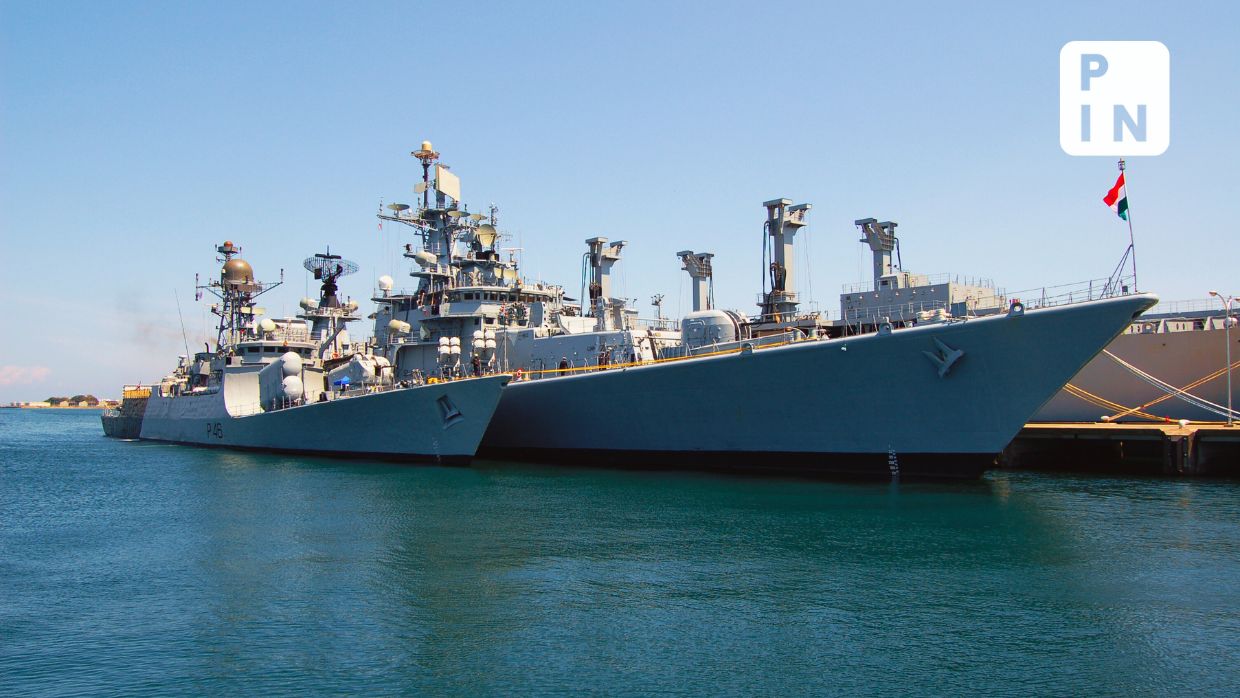


India is sending additional naval warships to the Gulf of Oman and Arabian Sea to escort fuel shipments, stepping up maritime security as the conflict in the Middle East disrupts energy flows and shipping routes, Bloomberg reported, citing people familiar with the matter.
The navy is sending more than half a dozen vessels, including logistics ships, to waters east of the Strait of Hormuz to safeguard tankers until they reach safer zones in the northern Arabian Sea, the report said.
The deployment comes under ‘Operation Sankalp,’ a long-running mission to protect India’s commercial shipping in the Gulf.
The move reflects growing concern in New Delhi over supply risks from a region that accounts for about 90% of India’s liquefied petroleum gas imports, as well as a significant share of its crude and LNG needs.
Government officials said more than 20 India-linked vessels remain in or near the Persian Gulf, including LPG carriers, crude tankers and at least one LNG ship.
India has already secured safe passage for some state-owned tankers in recent days and is in talks with Iran to allow additional fuel shipments to transit the Strait of Hormuz, which has effectively tightened since the conflict escalated late last month.
Prime Minister Narendra Modi discussed the “serious situation in the region” with Iranian President Masoud Pezeshkian last week, including ways to ensure the movement of Indian vessels through the chokepoint.
The naval deployment stops short of entering the Strait of Hormuz itself, underscoring India’s longstanding position of avoiding direct involvement in military coalitions without a United Nations mandate, even as it moves to protect its economic interests.
The urgency has increased after missile strikes hit energy infrastructure across the Gulf, including Qatar’s Ras Laffan Industrial City, the world’s largest liquefied natural gas export hub. The escalation has heightened fears of broader disruption to fuel supplies and shipping routes.
US officials are weighing additional troop deployments to secure tanker traffic, while Gulf states have reinforced defenses around critical energy assets following a series of attacks targeting oil and gas facilities in Qatar, Saudi Arabia and the United Arab Emirates.
Markets have responded sharply to the rising risk. Brent crude surged to as high as $119 a barrel during the session before settling near $114–$115, its highest level in months, as traders priced in escalating attacks on Gulf energy infrastructure. European natural gas prices also spiked to multi-year highs, with benchmark contracts jumping sharply amid fears of prolonged disruption to LNG flows.
Indian equities bore the brunt of the shock. The benchmark Nifty 50 closed down about 3.26% at 23,002.15, while the BSE Sensex fell 2,497 points, or 3.26%, to end at 74,207.24, wiping out roughly ₹11 lakh crore in investor wealth in a single session.
The rupee weakened to record lows against the dollar as higher crude prices raised import costs, reinforcing concerns that sustained disruption in the Gulf could feed into inflation, widen the current-account deficit and keep financial markets under pressure.
More Top Stories: