


- | 12:40 pm
India urges BRICS unity as Middle East conflict tests expanded bloc
Jaishankar says maritime flows through Hormuz and Red Sea are vital as India seeks consensus among a wider BRICS grouping divided by regional tensions.
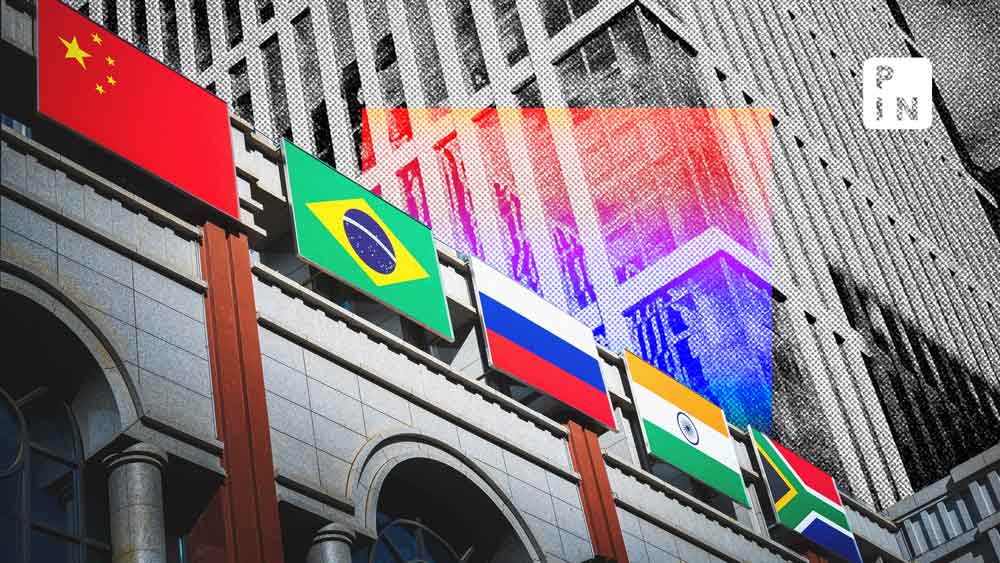


India on Thursday urged BRICS countries to coordinate more closely on conflict resolution, maritime security, sanctions, terrorism, climate finance and reform of the United Nations, as the expanded grouping met in New Delhi against the backdrop of the Middle East conflict and strains over global trade and energy flows.
External Affairs Minister S. Jaishankar, opening the BRICS Foreign Ministers’ Meeting under India’s chairship, said the world was facing “considerable flux” and that emerging markets and developing countries increasingly expected BRICS to act as a stabilizing force.
“There is a growing expectation, particularly from emerging markets and developing countries, that BRICS will play a constructive and stabilizing role,” Jaishankar said.
The meeting comes as India holds the BRICS chairship for the fourth time, after 2012, 2016 and 2021. India’s official BRICS presidency site says the group expanded with Egypt, Ethiopia, Iran, Saudi Arabia and the UAE becoming full members from January 2024, followed by Indonesia in January 2025. It also lists Belarus, Bolivia, Kazakhstan, Cuba, Malaysia, Nigeria, Thailand, Uganda, Uzbekistan and Vietnam as partner countries that joined in 2025.
The New Delhi meeting is being closely watched because the expanded BRICS now brings together countries with sharply different alignments and regional interests, including Iran and the UAE, at a time when the Middle East conflict, oil prices and maritime risks are testing the bloc’s ability to reach common positions.
Reuters reported that Iran had sought BRICS consensus on condemning US and Israeli actions, while internal divisions, including between Iran and the UAE, complicated efforts to produce a joint statement.
Jaishankar’s remarks reflected India’s attempt to keep the grouping focused on broad principles rather than allowing the meeting to be overtaken by one conflict.
In India’s national statement, he said global turbulence was not “a series of isolated events” but “a convergence of challenges testing the resilience of multilateral systems.”
India said these pressures were falling hardest on emerging markets and developing countries through energy, food and fertilizer insecurity, supply chain disruptions, inflation and weaker growth prospects.
Jaishankar said BRICS must move beyond discussion and work toward “effective and coordinated responses.”
On the Middle East, India called for safe and unimpeded maritime flows through international waterways, naming the Strait of Hormuz and the Red Sea.
That reference is significant because both routes are central to global energy and trade flows, and disruption in either would have direct consequences for import-dependent economies such as India.
Reuters also highlighted Jaishankar’s warning that maritime disruption could hurt global economic stability.
“The conflict in West Asia merits particular attention,” Jaishankar said, citing continuing tensions, risks to maritime traffic and disruption to energy infrastructure.
India also reiterated its position on Gaza, calling for a sustained ceasefire, humanitarian access and a credible pathway to a durable settlement. Jaishankar said India supported a two-state solution on the Palestine issue.
The statement also referred to instability in Lebanon, Syria, Sudan, Yemen and Libya, saying the region required sustained international engagement and coordinated diplomacy. “Stability cannot be selective, and peace cannot be piecemeal,” Jaishankar said.
India’s position places it in familiar diplomatic terrain. New Delhi has generally tried to balance ties with the US, Israel, the Gulf states, Iran and Russia while framing its public position around dialogue, sovereignty, territorial integrity, humanitarian access and the protection of civilians. The diplomatic contortionism is impressive, in the way tightrope walking over a pit of policy contradictions is impressive.
Jaishankar also criticized what India described as the growing use of unilateral coercive measures and sanctions inconsistent with international law and the UN Charter, saying such measures disproportionately affect developing countries.
“These unjustifiable measures cannot substitute dialogue, nor can pressure replace diplomacy,” he said.
The sanctions language is likely to resonate within BRICS, where several members have either faced Western sanctions or opposed sanctions imposed outside the UN framework. Russia and Iran have long argued against such measures, while India has often emphasized strategic autonomy and the need to protect developing-country interests in energy and trade.
India also used the platform to restate its long-standing demand for reform of the UN system, including expansion of the Security Council in both permanent and non-permanent categories. Jaishankar said the weakening of multilateral institutions had made reform more urgent, and that “continued delay comes at a high cost.”
The call fits India’s wider Global South diplomacy. During its G20 presidency in 2023 and now in its BRICS chairship, New Delhi has sought to frame itself as a bridge between developed and developing countries, while pressing for reforms in global governance, development finance, technology access and climate finance.
Terrorism was another major theme. India said there could be no justification for terrorism in any form and that cross-border terrorism violated the basic principles of international relations. Jaishankar said “zero tolerance” must remain an uncompromising and universal norm.
The formulation carries India’s familiar message on Pakistan-backed cross-border terrorism, though Pakistan was not named in the statement.
In a BRICS setting, the wording also reflects India’s effort to keep terrorism on the agenda even as the grouping’s membership has widened and its geopolitical priorities have grown more complex.
Jaishankar said climate action must go together with climate justice, including credible commitments, adequate financing and accessible support.
He also said technology offered opportunities for good governance and inclusive growth but raised concerns over trust, transparency and equitable access.
As chair, India said it had organized more than 80 BRICS meetings so far and had engaged with partner countries as part of efforts to build a more inclusive framework. Jaishankar said the integration of new members required stocktaking and updating of existing mechanisms, adding that later members must “fully appreciate and subscribe” to the BRICS consensus on important issues.
That line points to one of the central challenges facing BRICS after expansion. The group has become larger and more representative of the Global South, but also harder to manage.
Its members include major energy exporters and importers, democracies and authoritarian states, US partners and US rivals, and countries with unresolved regional tensions.
Jaishankar closed India’s statement by saying the message of the present moment was that “cooperation is essential, dialogue is necessary, and reform is overdue.”
More Top Stories:





