- | 10:00 am
India-US trade talks lose momentum as tariff differences persist
India and the US are struggling to turn their February framework into a signed agreement as tariff changes, Russian oil and demands for further concessions leave little room to maneuver



India and the US are struggling to close a trade agreement that appeared within reach earlier this year, with officials on both sides now signaling that negotiations have run into limits over tariffs, market access and broader US trade demands.
Finance minister Nirmala Sitharaman said on Monday, 5 October, that negotiations had reached a “plateau” where further concessions were becoming difficult.
“We would like to believe that both sides have reached a plateau beyond which giving or taking might be very, very difficult,” Sitharaman said.
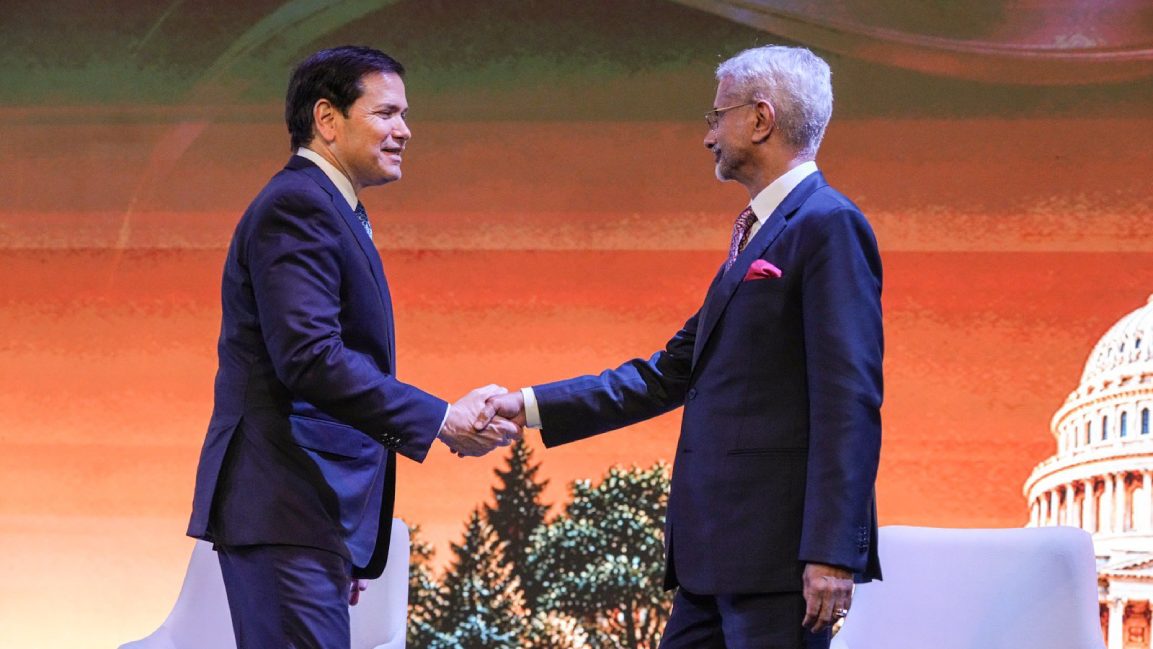
Her assessment followed similarly cautious remarks from US trade representative Jamieson Greer after talks with commerce and industry minister Piyush Goyal at the G20 trade ministers meeting in Milwaukee.
Greer said negotiations were in the “short strokes” and that the two sides had identified the remaining sticking points, but warned against expecting an immediate agreement.
“I don’t think there’s something imminent, but we truly have identified the universe of items that are sticking points,” Greer said.
The comments mark a sharp change from February, when India and the US announced a framework for an interim trade agreement after more than a year of negotiations.
The broader talks began in February 2025, when Prime Minister Narendra Modi and US President Donald Trump agreed to negotiate the first stage of a bilateral trade agreement and set a goal of increasing total bilateral trade to $500 billion by 2030.
The agreement was supposed to increase market access, lower tariff and non-tariff barriers and deepen supply-chain links between the two economies.
By February 2026, the two governments appeared to have cleared many of the toughest issues.
A framework announced on 6 February said India would eliminate or reduce tariffs on all US industrial goods and a range of agricultural products, including tree nuts, fruit, soybean oil, wine and spirits.
Washington, in turn, said it would cut its reciprocal tariff on qualifying Indian goods from 25% to 18% and remove tariffs on some products if the interim agreement was completed.
India also said it intended to purchase $500 billion of US energy products, aircraft and parts, precious metals, technology products and coking coal over five years.
But one of the foundations of that bargain changed just two weeks later.
On 20 February, the US Supreme Court ruled that the International Emergency Economic Powers Act did not give the president authority to impose the sweeping reciprocal tariffs used by the Trump administration.
The ruling struck at the legal basis of the tariff system under which India had been offered the 18% rate.
That has left an important question hanging over the negotiations: what tariff treatment would Indian exports receive under a final agreement?
The Global Trade Research Initiative (GTRI), a New Delhi-based research group, said the lack of clarity over the US tariff offer may help explain why negotiations have failed to close.
GTRI founder Ajay Srivastava said Sitharaman’s reference to a plateau did not necessarily mean negotiations were dead. One possibility, he said, was a narrower interim agreement limited to areas the two sides had already settled.
That would also help explain the apparently different signals coming from the Indian government.
Four days before Sitharaman’s remarks, Goyal met Greer in Milwaukee and pushed for the early conclusion of an interim agreement that India has described as balanced and mutually beneficial.
But the US tariff landscape has continued to shift since February.
In July, Washington imposed an additional 10% tariff on goods from India and several other economies after a Section 301 investigation into efforts to prevent imports made with forced labor.
The White House said India received the 10% rate after introducing a prohibition on forced-labor imports. Other countries that Washington said had not taken comparable steps faced a 12.5% rate.
Those measures illustrate a broader difficulty for New Delhi. Even a signed trade agreement may not necessarily insulate Indian exports from future US tariffs imposed under separate trade, national-security or foreign-policy authorities.
The February framework anticipated that possibility. It said either country could modify its commitments if agreed tariffs were subsequently changed.
Russian oil has added another layer of uncertainty.
When the February framework was announced, Trump also removed an additional 25% tariff imposed on India over Russian oil purchases. The White House said the decision followed an Indian commitment to stop buying Russian crude.
The issue has since returned to the trade relationship as Washington increases pressure on countries buying Russian energy.
India has long defended its oil purchases on energy-security grounds, arguing that sourcing decisions must reflect prices, availability and the needs of a large oil-importing economy.
Agriculture remains another difficult area. The February framework covered tariff reductions on several US farm products, but wider access remains politically sensitive in India. Agriculture supports hundreds of millions of people directly or indirectly, leaving New Delhi wary of concessions that could expose domestic producers to greater competition from heavily mechanized US agriculture.
Washington has also focused on its goods trade deficit with India.
Sitharaman said the US wanted to address an imbalance that favors India but questioned whether tariffs were the appropriate instrument. She pointed to India’s own large trade deficit with China, arguing that trade gaps should be dealt with through negotiation rather than escalating tariffs.
Despite the growing differences, neither side has walked away.
Modi and Trump spoke on 30 September and reviewed cooperation in trade, defense, energy and critical technologies, according to the government. They agreed to remain closely engaged, although the readout announced no breakthrough on the trade agreement.
A very good call between President Trump and Prime Minster Modi! 🇺🇸🇮🇳
— Ambassador Sergio Gor (@USAmbIndia) September 30, 2026
Negotiators also remain in contact following the Milwaukee meeting.
That leaves the two governments in an unusual position.
They have already agreed much of the outline of an interim agreement, including Indian tariff cuts, additional purchases of US goods and greater market access. What is less clear is what India would now receive in return, particularly after the original US reciprocal tariff system was struck down and replaced by a succession of new trade measures.
GTRI argues that India should avoid making further unilateral concessions until those benefits become clearer.
The research group said an interim agreement could still be signed if both countries decide to lock in what has already been negotiated. But it said India should seek durable tariff advantages and protection from arbitrary increases before committing to additional concessions.
More Top Stories: