
- | 1:46 pm
India’s lower house rejects bill on women’s quota in Parliament
The proposal sought to link implementation of women’s reservation to delimitation and failed to secure a two-thirds majority
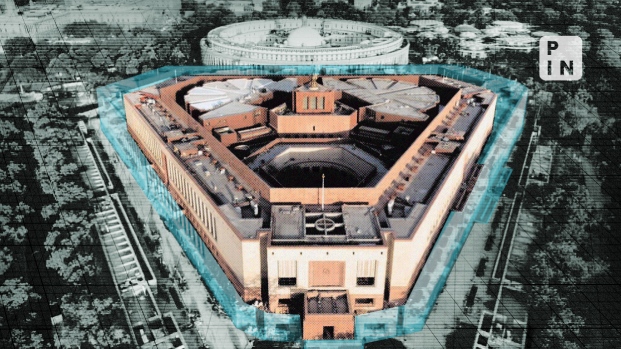


India’s lower house, the Lok Sabha, rejected a constitutional amendment tied to women’s reservation and electoral boundary changes on Friday, 17 April, capping a combative parliamentary debate that exposed deep political divisions over how and when to expand female representation.
The proposal, brought by Prime Minister Narendra Modi’s government, sought to fast-track a one-third quota for women in Parliament and state assemblies by linking it to a nationwide delimitation exercise that would redraw constituencies and expand the Lok Sabha’s size ahead of the 2029 elections.
The bill failed to secure the required two-thirds majority, with 298 lawmakers voting in favor and 230 against in the Lok Sabha, marking a rare legislative setback for the ruling coalition.
Delimitation fault line
The debate, stretched over two days and extended late into Friday, centered less on the principle of women’s reservation, which commands broad political support, and more on its linkage to delimitation, a politically sensitive redrawing of electoral boundaries based on population changes.
The government argued that revising constituencies was necessary to correct imbalances in voter representation that have persisted since seats were last fixed using the 1971 census.
Union home minister Amit Shah told the House the exercise would ensure “equal value” for each vote and would not reduce southern states’ share of seats.
He also said the package of bills would enable the 2029 general election to be conducted with women’s reservation in place.
Opposition parties, however, accused the government of using gender reform as a vehicle to reshape India’s electoral map.
Leaders across parties said they supported women’s quotas in principle but opposed tying them to delimitation, which they warned could alter regional political balances in favor of more populous northern states.
Leader of the Opposition and Congress member of Parliament Rahul Gandhi said the proposal had “nothing to do with the empowerment of women” and was instead an attempt to change the electoral structure.
North-south tensions
The delimitation proposal intensified longstanding tensions between India’s southern and northern states.
Southern leaders argued that population-based seat redistribution would penalize states that have achieved lower population growth through social development policies.
Critics warned that a larger Lok Sabha, potentially expanding from 543 to around 850 members, could shift political weight toward states with faster population growth.
Government ministers countered that seat expansion would increase representation across regions rather than diminish it, pointing to projected increases in absolute seat numbers even for southern states.
Legislative context
India’s Parliament had already passed a law in 2023 mandating a one-third reservation for women, but its implementation was tied to the next census and subsequent delimitation, delaying its rollout until at least 2029.
The new amendment sought to accelerate that timeline by advancing the delimitation process, effectively bringing forward the quota’s operationalization.
Women currently account for about 14% of the Lok Sabha and 17% of the Rajya Sabha, underscoring the gap the policy aims to address.
Following the vote, the bill was not passed, leaving the existing framework unchanged and pushing any near-term implementation of women’s reservation back into uncertainty.
The government signaled it would continue to pursue the policy, while opposition parties said they would press for implementing the 2023 law without linking it to delimitation.
Parliament was later adjourned, bringing the special session to a close after one of the most politically charged debates of the year.
More Top Stories: