- | 8:00 pm
Takaichi’s India visit puts trade security, energy, China in focus
Sanae Takaichi’s first India visit as prime minister comes as Tokyo looks to India for production diversity, strategic depth and a stronger Indo-Pacific partnership.
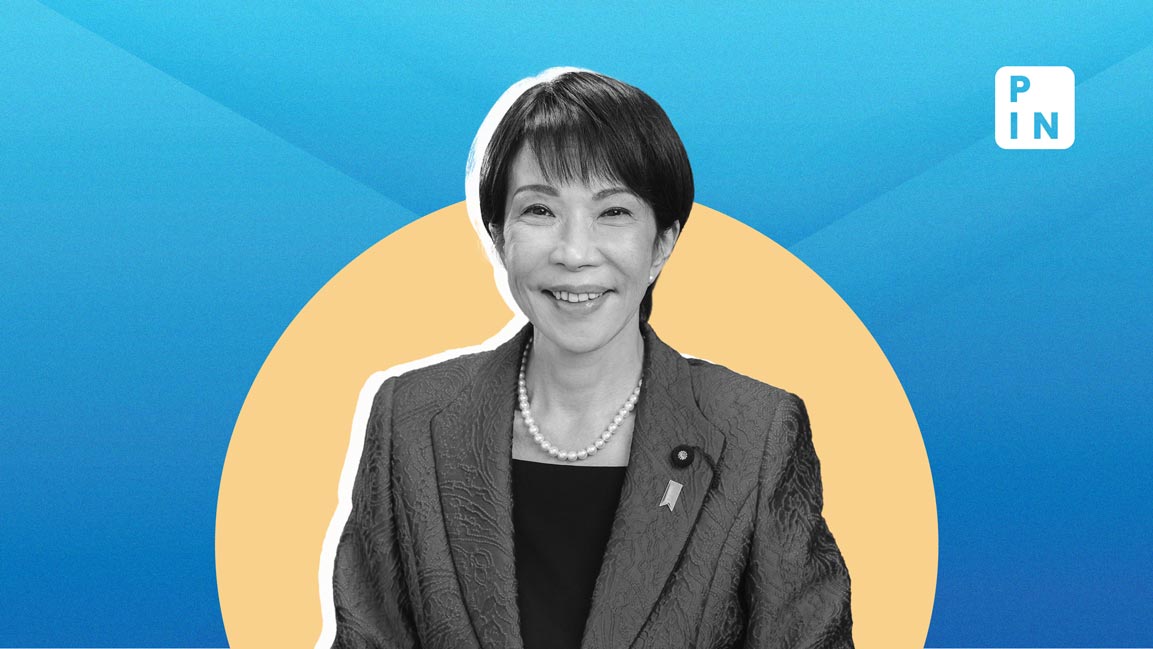


Japanese Prime Minister Sanae Takaichi is set to hold talks with Prime Minister Narendra Modi in New Delhi on Thursday, in a summit expected to push India and Japan deeper into cooperation on economic security, energy, technology, defense and the Indo-Pacific.
Takaichi is on her first official visit to India as prime minister from 1 to 3 July. The visit is centered on the 16th India-Japan Annual Summit, a mechanism through which leaders of both countries meet alternately in India and Japan.
The visit comes less than a year after Modi travelled to Japan in August 2025, when the two sides announced a Japan-India Joint Vision for the Next Decade.
Tokyo has said Takaichi’s visit will focus on strengthening cooperation under that framework, especially in economic security, energy, investment and innovation.
For New Delhi, the summit comes at a time when India is looking for reliable partners for capital, technology, supply chains and strategic balancing in the Indo-Pacific.
India is increasingly central to Japan’s attempt to diversify production networks, deepen security partnerships beyond East Asia and reduce exposure to coercive economic pressure from China.
Strategic alignment
Takaichi made that case in an article published on the website of Japan’s Ministry of Foreign Affairs (MOFA) on Wednesday.
She said the relationship had become a “strategically aligned trusted partnership” and that India was an “indispensable partner for Japan” in realizing a free and open Indo-Pacific.
The Japanese leader also linked the summit to the wider regional order.
She said she wanted to deepen security cooperation and strengthen the two countries’ ability to deal with an uncertain international landscape.
The visit carries political weight because Takaichi is Japan’s first woman prime minister and is seen as a political heir to former prime minister Shinzo Abe, who pushed Japan and India closer through the language of the Indo-Pacific, maritime security and strategic convergence.
Abe’s 2007 address to the Indian Parliament, in which he spoke of the “confluence of the two seas”, remains one of the intellectual markers of the relationship.
Takaichi invoked that legacy in her article, saying the concept of the free and open Indo-Pacific first took root in India.
“A strong India is good for Japan and a strong Japan is good for India,” she wrote, quoting Abe.
The formal agenda is expected to cover trade, investment, technology, infrastructure, defense, energy security and people-to-people ties.
Reuters reported that the two leaders are also expected to discuss security cooperation and efforts to advance a free and open Indo-Pacific.
Secure supply chains
Economic security is also expected to figure in the talks. Japan wants to secure supply chains in areas such as semiconductors, batteries, critical minerals, clean energy and digital infrastructure.
India wants Japanese capital and technology to support manufacturing, infrastructure, green energy and high-end industrial capacity.
The economic relationship has scale, but also room to grow. India’s embassy in Tokyo says bilateral trade between India and Japan totaled $27.47 billion in FY2025-26, with Japan’s exports to India at $21.43 billion and imports from India at $6.04 billion.
Japan ranked as India’s 10th largest trading partner in that period, while India ranked 14th in Japan’s total trade.
Japanese investment remains one of the strongest pillars of the relationship.
Japan has been among India’s top foreign investors, with investments spread across automobiles, electronics, infrastructure, logistics, finance and industrial townships.
About 1,400 Japanese companies operate in India, nearly half of them in manufacturing.
The most visible symbol of Japanese infrastructure backing remains the Mumbai-Ahmedabad high-speed rail project. The National High Speed Rail Corp. says the majority of approved funding for the project is from the Japan International Cooperation Agency through an official development assistance loan, with a 50-year tenure and a 15-year moratorium.
Energy security
The summit could also carry an energy security element.
The Economic Times reported that India and Japan are expected to sign an LNG supply pact and consider a joint task force on LNG stockpiling. That would fit the wider agenda set out by Tokyo, which has explicitly listed energy under economic security for the summit.
Energy has become a sharper concern after recent disruptions in the Middle East and the Strait of Hormuz, a route central to global oil and LNG flows.
India and Japan are both major energy importers, and both have an interest in stable supplies, diversified routes and predictable pricing.
The defense and security track is also expected to draw attention. India and Japan are members of the Quad along with the US and Australia, and both have steadily expanded security dialogue as China becomes more assertive in the Indo-Pacific.
The two countries already have a foreign and defense ministerial 2+2 framework, regular defense dialogue and a logistics agreement between the Indian armed forces and Japan’s Self-Defense Forces.
Economic links
Japan’s MOFA says India is of “utmost importance” to the realization of a free and open Indo-Pacific. That language reflects Tokyo’s view that India is no longer just an economic partner, but a strategic anchor connecting the Indian Ocean, Southeast Asia and the wider Pacific.
Northeast India may remain part of the background even though the summit is being held in New Delhi.
Earlier plans to include Guwahati were dropped, according to some media reports, but Japanese interest in the region remains linked to connectivity, Bangladesh, ASEAN access and industrial value chains.
Takaichi’s article referred to infrastructure such as regional roads, bridges and Bangladesh’s Matarbari Port as part of a broader industrial value-chain idea connecting Assam, Northeast India, Bangladesh and the Indian Ocean.
People-to-people ties are likely to feature as well. Japan faces labor shortages and India has a large young workforce, making mobility, skills and training a natural area for expansion.
The Japanese ambassador to India, Ono Keiichi, said on Wednesday that Takaichi’s visit would be a chance to advance people-to-people exchanges, calling them a cornerstone of deeper strategic ties.
More Top Stories: