

- | 12:40 pm
Anil Chakravarthy to succeed Shantanu Narayen as Adobe CEO
The longtime software executive takes charge on 1 December as Shantanu Narayen moves to executive chair and Adobe confronts growing competition from AI-powered creative tools
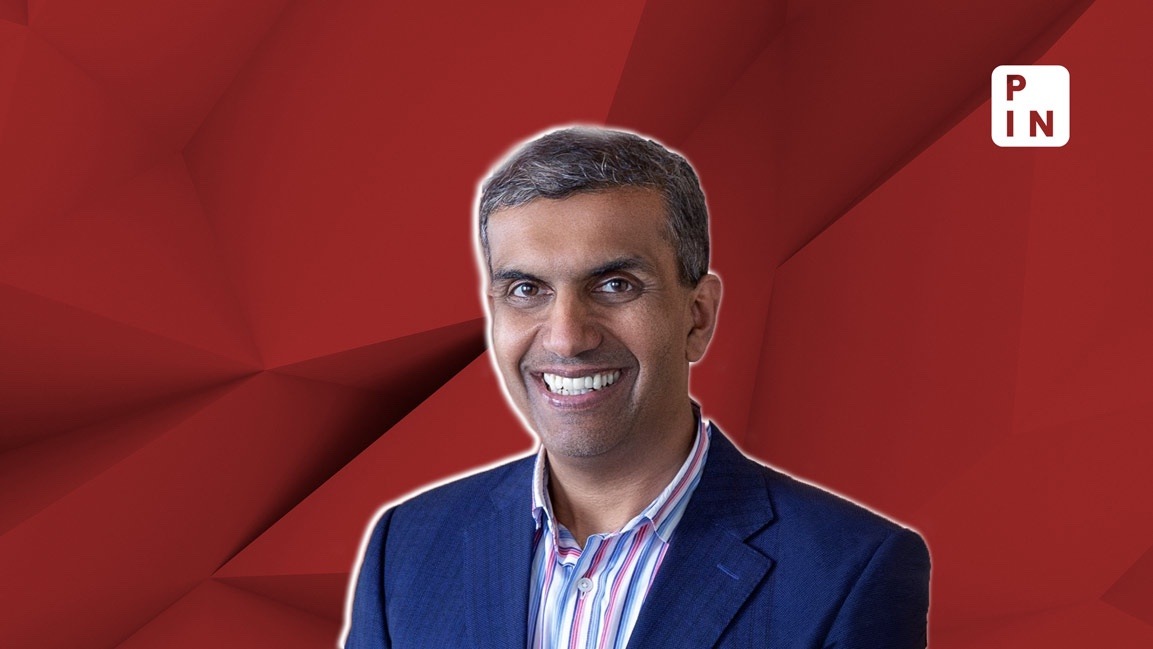


Adobe has named Anil Chakravarthy as its next president and chief executive officer, handing an internal candidate the task of leading the Photoshop maker through the upheaval caused by generative artificial intelligence.
Chakravarthy will assume the role and join Adobe’s board on 1 December. Shantanu Narayen, who has led the company for more than 18 years, will become executive chair and work with his successor during the transition, Adobe said on Thursday, 3 September.
The appointment follows a search that began in March, when Narayen disclosed his decision to step down once a successor had been found. A special board committee led by independent director Frank Calderoni considered candidates from inside and outside Adobe before unanimously selecting Chakravarthy.
Chakravarthy currently leads Adobe’s Customer Experience Orchestration business and worldwide field operations. That gives him responsibility for products used by companies to manage marketing, content and customer engagement, as well as Adobe’s enterprise sales, professional services and customer-success teams.
“I’m energized by the opportunity to fuel growth and drive Adobe’s leadership in the next era of agentic software,” Chakravarthy said.
His selection places an executive with experience in enterprise software and subscription businesses at the head of a company whose traditional creative-software dominance is being tested by AI.
Tools capable of producing images, videos, presentations and designs from simple prompts have lowered the technical barriers to creative work. Adobe has responded by building its Firefly generative-AI models into products such as Photoshop, Illustrator and Adobe Express, while expanding its enterprise AI offerings.
The company nevertheless faces pressure from younger rivals including Canva and Figma, as well as AI models that can generate and edit visual content without requiring users to master conventional design software.
Adobe’s attempt to buy Figma for $20 billion was abandoned in December 2023 after the companies concluded that they had no clear route to regulatory approval in Europe and the UK. Adobe paid Figma a $1 billion termination fee.
Investors remain divided over whether AI will expand Adobe’s market or weaken demand for its core products. Its shares have fallen about 18% in 2026 after losing more than 21% in 2025. They dropped another 1.7% in after-hours trading following the leadership announcement.
The operational picture has been stronger. Adobe reported record second-quarter revenue of $6.62 billion, up 13% from a year earlier, while annualized recurring revenue from products classified as “AI-first” more than tripled to over $500 million.
The company raised its fiscal 2026 revenue forecast in June to between $26.5 billion and $26.6 billion. Its next financial results are due on September 10, when investors are likely to seek further evidence that AI adoption is translating into durable revenue growth. Adobe’s second-quarter results
Chakravarthy joined Adobe in January 2020 as executive vice president and general manager of its Digital Experience business. He later assumed responsibility for worldwide field operations and was promoted to president of Digital Experience in December 2021.
Adobe credits him with expanding its customer-experience business and developing products including Adobe CX Enterprise, GenStudio and Brand Visibility. He also helped oversee the acquisitions and integration of work-management software company Workfront and online marketing platform Semrush.
Before Adobe, Chakravarthy served as chief executive of enterprise cloud-data company Informatica from 2015 to 2020. He led Informatica’s move toward cloud and subscription services, experience that could prove relevant as Adobe adapts its own business to AI-driven software.
He previously held senior positions at cybersecurity company Symantec and internet infrastructure business VeriSign, after beginning his career at McKinsey & Co.
Chakravarthy has a bachelor’s degree in computer science and engineering from the Institute of Technology in Varanasi and holds master’s and doctoral degrees from the Massachusetts Institute of Technology. He also serves on the board of financial-technology company FIS.
Narayen joined Adobe in 1998 and became chief executive in December 2007. His tenure was defined by the company’s shift from selling packaged software to offering Creative Cloud subscriptions, a move that produced predictable recurring revenue and reduced its dependence on periodic product releases.
Adobe generated $23.77 billion in fiscal 2025 revenue, up 11% from the previous year, with subscription sales accounting for nearly all of the total. Its annualized recurring revenue reached $25.2 billion at the end of the year.
As executive chair, Narayen will remain closely involved while Chakravarthy takes responsibility for proving that Adobe can repeat its successful subscription transformation in the AI era.
The change also comes amid turnover in Adobe’s senior ranks. Finance chief Dan Durn left in June, and Steve Day, a 20-year Adobe veteran, is serving as interim chief financial officer while the company searches for a permanent replacement.
More Top Stories: