- | 4:15 pm
Xi to visit India for BRICS Summit in first trip since 2019
The Chinese president will attend the 12-13 September summit in New Delhi, giving Xi and Narendra Modi another opportunity to build on a cautious improvement in relations after years of border tensions
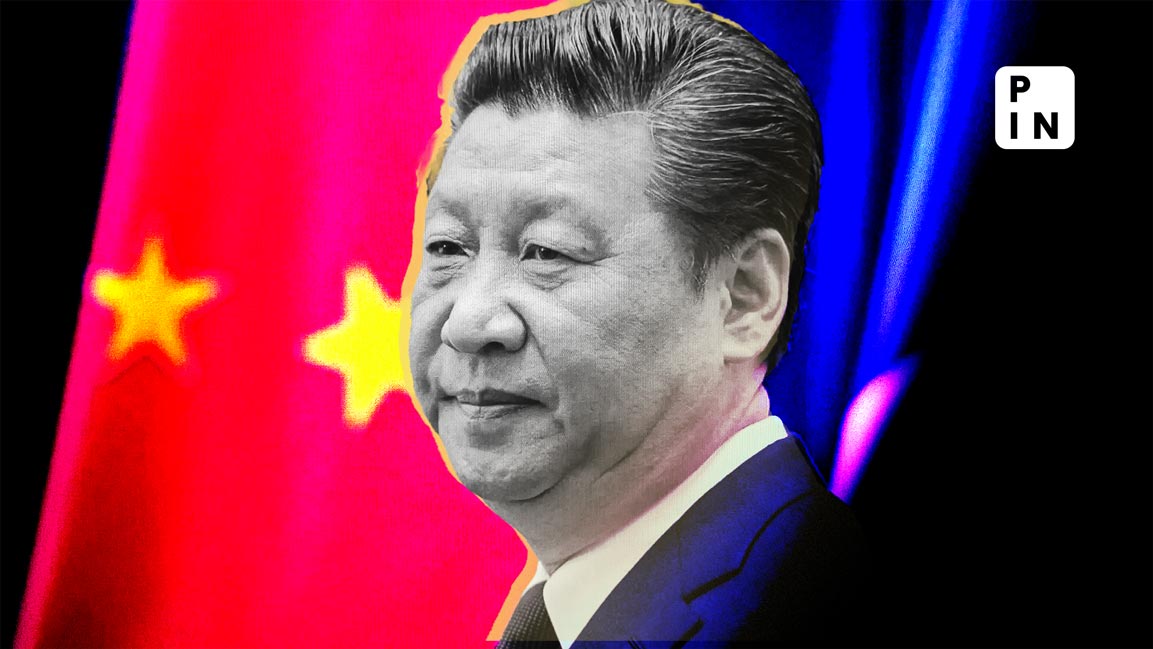


Chinese President Xi Jinping will travel to New Delhi for the 18th BRICS Summit this weekend, his first visit to India since 2019 and the latest sign of a gradual easing of tensions between Asia’s two largest countries.
China’s Ministry of Foreign Affairs said Thursday, 10 September, that Xi will attend the 12-13 September summit at the invitation of Prime Minister Narendra Modi. The announcement was made on the ministry’s official X account two days before the meeting begins.
At the invitation of Prime Minister of the Republic of India Narendra Modi, President Xi Jinping will attend the 18th BRICS Summit in New Delhi from September 12 to 13. pic.twitter.com/abKPwOyqRm
— CHINA MFA Spokesperson 中国外交部发言人 (@MFA_China) September 10, 2026
Beijing had until Wednesday declined to confirm who would represent China. Asked at a regular briefing on 9 September who would lead the Chinese delegation, foreign ministry spokesperson Mao Ning said only that the government would release information when there was an update.
A day earlier, she had said China “sets great store by BRICS cooperation.”
Xi’s attendance turns what was already one of India’s biggest diplomatic gatherings of the year into an important moment for India-China relations. His last visit to India was in October 2019, when he met Modi for their second informal summit in Chennai and Mamallapuram.
The two leaders discussed how to manage differences while expanding cooperation and agreed at the time that disagreements should not be allowed to become disputes.
Relations deteriorated sharply the following year after the military confrontation along the Line of Actual Control in eastern Ladakh. The prolonged standoff froze much of the political relationship and disrupted travel, economic engagement and other exchanges.
A slow improvement began after Modi and Xi met on the sidelines of the BRICS summit in Kazan in October 2024, shortly after the two countries reached an agreement that allowed disengagement at the remaining friction points in eastern Ladakh.
The two leaders met again in Tianjin in August 2025. India said after that meeting that they had welcomed the improvement since Kazan, reaffirmed that India and China were “development partners and not rivals” and agreed that their differences should not become disputes.
Modi also stressed that peace along the border was necessary for the continued development of bilateral relations. The two leaders discussed restoring direct flights, easing visas and expanding trade and investment while addressing India’s trade deficit.
Modi invited Xi to the 2026 BRICS summit during that meeting, and Xi accepted the invitation in principle while offering Chinese support for India’s presidency.
Diplomatic activity has accelerated since then. China and India held a strategic dialogue in New Delhi in February, where the two sides said they should view their relationship from a long-term perspective and regard each other as partners rather than rivals. They also agreed to support India’s BRICS presidency this year and China’s presidency in 2027.
In June, Chinese foreign minister Wang Yi traveled to New Delhi for the BRICS meeting of national security advisers and high representatives. Modi told Wang that the two countries should maintain high-level exchanges, expand practical cooperation and protect the interests of countries in the Global South, according to the Chinese foreign ministry.
That was followed on 25 August by the 25th round of talks between National Security Adviser Ajit Doval and Wang, the two countries’ Special Representatives on the boundary question.
The talks produced an eight-point understanding that included commitments to maintain peace in the border areas, continue work toward a settlement of the boundary dispute and strengthen mechanisms for managing the border.
The two sides also agreed to continue negotiations under the political parameters established in 2005 and hold the next Special Representatives meeting in India in 2027.
Xi and Modi were both in Bishkek for the Shanghai Cooperation Organization (SCO) summit at the end of August and beginning of September.
The New Delhi BRICS meeting now gives them another opportunity for direct discussions. A Modi-Xi meeting is expected during the summit, although neither government publicly released a bilateral schedule as of Thursday afternoon.
The improvement in political ties has been accompanied by a gradual restoration of links disrupted after 2020.
Chinese ambassador to India Xu Feihong said this week that five direct air routes between mainland China and India had resumed and that border trade had restarted after a six-year suspension.
He said Beijing wanted the two sides to turn agreements reached by Xi and Modi into “concrete actions” and move relations onto a more stable footing.
Important disputes remain. The boundary question has not been resolved, and both governments continue to differ over their competing territorial claims. Economic relations are also heavily imbalanced. At their Tianjin meeting last year, Modi and Xi specifically acknowledged the need to expand trade and investment while reducing India’s trade deficit with China.
The BRICS summit itself will bring Xi together with Russian President Vladimir Putin, Iranian President Masoud Pezeshkian, South African President Cyril Ramaphosa, Indonesian President Prabowo Subianto and other leaders from the expanded grouping.
India is hosting the 12-13 September meeting at Bharat Mandapam under its 2026 BRICS chairship. Its theme, “Building for Resilience, Innovation, Cooperation and Sustainability,” is intended to focus the grouping on economic cooperation and development alongside its longstanding push for changes to global institutions.
India has also sought greater cooperation on trade, technology, finance, supply chains and development among BRICS members.
China has set out a broadly compatible economic agenda while putting greater emphasis on opposition to protectionism and on increasing the role of developing economies in global governance.
Xu, the Chinese ambassador, said ahead of the summit that Beijing wants BRICS countries to deepen cooperation on energy, minerals, infrastructure and supply chains, increase coordination on macroeconomic policy and advance local-currency and cross-border payment arrangements.
China has also called for greater cooperation in artificial intelligence, manufacturing and other technologies.
But the leaders will meet against a far more difficult geopolitical backdrop.
The war involving the US, Israel and Iran has disrupted shipping through the Strait of Hormuz and pushed oil prices above $100 a barrel. It has also created tensions within BRICS because Iran and the United Arab Emirates are both part of the grouping but are on opposing sides of the regional crisis. Negotiators have been trying to find language that all members can accept for the summit declaration.
That makes the meeting a test of whether the expanded BRICS can reach consensus when the interests of its own members collide.
Beijing will take over the rotating BRICS presidency from India in 2027. Xu said coordination between the two countries during their successive presidencies could help sustain cooperation inside the grouping.
More Top Stories: