- | 10:35 am
Dangote hires Engineers India for $16 billion Kenya refinery project
The Indian state-owned engineering company has won a $450 million-plus contract for a planned 700,000-barrel-a-day refinery in Lamu as Aliko Dangote pushes ahead with a project expected to cost as much as $16 billion.
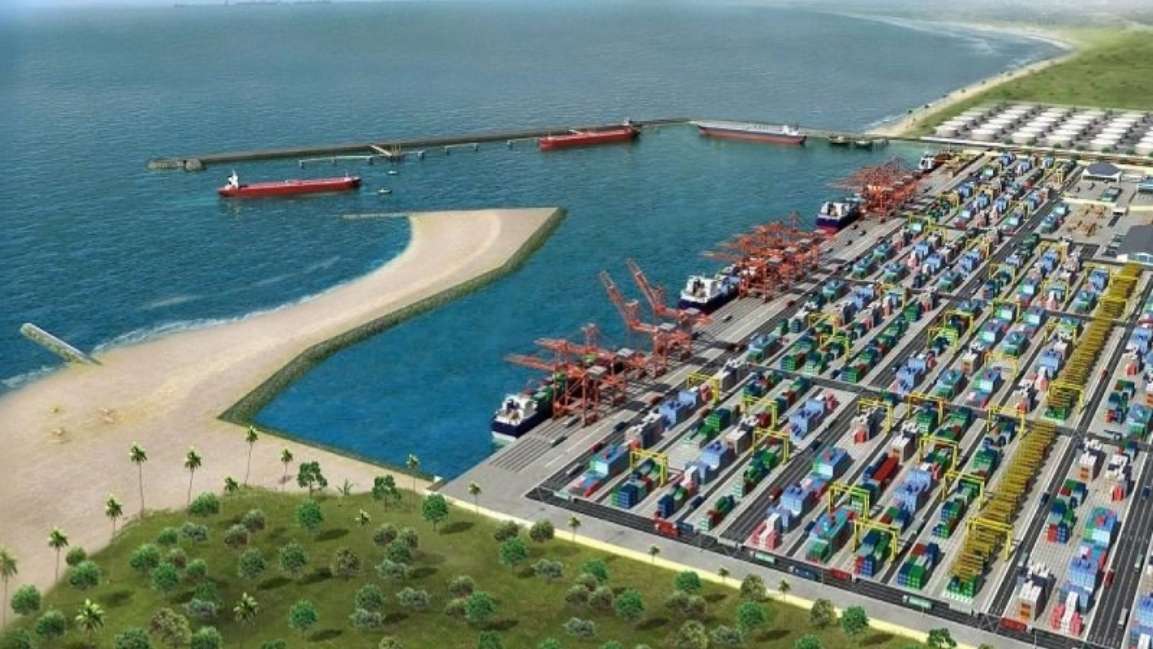


Nigerian billionaire Aliko Dangote has hired Engineers India Ltd to help develop a refinery and petrochemical complex in Kenya that could cost as much as $16 billion, extending a partnership that helped deliver his giant refining complex in Nigeria.
State-owned Engineers India said on Tuesday, 22 September, that it had secured a contract worth more than $450 million, or about ₹4,300 crore, to serve as project management consultant and engineering, procurement and construction management consultant for the proposed plant.
The greenfield complex will have capacity to process 700,000 barrels of crude a day, putting it among the largest refineries in Africa if completed. The plant is planned for Lamu on Kenya’s Indian Ocean coast and is intended to supply fuels to Kenya and other East African markets, as well as produce for export.
The award significantly expands Engineers India’s overseas order book and deepens a relationship with Dangote that stretches back to the construction of his Nigerian refinery near Lagos.
Engineers India provided project management, engineering and related services for that project, which was originally developed with nameplate capacity of 650,000 barrels a day. The refinery is now operating at about 700,000 barrels a day.
The Nigerian complex also includes petrochemical facilities with 830,000 tons a year of polypropylene capacity.
Engineers India describes the project as the largest overseas consultancy assignment it has executed.
Dangote is now seeking to replicate parts of that model in East Africa.
The proposed Kenyan refinery is expected to cost about $15 billion to $16 billion, with construction targeted for completion around 2030. Kenyan President William Ruto has said a groundbreaking ceremony is planned for 30 September.
Ruto met Dangote and Africa Finance Corporation Chief Executive Samaila Zubairu in New York on Monday on the sidelines of the United Nations General Assembly as preparations and financing discussions continued.
Ruto has said the project could strengthen East Africa’s energy security, expand local processing and support industrialization.
The refinery would be developed within the Lamu Port-South Sudan-Ethiopia Transport Corridor, or LAPSSET, special economic zone, a vast infrastructure project intended to connect Kenya’s coast with markets deeper in East Africa.
For Dangote, the Kenyan investment represents the next stage of an expansion of his oil business beyond Nigeria.
His Lagos refinery, built at a cost of about $20 billion, began producing fuels in 2024 and has reduced Nigeria’s dependence on imported petroleum products. Dangote also plans to expand its capacity to as much as 1.4 million barrels a day.
The Nigerian refinery has increasingly supplied international markets as well, including exports of diesel and jet fuel. It reported first-half 2026 after-tax profit of $1.82 billion on revenue of more than $13 billion, according to its IPO prospectus.
Dangote is raising fresh capital as those expansion plans accelerate.
Dangote Petroleum Refinery and Petrochemicals opened a public share offer on 14 September, selling 4.1 billion shares at 525 naira each. The offer could raise about 2.15 trillion naira, or roughly $1.6 billion, and is scheduled to close on 13 October.
The offering values the refinery business at $47 billion. Dangote has said his broader energy plans could require about $40 billion of investment over the next five years, including the expansion of the Nigerian refinery and development of the Kenyan project.
The Kenyan refinery, however, faces challenges extending well beyond engineering. The biggest is crude supply.
Kenya does not currently produce oil commercially, meaning a 700,000-barrel-a-day refinery would initially have to rely heavily on crude imported by sea unless proposed regional oil projects and transport links are developed.
Potential sources include Uganda, South Sudan and Kenya’s own Turkana fields, but each presents infrastructure, political or commercial difficulties.
Kenya has also discussed infrastructure that could eventually transport crude from its Turkana fields to Lamu. A pipeline linking the Lokichar basin with the coast remains at an early stage, however, with no construction agreement or financing plan publicly announced.
The Lamu location creates additional infrastructure requirements.
The LAPSSET zone does not yet have all the oil-storage and related facilities that a refinery of this scale would require. Development in the region has also faced environmental scrutiny because of Lamu’s sensitive coastal ecosystem and the refinery site’s proximity to UNESCO-listed Lamu Old Town.
Financing is another major execution risk.
Dangote has indicated that funding for his broader expansion could come from internal cash generation, debt and equity markets, while investment by East African governments has also been discussed. The meeting involving Dangote, Ruto and Africa Finance Corporation this week underlined the continuing work on financing arrangements.
Engineers India’s appointment nevertheless gives the project a major engineering and project-management partner as Dangote moves toward the planned groundbreaking.
The company operates under India’s Ministry of Petroleum and Natural Gas and says it has executed more than 8,000 assignments covering 700 major projects. Its portfolio includes 91 major refinery projects, 13 major petrochemical projects and work across pipelines, oil and gas processing, storage terminals and infrastructure.
Its international work includes projects in Nigeria, Mongolia, Algeria, the United Arab Emirates, Oman, Kuwait and Kenya.
Engineers India shares jumped after the contract announcement, rising more than 6% on Tuesday and touching a fresh 52-week high.
For Kenya, the scale of the Dangote proposal dwarfs its previous refining industry.
The country’s Mombasa refinery stopped processing crude more than a decade ago, leaving Kenya heavily dependent on imported petroleum products. A 700,000-barrel-a-day plant would produce substantially more fuel than Kenya consumes domestically, making access to neighboring markets and international export routes central to the economics of the project.
More Top Stories: