- | 7:00 pm
Adani Ports expands Middle East footprint with new Oman subsidiary
The Indian ports operator has incorporated a wholly owned company in Oman as part of its overseas expansion, although no specific terminal project has been announced
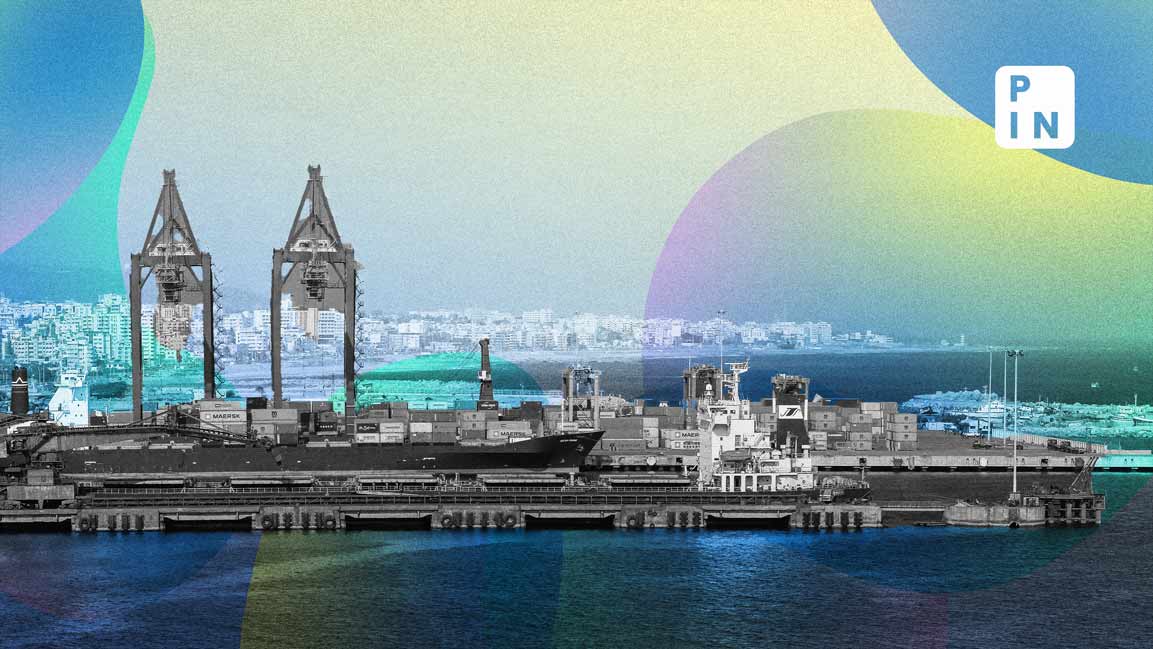


Adani Ports and Special Economic Zone Ltd (APSEZ), India’s largest private ports operator, has established a subsidiary in Oman as it expands its international logistics and maritime operations.
The company, Indian Ocean Gateway Terminal, was incorporated on October 21, 2026, through Adani International Ports Holdings Pte Ltd, APSEZ’s wholly owned international holding company.
In a disclosure dated October 22, APSEZ said the new entity had share capital of 500,000 Omani rials, divided into 100 shares valued at 5,000 rials each.
Adani International Ports Holdings owns the entire shareholding, making the Omani company a wholly owned step-down subsidiary of APSEZ.
The company said the entity had been established to conduct operations locally as part of its wider international expansion.
The disclosure did not identify a specific port, terminal concession, construction project or commercial agreement associated with the new subsidiary.
Oman adds to international footprint
Oman’s location on the Arabian Sea gives it strategic importance for shipping routes connecting India, the Persian Gulf, East Africa and international markets.
Its major commercial ports, including Sohar, Duqm and Salalah, support container shipping, industrial cargo, energy exports and logistics services.
The country has been investing in transport infrastructure and industrial development as part of efforts to diversify its economy beyond hydrocarbons.
For international port operators, Oman offers access to shipping networks serving both Gulf markets and the wider Indian Ocean.
APSEZ has not specified which of these opportunities its new subsidiary will pursue.
The incorporation nevertheless gives the company a locally registered entity through which it could undertake future business activities, subject to the necessary agreements and regulatory approvals.
The announced share capital should not be confused with the cost of a port development. No investment commitment of that kind has been disclosed.
Overseas terminals already form part of strategy
APSEZ has been expanding beyond its Indian port network through investments, concessions and partnerships.
In Tanzania, its international holding company signed a 30-year concession agreement with the Tanzania Ports Authority in May 2024 to operate and manage Container Terminal 2 at Dar es Salaam Port.
The terminal comprises four berths and has an annual handling capacity of approximately one million twenty-foot equivalent units, or TEUs.
The agreement gave the group an operating presence in East Africa, a region connected to major shipping routes across the Indian Ocean.
In Sri Lanka, APSEZ is part of the consortium developing Colombo West International Terminal, alongside John Keells Holdings and the Sri Lanka Ports Authority.
The terminal began operations in April 2025 under a 35-year build-operate-transfer arrangement.
The approximately $800 million project has a planned annual capacity of 3.2 million TEUs, with a 1,400-meter quay and a depth of 20 meters.
Colombo is an important transshipment center serving cargo moving between the Indian subcontinent and international shipping networks.
These projects illustrate the group’s existing approach to overseas expansion, although APSEZ has not indicated whether the Oman subsidiary will follow a similar model.
Expansion beyond container terminals
APSEZ’s international activities also include marine services and offshore support operations.
Its acquisition of a controlling interest in Astro Offshore expanded the group’s offshore vessel fleet and strengthened its presence in the Middle East, Africa and Asia.
Astro Offshore brought 26 offshore support vessels, including anchor-handling tugs, barges, multipurpose support vessels and workboats.
Such vessels serve industries including offshore energy, engineering and renewable energy development.
APSEZ’s marine-services operations also include Ocean Sparkle and other group businesses involved in harbor and offshore activities.
The Oman subsidiary could provide a corporate platform for future maritime activities, but the company has not disclosed any direct connection between Indian Ocean Gateway Terminal and these existing businesses.
The immediate significance of the Oman announcement is corporate rather than operational.
APSEZ has created a wholly owned local subsidiary, but has not announced that it has secured a terminal concession, acquired port infrastructure or begun construction.
The scale of any future investment, the nature of its services and its expected contribution to group revenue remain unknown.
Those details will determine whether the new company becomes a significant addition to APSEZ’s overseas portfolio or serves primarily as a vehicle for local operations.
More Top Stories: