
- | 9:35 am
India ends zero UPI fee era with charges on merchant payments above ₹2,000
Consumers will continue to pay nothing for UPI, while larger merchant payments will face an MDR of up to 0.4% from 15 October as India changes the way its dominant digital payment network is funded
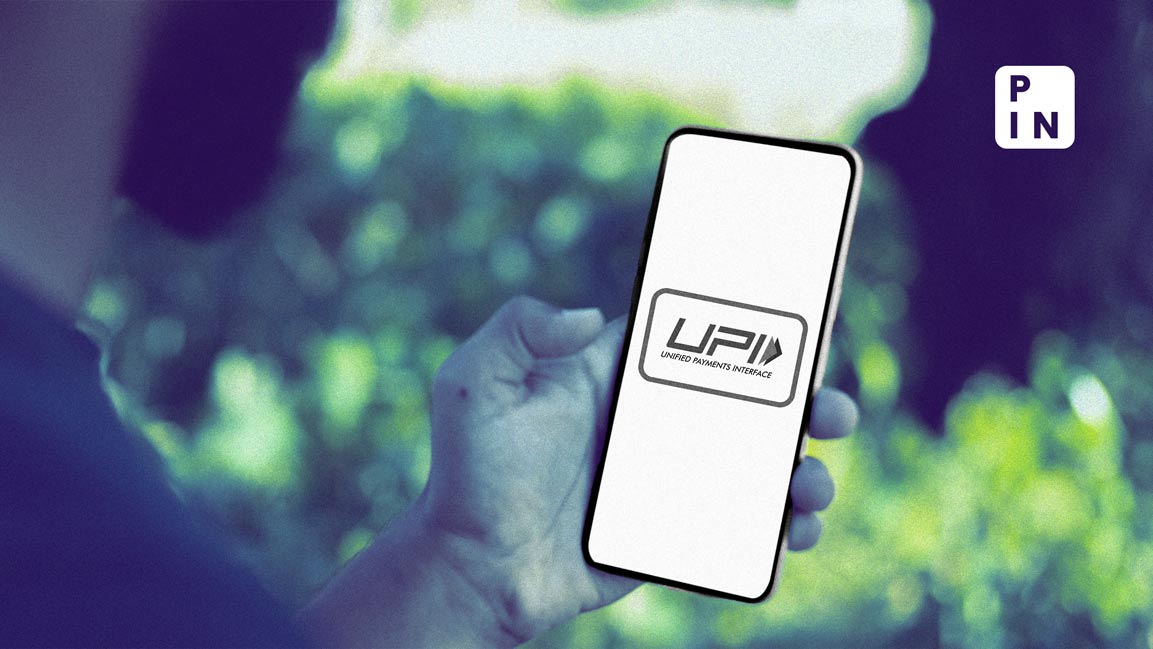


India will allow charges on higher-value UPI merchant payments from 15 October, ending more than six years of zero merchant discount rates (MDR) across bank-account-funded UPI transactions while keeping the service free for consumers.
Under a framework issued by the National Payments Corporation of India (NPCI), person-to-merchant payments above ₹2,000 ($21) will attract an MDR, or the fee a merchant pays to the payment ecosystem for accepting a digital payment, of up to 0.4%.
The MDR is paid within the merchant-payment system rather than by the customer making the UPI payment.
The charge will be capped at ₹300 for transactions of ₹75,000 ($780) or more. Person-to-person transfers will remain free regardless of value.
A customer paying ₹20,000 ($210) at a large retailer, for instance, will not be charged for using UPI. At the maximum standard rate, the merchant could incur an MDR of ₹80.
The change follows a 14 September finance ministry notification that protected UPI transactions of up to ₹2,000 from charges under the amended Payment and Settlement Systems Act. NPCI issued the detailed pricing framework a day later.
Payments of ₹2,000 or less will remain free of MDR. Small merchants receiving up to ₹1 lakh ($1,043) a month through UPI QR codes under the person-to-person-merchant, or P2PM, category will also retain zero MDR on all their transactions, including individual payments above ₹2,000.
The finance ministry said about 96% of all merchant UPI transactions will therefore remain outside the new MDR framework.
Transactions above ₹2,000 made up only about 4% of merchant UPI payments in 2025-26, but accounted for roughly two-thirds of their total value, according to parliamentary data cited earlier this year.
UPI processed about 24.5 billion transactions in August 2026. Government data put their value at about ₹29.9 trillion. The network had about 555 million registered users by June and more than 700 participating banks by the end of 2025-26.
Why India changed the model
UPI merchant payments have operated under zero MDR since January 2020, when the government removed the charge to encourage businesses and consumers to move toward digital payments.
The policy helped UPI expand rapidly, but banks and payment companies have argued that the growing system needs a more reliable source of revenue to pay for technology, fraud controls, cybersecurity and merchant infrastructure.
The government sought to compensate parts of the ecosystem through incentive schemes.
For 2024-25, the government approved a ₹1,500 crore incentive scheme covering eligible UPI payments of up to ₹2,000 to small merchants. These payments remained free of MDR and qualified for a government-funded incentive equal to 0.15% of transaction value. Payments above ₹2,000 and payments to large merchants remained free of MDR but received no incentive.
In March this year, the Standing Committee on Finance said government incentives covered only about 11% of the digital payment industry’s costs and 14% of potential MDR collections. It called on the Department of Financial Services to explore a self-reliant, tiered revenue model for UPI.
The committee cited an industry estimate putting UPI’s annual operating costs at about ₹20,700 crore.
Parliament later amended Section 10A of the Payment and Settlement Systems Act, allowing the government to specify which electronic payment modes must remain free of charges. The finance ministry said in August that consumers would continue to use UPI without transaction charges and that any MDR would apply only to a limited set of merchant payments above a specified threshold.
That threshold has now been set at ₹2,000.
RBI backs the change
The Reserve Bank of India (RBI) said the introduction of MDR on larger UPI merchant transactions would strengthen the long-term sustainability of the payments system.
“A fair and appropriate distribution of MDR across ecosystem participants will support continued investment in technology, infrastructure and acceptance networks,” the RBI said in a post on X on Tuesday.
The central bank said UPI would remain free for users and that MDR would apply only on eligible merchant transactions.
The finance ministry has also stressed that MDR is not a government tax.
“MDR is neither a tax nor a charge collected by the Government or NPCI,” it said. The money is distributed among participants in the payments ecosystem, including banks, payment service providers and UPI application providers.
Paytm sees additional revenue
The change creates a new source of revenue for payment companies from UPI transactions that have generated no MDR since 2020.
One 97 Communications Ltd, the parent of Paytm, told stock exchanges on 15 September that NPCI had introduced MDR of up to 0.4% on eligible P2M transactions above ₹2,000 from 15 October. Paytm said the change was expected to generate additional revenue from its merchant business and that it would make further disclosures if required once the framework took effect and its financial impact became clearer.
PhonePe Chief Executive Sameer Nigam had already drawn a distinction between consumer payments and merchant charges during the policy debate in August.
“UPI is and will remain free for all Indian consumers!” Nigam wrote on X on 8 August, adding that consumers would not be charged for making UPI payments.
The Payments Council of India, which represents payments companies, made a similar argument before the final framework was announced. It said merchant service charges were commercial arrangements between merchants and payment providers and “do not mean that consumers pay to use digital payments.”
Rajnish Kumar, a former State Bank of India chairman who is now chairman of Mastercard India, also supported the introduction of MDR.
“It is not a tax,” Kumar told India Today TV. “This is a fee payable by the merchant for the convenience.”
Kumar said banks and payment companies could not continue bearing the cost indefinitely and estimated industry losses from the zero-MDR structure at ₹10,000 crore to ₹12,000 crore.
He also said the 0.4% rate was a maximum and actual commercial rates could be lower depending on competition among payment providers.
Lower charges for some sectors
The standard MDR will not apply to every eligible merchant payment. Payments above ₹2,000 to railways, telecommunications companies, insurers, fuel retailers and agricultural-input businesses will attract a flat ₹5 MDR per transaction.
The government described these as essential or thin-margin sectors where a percentage-based fee could impose a disproportionate cost.
Payments related to mutual funds, securities, stockbrokers and dealers will carry MDR of 0.02%, capped at ₹300 per transaction.
The framework also provides for an amount equivalent to 5% of total MDR collections to go into a dedicated fund intended to expand UPI acceptance among small merchants.
The new charge may encounter resistance among businesses that have become accustomed to accepting UPI without transaction fees.
A LocalCircles survey released before the final policy was announced found that 41% of participating businesses said they were unwilling to bear any MDR on UPI payments above ₹2,000.
Only 17% said they would be willing to absorb an MDR of 0.3% or more. The survey received 32,796 responses from merchants and businesses across 242 districts.
A separate LocalCircles survey found that many consumers said they would switch payment methods if merchants were allowed to pass an MDR directly to them. Under the framework subsequently announced by the government, however, merchants are not supposed to impose the MDR separately on customers.
Banks have been advised to ensure that merchants do not pass MDR charges on to customers, while UPI application providers are prohibited from imposing platform fees or hidden charges on users.
Whether the cost affects merchants’ broader pricing over time cannot be determined before the system takes effect.
Congress says consumers could ultimately pay
The new framework has also become a political issue. Leader of the Opposition Rahul Gandhi said on X on Tuesday that the government had “quietly opened the door to imposing fees on UPI”.
Gandhi argued that even if MDR were formally paid by merchants, businesses could ultimately recover the cost through higher prices. He also pointed to the large share of merchant-payment value represented by transactions above ₹2,000.
Congress president Mallikarjun Kharge called the policy a “Digital Payments Tax” and argued that merchants would eventually recover the additional cost from consumers.
The BJP rejected the Congress criticism.
Party spokesperson Pradeep Bhandari said on X that Congress was spreading “fake news” and said consumers would not be charged MDR.
BJP IT department head Amit Malviya also rejected Congress claims that customers would directly pay ₹25 on a ₹5,000 transaction or ₹50 on ₹10,000, saying the MDR applies to eligible merchants rather than consumers.
The later finance ministry clarification said customers will not directly pay MDR, although the political disagreement over whether merchant costs could ultimately affect retail prices remains unresolved.
US pressure claim remains unproven
Gandhi and other Congress leaders have also linked the shift in UPI policy to pressure from the US. There is a factual basis for saying Washington has criticized elements of India’s digital-payment regime. The US Trade Representative’s 2026 National Trade Estimate report said the US had raised concerns about Indian electronic-payment policies that it said appeared to favor domestic suppliers over foreign competitors.
US officials have also objected to restrictions affecting foreign payment-service providers’ participation in India’s UPI ecosystem.
The domestic debate, however, predates the September decision. The Standing Committee on Finance recommended a sustainable revenue model for UPI in March, and payment-industry groups had been lobbying for changes to the zero-MDR regime.
The finance ministry said in August that suggestions that external pressure was driving changes to UPI policy were “unfounded, completely false and misleading.” There is no publicly available trade agreement, government order or other official document linking the new MDR framework to US demands.
More Top Stories: