- | 5:02 pm
India, New Zealand sign defense deal, relaunch free trade talks
Modi and Luxon held wide-ranging talks in New Delhi with a focus on ramping up bilateral ties, including in education and agriculture


India and New Zealand on Monday signed a deal to step up defense and security ties, while also pushing for exploring further possibilities to expand bilateral trade.
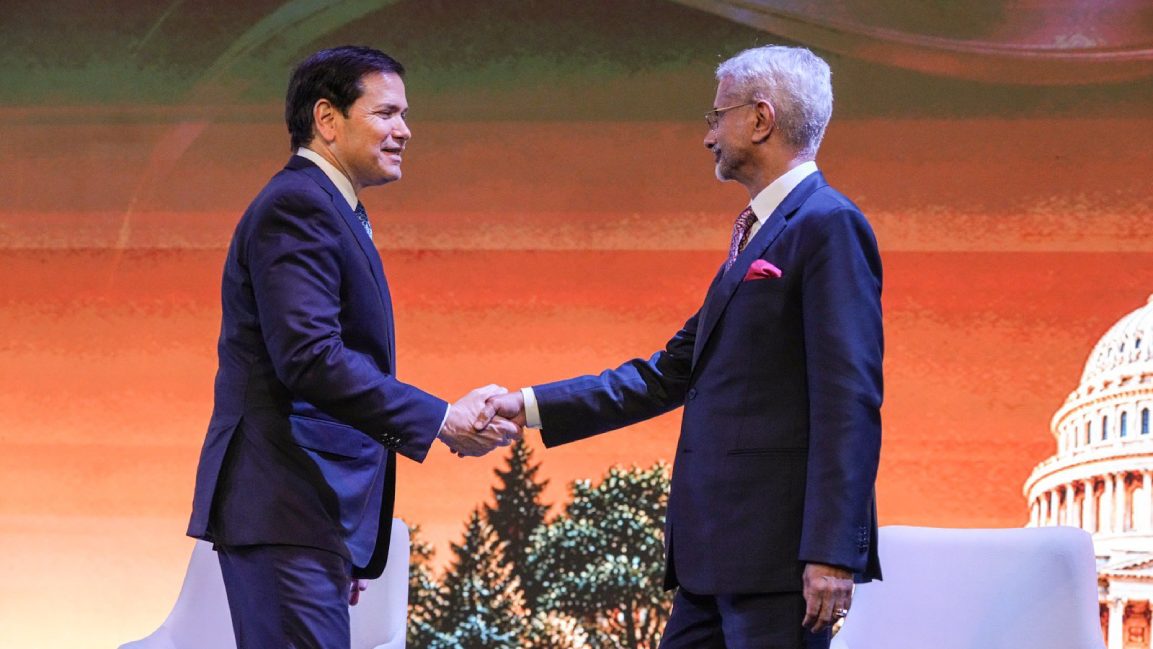
Prime Minister Narendra Modi and New Zealand Prime Minister Christopher Luxon held wide-ranging talks in New Delhi with a focus on ramping up bilateral ties, including in education and agriculture.
Modi also conveyed India’s concerns to his Kiwi counterpart over certain unlawful elements carrying out anti-India activities in the Pacific Island nation.
Both sides have decided to strengthen and institutionalize defense and security partnership, while readying a roadmap for cooperation in the defense industry sector, a statement to the media said.
The prime minister also said India and New Zealand have decided to start negotiations for a mutually beneficial free trade pact.
“This will boost the potential of mutual trade and investment. Mutual cooperation and investment will be encouraged in areas like dairy, food processing, and pharma,” he said.
Luxon arrived in New Delhi on Sunday for a five-day visit, accompanied by a high-level delegation that included ministers, senior officials, businesses, media, and members of the Indian diaspora.
India and New Zealand on Sunday said they are resuming talks on a trade deal following negotiations between trade minister Piyush Goyal and his New Zealand counterpart Todd McClay.
In a post on X, Goyal said “this marks a significant milestone in the bilateral partnership, reflecting a shared vision to deepen trade ties and expand economic opportunities between the two countries.”
Goyal said bilateral trade between the two countries continues to grow steadily, surpassing $1 billion between April 2024 to January 2025.
This is not the first time both countries are set to discuss a potential FTA.
India and New Zealand last began talks on an FTA in April 2010.
However, after 10 rounds of negotiations, talks stalled in February 2015 due to disagreement over market access and trade priorities, Ajay Srivastava, founder of Delhi-based think tank Global Trade Research Initiative, said.
The renewed FTA negotiations will cover businesses and consumers, supply chain integration, and improved market access.
“One major challenge earlier was New Zealand’s demand for greater access to India’s dairy market, which India resisted to protect its domestic dairy industry that supports millions of farmers. India’s dairy imports from New Zealand are minimal (around $0.57 million). While India may consider limited imports of value-added dairy products, it remains firm against allowing raw dairy imports,” Srivastava said.
India was also reluctant to lower tariffs on New Zealand’s dairy, meat, and wine exports, while the latter also pushed for more favorable trade terms, he said.
Another key hurdle was India’s demand for more effortless movement of skilled professionals and better access to New Zealand’s information technology and services sector.
While India wanted New Zealand to grant work opportunities similar to those given to Australia and China, New Zealand disagreed, Srivastava said.
“Trade imbalances also contributed to the deadlock, as India wanted better access for its products and services in the New Zealand market, but little progress was made,” he added.
Bilateral trade
India-New Zealand bilateral trade in FY24 stood at $1.54 billion. With India’s goods exports at $538.3 million and New Zealand’s exports at $335.1 million, both countries have yet to tap into their true trade potential, Srivastava said.
India’s key goods exports to New Zealand include clothing, fabrics, and home textiles, valued at $72.8 million. Medicines and medical supplies followed closely at $67.5 million, while refined petrol exports totaled $52.2 million. Agricultural equipment and machinery, such as tractors and irrigation tools, were also significant, contributing $37.4 million.
Other notable exports included automobiles and parts ($17.2 million), iron and steel ($14.1 million), paper products ($13.5 million), electronics ($13.4 million), shrimps ($12.6 million), diamonds ($12.4 million), and basmati rice ($11.2 million).
New Zealand’s goods exports to India primarily consist of agricultural goods, minerals, and scrap metals. Key items include apples and kiwifruit.
Meat products such as lamb, mutton, and beef contributed $1.9 million, while dairy products totaled a modest $0.57 million due to India’s protective policies.
Specialized dairy derivatives, including milk albumin and lactose syrup, were exported at $19.4 million and $6.7 million, respectively.
Scrap metals formed a significant part of New Zealand’s exports to India, totaling $91.46 million, with aluminum scrap ($ 39.9 million) and iron and steel scrap ($39 million) being the most significant components.
The trade of services between India and New Zealand is another critical component of their economic relationship. In FY 2024, India’s services exports to New Zealand stood at $214.1 million, while New Zealand’s exports to India totaled $456.5 million.
More Top Stories: