- | 1:30 pm
India weighs farm risks as US extends tariff clock but keeps up pressure
US President Donald Trump signed an executive order delaying his so-called reciprocal tariffs and sent letters to several nations outlining the rates they face if no trade deals are struck
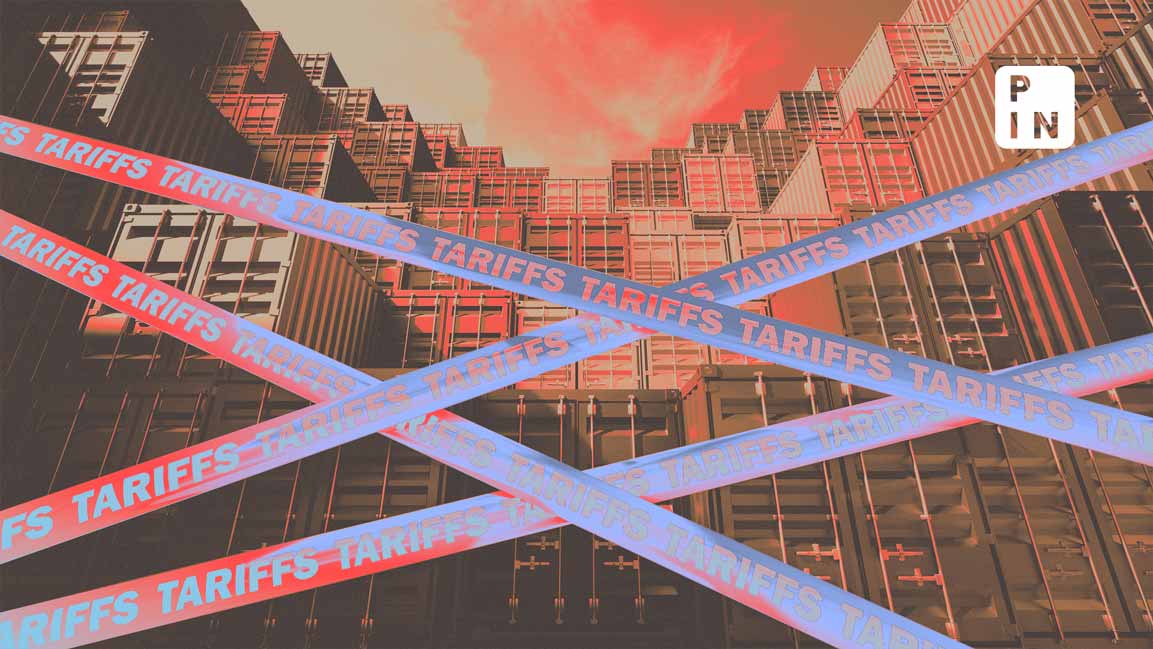


The US has set 1 August as the date when steep tariffs will kick in on countries that fail to strike trade deals, giving India a brief window to finalize an agreement.
US President Donald Trump on Monday signed an executive order extending the date when his so-called reciprocal tariffs would take effect.
He also sent out letters to a handful of nations outlining the tariff rates they would pay if they didn’t strike trade deals by 1 August.
On his Truth Social platform, Trump also posted letters to the leaders of Japan, South Korea, Malaysia and others, informing them of the new deadline.
White House Press Secretary Karoline Leavitt said that just more than a dozen nations would get letters but didn’t specify how the countries were chosen. More than 80 countries were subject to the “Liberation Day” tariffs first announced on 2 April.
Though the original 8 July deadline was effectively pushed back, Washington has signaled that the new cutoff is “not 100% firm,” leaving room for more negotiations even as pressure mounts.
“We are going to have several announcements in the next 48 hours,” Treasury Secretary Scott Bessent told CNBC on Monday.
Trump recently said he believes a deal with India and other nations is close, but Leavitt offered no hint about which, if any, might be announced in the coming days.
For India, the stakes are high: country-specific tariffs could reach 26%, jeopardizing key exports if a deal is not reached.
The Indian government is under mounting pressure to balance US demands with protecting India’s politically sensitive farm sector, a crucial source of employment and votes.
Farmer groups and opposition leaders have warned that rushing into an agreement could harm millions of livelihoods, undermine food safety standards, and open India’s markets to genetically modified (GM) crops.
Union commerce minister Piyush Goyal has insisted that India’s approach remains “guided by national interests” and that the government “will not work to any imposed deadlines.”
Contentious demands
One of Washington’s most controversial demands is greater access to India’s agriculture market for genetically modified (GM) products, including soybean meal and distillers dried grains with solubles, used as animal feed.
India currently bans domestic cultivation of GM food crops and prohibits imports of GM grains, citing health, environmental, and export risks.
The risks are not just domestic. Allowing GM imports could hurt India’s reputation in GM-sensitive markets like the European Union, which has strict labeling rules and strongly favors GM-free supply chains, think tank Global Trade Research Initiative (GTRI) said in report.
Farmer groups argue that opening the door to GM products would erode rural incomes, compromise food sovereignty, and increase India’s dependency on patented seeds and feed.
India’s Supreme Court is currently hearing a challenge to GM mustard, and the government rejected a GM brinjal variety in 2010 over similar concerns.
Opposition leaders have seized on the issue. Congress leader Rahul Gandhi accused Modi of lacking the courage to resist US pressure, saying he would “meekly bow” to Washington’s demands.
Kerala’s agriculture minister also criticized the Centre for failing to consult states on concessions that directly affect a sector constitutionally under state jurisdiction.
Farmers, who form a critical voting bloc for the BJP, remain deeply skeptical. Agriculture employs millions and is seen as politically untouchable, making any concessions a high-stakes gamble for the Modi government.
Tougher stance but fragile deal
India has also signaled a tougher posture, warning it could impose retaliatory tariffs on certain US goods if talks fail.
Yet Washington’s negotiating strategy, described by some trade analysts as “compliance through threat, not cooperation,” has left India with little room to maneuver.
The so-called “Trump model” is not a true free trade agreement but a one-sided pact where the US demands tariff cuts and purchase commitments without offering reciprocal concessions.
Even signed deals offer little certainty: just last week, Trump warned of an additional 10% tariff on BRICS nations, including India, over what he called “anti-American policies.”
Despite these concerns, India has already submitted its final offer and is expected to announce a deal soon. Whether the outcome strikes the right balance between market access and safeguarding domestic interests remains to be seen.
As GTRI put it bluntly: “Trump’s model isn’t a Free Trade Agreement, it’s a YATRA—Yielding to American Tariff Retaliation Agreement.”
Goyal, however, said that India’s aim is to secure a deal that fosters growth while protecting national interests. But with the US showing willingness to override even existing agreements, New Delhi’s challenge may not just be to clinch a deal but to ensure it does not become a strategic liability.
More Top Stories: