- | 6:30 pm
Rupee slides to record lows as gold rallies on tariff fears, capital strain
Trade uncertainty and tariff risks push investors toward defensive assets as currency pressure deepens
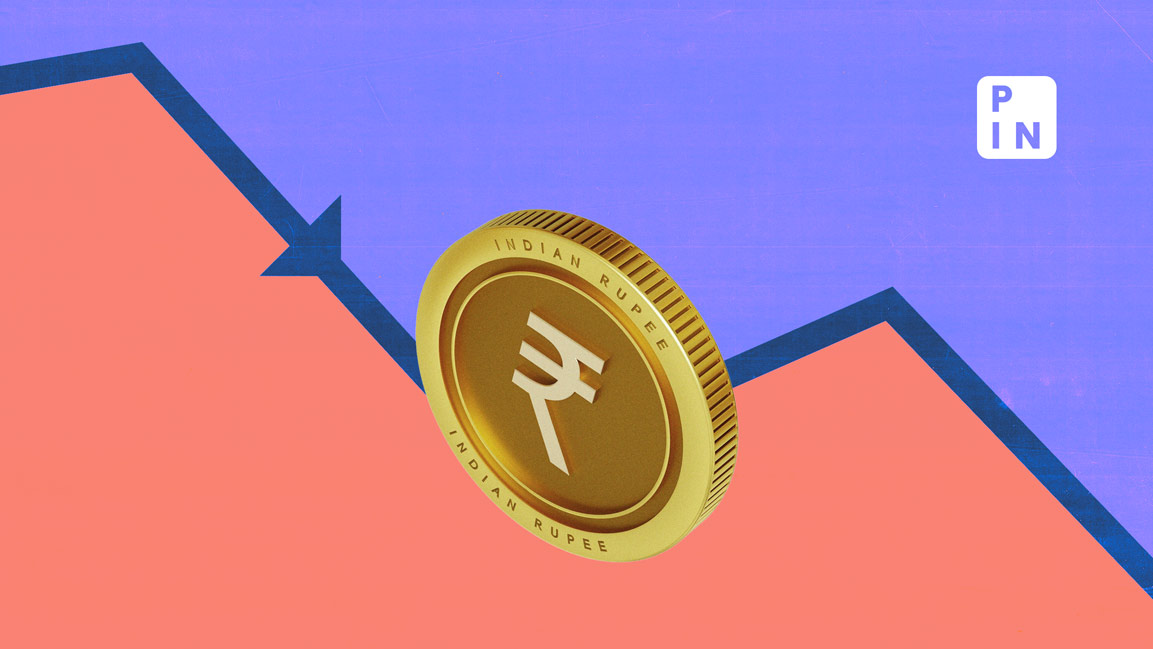


India’s rupee slid to fresh record lows against the US dollar as gold prices surged to all-time highs, a twin move that reflects mounting pressure from trade uncertainty and the growing cost of tariff-driven disruption.
The domestic currency weakened past the ₹90.70 level in intraday trade, extending a decline fueled by strong dollar demand, persistent capital outflows and unease over stalled trade negotiations that risk reshaping tariff regimes for key export markets.
For investors, the absence of clarity on trade terms has sharpened concerns about India’s external balances at a time when global funding conditions remain tight.
Gold, priced in dollars and sensitive to currency swings, moved sharply higher in domestic markets, crossing ₹1.35 lakh per 10 grams. The rally has been driven by a weaker rupee that has inflated import costs, alongside rising demand for safe-haven assets as tariff risks cloud the outlook for global growth and cross-border trade flows.
The simultaneous fall in the rupee and rise in gold underscores how trade frictions are filtering through financial markets, pushing investors toward defensive positions even before the full impact is felt across risk assets and corporate earnings.
The rupee’s decline has been accelerated by a combination of external and domestic pressures. Persistent dollar demand from importers and corporate hedgers has coincided with continued foreign portfolio outflows, while uncertainty around global tariff regimes has complicated the outlook for exports and capital flows, analysts said.
Markets have grown wary that prolonged trade friction could weigh on India’s current account just as global liquidity conditions remain tight.
Policy uncertainty has sharpened that anxiety. Delays in trade negotiations with major partners have left exporters exposed to the risk of higher duties and disrupted supply chains, feeding concerns about future dollar inflows. For currency markets, that uncertainty matters as much as hard data. Even modest shifts in tariff expectations can alter hedging behavior, pulling more dollars out of local markets and adding pressure on the rupee, analysts added.
The Reserve Bank of India has intervened intermittently to smooth volatility, traders said, but has shown little appetite to defend a specific level. That approach reflects a broader policy preference for allowing the exchange rate to absorb external shocks rather than burning reserves aggressively. While India’s foreign-exchange stockpile remains substantial, policymakers appear focused on avoiding disorderly moves rather than reversing the broader trend.
Gold’s surge, meanwhile, reflects more than just currency mechanics. The rally has been reinforced by global demand for safe assets as investors reassess growth prospects amid tariff uncertainty and geopolitical strain. In rupee terms, the move has been amplified by the currency’s weakness, making gold an increasingly attractive hedge for domestic investors seeking protection against purchasing-power erosion.
Bullion dealers reported steady buying interest despite elevated prices, a sign that demand is being driven less by short-term speculation and more by portfolio rebalancing. For households and institutions alike, gold has regained its role as insurance against macro instability, particularly at a time when currency volatility has returned to the foreground.
The interaction between the rupee and gold also carries broader implications for financial conditions. A weaker currency raises the local cost of imports, complicating inflation management even as global commodity prices remain volatile. At the same time, rising gold prices can divert savings away from productive financial assets, reinforcing defensive behavior across the economy.
These pressures have begun to surface in broader markets. With the rupee at record lows and gold surging, benchmark indices finished the session under pressure.
The 30-share benchmark Sensex index on Monday ended around 85,213, down about 0.06%, and the Nifty 50 closed near 26,027, down roughly 0.08%, underscoring how defensive positioning has crept into equities as foreign investors stay cautious amid trade and currency concerns.
More Top Stories: