
- | 4:30 pm
China’s ‘Niu Lai’ turns ridicule into Box Office gold
A film that drew fewer than 300 people in its first 10 days became a viral hit after audiences started buying tickets to see just how bad it really was
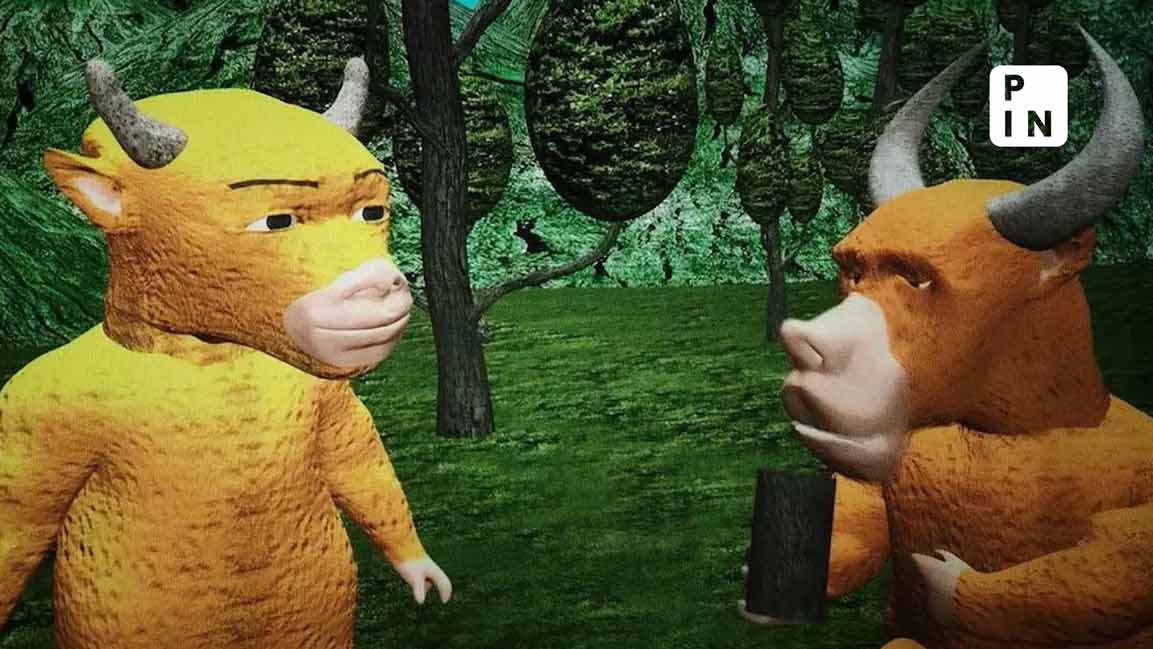


For its first 10 days in Chinese cinemas, hardly anyone went to see Niu Lai.
The 86-minute animated film opened on 5 August and made just 7,711 yuan from 278 moviegoers over that period, data from Chinese ticketing and box-office platform Maoyan showed.
With little publicity, rough-looking animation and a plot that baffled some of the few people who saw it, the film looked likely to vanish from theaters without much fuss.
Then people started buying tickets because they had heard how bad it was.
Clips and screenshots spread across Chinese social media. Viewers picked apart the graphics, the character movements and the story. The stranger the film looked, the more people seemed to want a look for themselves.
Some of the mockery even became oddly affectionate. Users began describing the animation as “handmade,” partly as a joke but also as a compliment. At a time when social feeds are filling up with polished AI-generated images and video, Niu Lai had something rather harder to fake. It looked unmistakably homemade.
The joke escaped the internet and reached the box office.
On Monday, 17 August, Niu Lai brought in 8.2 million yuan in a single day, according to Maoyan data cited by the Associated Press. Its cumulative box office reached 17.1 million yuan. By Wednesday, live Maoyan data showed the total had climbed past 26 million yuan.
Cinemas noticed.
At Beijing’s Guanhua International Cinema in Shilipu, a 1045 pm screening added on 15 August sold all 97 seats two hours before it began. A staff member told local media that people had wondered whether the theater had been block-booked.
It had not.
“The tickets really were sold one by one,” she said.
The cinema scheduled more screenings. Similar scenes played out elsewhere as audiences sought out a film that, only a few days earlier, could barely attract enough people to fill a row.
By then, going to see Niu Lai had become something other than an ordinary trip to the movies. People wanted to join the joke, complain about it with everyone else and find out whether the clips circulating online had somehow made the film look better than it really was.
One young Beijing moviegoer told Beijing Daily that because everyone was already saying the film was terrible, she could watch it in a more relaxed frame of mind. Another said she had seen the film discussed on social media and simply wanted to find out what it was actually like.
The title supplied another joke.
Niu Lai can be translated as “the bull is coming,” an irresistible bit of wordplay for Chinese investors hoping for a bull market. Social media users began treating cinema tickets almost like charms for their portfolios, while some moviegoers openly said the market association was part of the attraction.
Behind all this is an unusually small production.
Red Star News reported that director Xin Yumeng and his mother, Sun Lifan, made the film themselves over five years. The Associated Press said it could not independently verify that account. Maoyan lists Xin as the director.
Not everybody found the phenomenon charming.
A commentary in Beijing News questioned why a film it regarded as falling below normal theatrical standards had reached commercial cinemas at all. It argued that theaters risked damaging audiences’ trust if they kept adding screenings simply because online mockery was generating ticket sales.
The criticism is easy enough to understand. The peculiar thing about Niu Lai, though, is that audiences no longer seem confused about what they are paying for.
Nobody is turning up expecting Pixar.
The awkward animation is part of the attraction. So is the bewildering plot. People know the reputation before they enter the theater, and for many of them the fun appears to lie in discovering whether the film can possibly live down to it.
There is also something unexpectedly appealing about its obvious roughness. A lot of what appears on a screen now arrives buffed, filtered and rendered within an inch of its life. Niu Lai does not.
For better or worse, you can see the human fingerprints all over it.
That has given a movie mocked for looking cheap something that far more expensive productions spend fortunes trying to create: a personality.
For most filmmakers, being told that people are rushing to see your movie because the internet says it is terrible would be alarming.
Niu Lai has turned it into a business model.
More Top Stories: