
- | 2:05 pm
India-Bangladesh ties have reached an inflection point
With an unresolved extradition request stalling rapprochement, New Delhi must balance due process, political sensitivities and its long-term strategic interests in Bangladesh
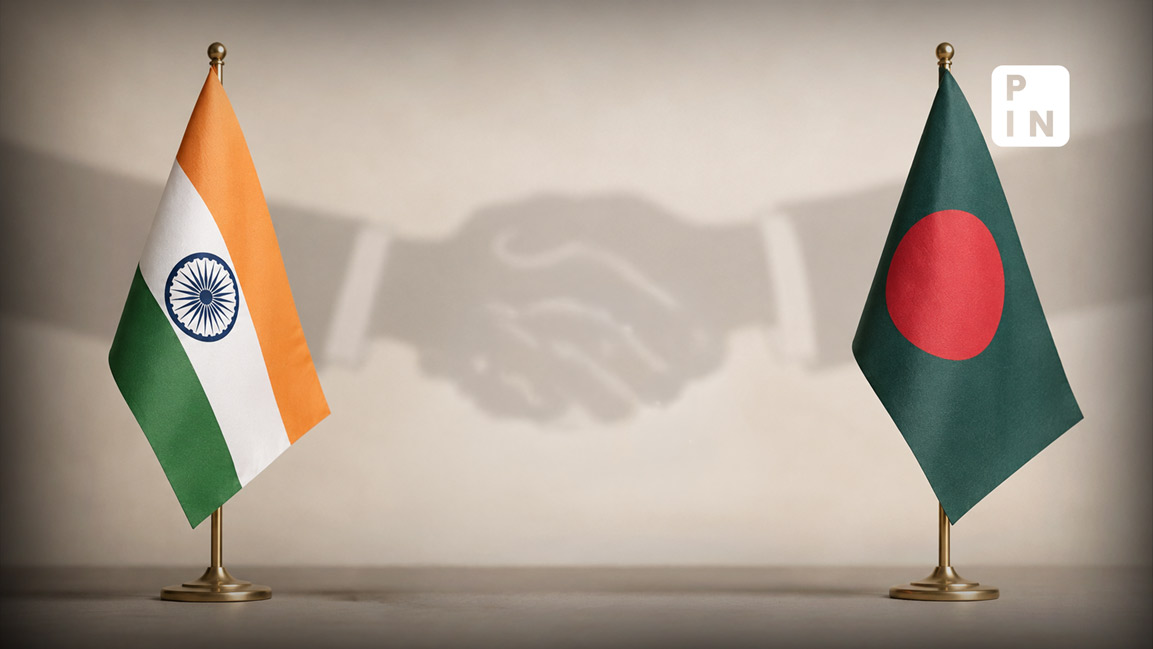


Former Bangladesh prime minister Sheikh Hasina’s online press conference at the Foreign Correspondents’ Club of South Asia in New Delhi on 5 August, coupled with what Dhaka sees as India’s delay in acting on its request for her extradition, has stalled plans for an official visit by Bangladesh’s newly elected Prime Minister Tarique Rahman. His Bangladesh Nationalist Party holds more than a two-thirds majority in Parliament.
New Delhi had expected a rapid rapprochement with Rahman. Prime Minister Narendra Modi was the first foreign leader to congratulate him on his election victory. Weeks before the election, external affairs minister S. Jaishankar had attended the state funeral of former prime minister Khaleda Zia on 31 December 2025, carrying a personal condolence letter from Modi, which he handed to Rahman.
Those overtures have yet to produce the reset New Delhi hoped for.
Why?
It is now abundantly clear that India underestimated the importance Dhaka attaches to Hasina’s extradition. Bangladesh first made the request in December 2024, months after she fled to India, invoking the India-Bangladesh Extradition Treaty of 2013.
External affairs ministry spokesperson Randhir Jaiswal confirmed receipt of the request but said he had nothing further to add. The silence suggested that the ministry believed the matter could be left unanswered without seriously damaging bilateral relations.
I have heard several former Indian high commissioners argue that the request should simply be ignored. One even envisaged Hasina’s returning to Bangladesh and regaining power.
Hasina’s December 2018 re-election was marred by widespread and credible allegations of vote rigging, intimidation and other abuses. Did Indian intelligence anticipate that she would resign and flee once the student protests gathered force? Apparently not.
In recent years, New Delhi had personalized, indeed over-personalized, its relations with Bangladesh. Personal ties had come to stand in for statecraft.
This was a neighbor whose liberation was won through the struggle of the Bangladeshi people and India’s decisive military intervention under Indira Gandhi. After the Pakistan Army’s mass atrocities in East Pakistan, its Eastern Command surrendered to India’s Lieutenant General Jagjit Singh Aurora on 16 December 1971.
In November 2025, after receiving another note verbale from Bangladesh drawing attention to the verdict of the International Crimes Tribunal in Dhaka, the external affairs ministry said the matter was “under consideration” through “established legal, judicial and internal processes.”
Despite its name, the International Crimes Tribunal is not an international court. It is a domestic tribunal constituted under Bangladeshi law. Hasina’s government established it in 2010 to prosecute people accused of collaborating with Pakistan and committing atrocities during the 1971 Liberation War.
The external affairs ministry has yet to announce a decision. Reports quoting unnamed officials have suggested that the matter could be referred to an Indian court under the Extradition Act of 1962.
The bilateral treaty does not displace India’s domestic legal process. It defines an extraditable offence as conduct punishable in both countries by at least one year’s imprisonment, while also setting out grounds on which extradition may be refused. New Delhi must therefore follow the law. But it cannot pretend that continued delay carries no diplomatic cost.
Against this background, Dhaka reacted strongly to Hasina’s 5 August press conference, at which she made two principal points.
First, she intended to return to Bangladesh by December despite the danger to her liberty and even her life. The choice of December carried unmistakable symbolism, since Bangladesh was liberated that month in 1971.
Second, she presented her return as a mission to restore democracy in Bangladesh.
The suggestion that democracy now needed to be restored was bound to be resented by a government elected only months earlier with a commanding parliamentary majority.
The external affairs ministry argued that the Indian government had played no role in organizing the press conference and did not endorse Hasina’s statements. That explanation cut no ice with Dhaka.
Rahman made Bangladesh’s position clear during his first meeting with India’s newly appointed high commissioner, Dinesh Trivedi, on 10 August. Dhaka has said, in so many words, that New Delhi must help create a “conducive environment” before Rahman visits India.
It is also significant that, despite Modi’s invitation, Rahman chose to visit Beijing before New Delhi.
When discussions during the second week of August failed to settle the proposed India visit, New Delhi invited Rahman to the BRICS summit on 12 and 13 September as part of its outreach program. Bangladesh currently chairs BIMSTEC, the Bay of Bengal Initiative for Multi-Sectoral Technical and Economic Cooperation.
The wider picture explains why India should seriously consider sending Hasina back.
Geography alone makes a working relationship unavoidable. India and Bangladesh share a border of about 4,096 kilometers and 54 cross-border rivers. History, cultural ties rooted in a common language and the complementary nature of their economies make good neighborly relations not merely desirable but imperative.
The Siliguri Corridor, commonly called the Chicken’s Neck, is India’s only direct land link with its eight northeastern states. Transit arrangements through Bangladesh could transform connectivity between the Northeast and the rest of India, cutting both distances and costs.
India must also audit its much-publicized Neighborhood First policy. The record is uneven, and relations with several neighbors are under strain. A policy cannot be judged by the warmth of official statements. It must be judged by the relationships it produces.
China, Pakistan and the US are all seeking to expand their influence in Bangladesh. The three may not be acting in concert, though China and Pakistan could find common cause where their interests converge against India.
To argue that Hasina was a great friend of India while in power and that India must therefore reject Bangladesh’s demand is to substitute sentiment for diplomacy. Friendship in office cannot become a permanent claim on Indian policy after power has been lost.
In retrospect, New Delhi should have persuaded Hasina to move to a third country within weeks of her arrival.
India should also study the advantages and risks of reviving the South Asian Association for Regional Cooperation, or SAARC. Geography cannot be changed, and good relations with one’s neighbors are not optional. As the region’s largest power, India should take the lead, but without appearing hegemonic.
Ultimately, the relationship must move beyond governments and return to the lives of ordinary people. Let women in Bangladesh buy the saris they want, and let hilsa reach the tables of Indian connoisseurs.
More Top Stories: