
- | 11:40 am
Bangladesh raises extradition issues ahead of Rahman’s India visit
Dhaka says India must help create a conducive environment as the Sheikh Hasina dispute holds up talks between the two prime ministers


Dhaka has made progress on two politically sensitive extradition demands a condition for Bangladesh Prime Minister Tarique Rahman’s proposed visit to India, casting doubt on plans for the trip even as New Delhi presses for talks between the two leaders.
Officials had been discussing a visit between 20 and 25 August in what would be Rahman’s first trip to India since taking office in February. No date has been confirmed, with Bangladesh’s foreign ministry saying on Sunday, 16 August, that the atmosphere surrounding the visit had deteriorated.
“We are of the view that a propitious environment needs to be created for the visit,” foreign ministry spokesperson A.K.M. Shahidul Karim said at a media briefing.
Dhaka has asked India to expedite the extradition of former prime minister Sheikh Hasina and other people wanted in Bangladesh. It has also sought the return of suspects accused of killing Sharif Osman Hadi, a spokesperson for the political platform Inquilab Moncho, under the bilateral extradition treaty.
“We are awaiting their response,” Karim said, according to Bangladesh’s The Daily Star.
The statement puts a public condition on a visit that both sides had spent several weeks trying to arrange. It also shows how Hasina’s continued presence in India remains the biggest obstacle to a broader diplomatic reset following the change of government in Bangladesh.
The latest tension followed an online media interaction involving Hasina in New Delhi on 5 August, the second anniversary of the uprising that ended her government in 2024. Bangladesh had asked Indian authorities to prevent the event, arguing that allowing her to make political statements from Indian territory would be unacceptable.
Hasina said during the interaction that she planned to return to Bangladesh in December. Her son, Sajeeb Wazed Joy, also criticized the uprising and the political order that followed it.
Bangladesh’s government protested, saying the event undermined its sovereignty and judicial process.
Hasina was sentenced to death in absentia in November 2025 after being convicted of crimes against humanity over the crackdown on the 2024 protests. She has denied the charges and described the proceedings as politically motivated.
India said the media event had been organized by a private organization and that the government had no role in it.
New Delhi has acknowledged receiving Bangladesh’s extradition requests but says they are being considered under India’s legal procedures and the treaty between the two countries.
Rahman had already raised the issue when Indian High Commissioner Dinesh Trivedi met him in Dhaka on 10 August. A Bangladesh government handout said the prime minister had stressed the need for a conducive environment to advance relations.
Trivedi also met foreign minister Khalilur Rahman and home minister Salahuddin Ahmed before travelling to New Delhi.
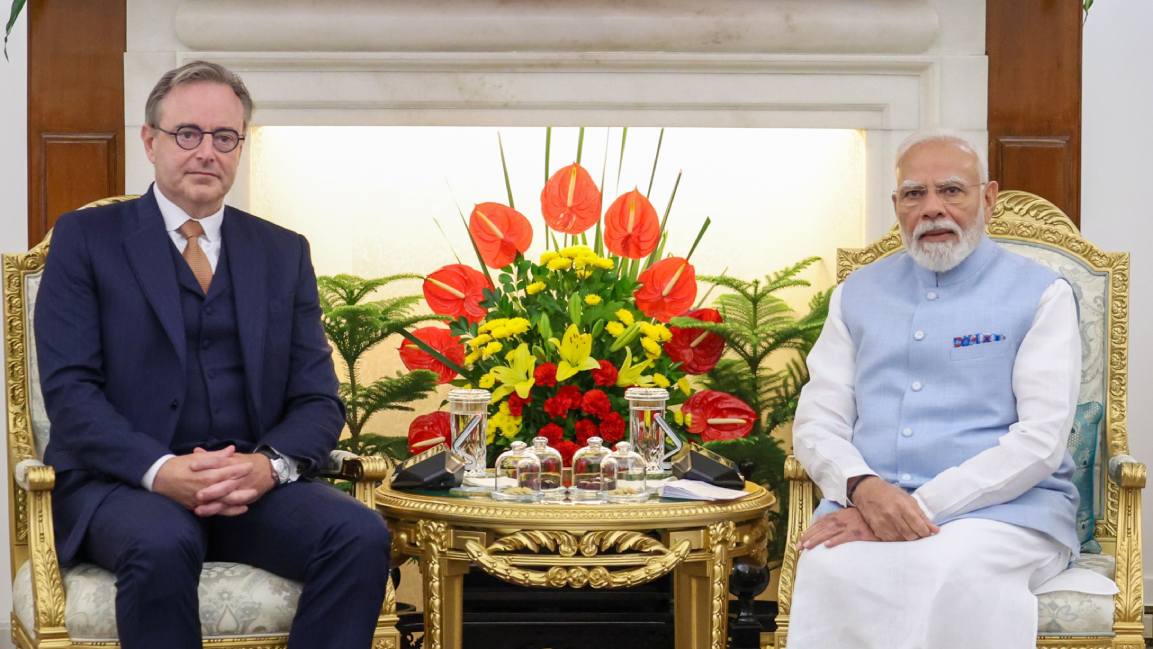
He met Prime Minister Narendra Modi on 11 August, adding to expectations that a bilateral visit was close to being settled.
India has not withdrawn its invitation. Trivedi said on Sunday that Rahman’s visit should take place “much sooner” and that direct engagement could help the two governments address their differences.
“Issues can only be sorted out by meeting,” he told reporters in Dhaka, according to The Daily Star.
India had invited Rahman for a bilateral visit after his Bangladesh Nationalist Party government took office. A separate invitation was sent for the BRICS summit in New Delhi on 12 and 13 September, with Bangladesh invited because it currently chairs BIMSTEC.
Bangladesh has indicated that Rahman may not attend the BRICS outreach session. Foreign minister Rahman said the invitation had been addressed to the BIMSTEC chair rather than personally to Bangladesh’s prime minister. That made a separate bilateral visit the more likely option before the latest dispute.
The talks are about more than Hasina. Relations between India and Bangladesh cover trade, energy, river water, border management, transit routes and security in India’s northeast. Several of those arrangements have come under strain since Hasina’s government collapsed.
The Ganges Water Sharing Treaty expires in December, making its renewal one of the most urgent subjects for the two governments.
The agreement governs the dry-season sharing of water at Farakka. Bangladesh also wants movement on the long-delayed Teesta agreement, which has remained unresolved since an expected deal fell through in 2011.
Dhaka is seeking the withdrawal of Indian curbs on some Bangladeshi imports, a wider restoration of visa services and action to prevent killings along the border. Energy supplies have also become more important as Bangladesh grapples with shortages and higher prices resulting from the war involving the US, Israel and Iran.
India wants reliable transit and connectivity through Bangladesh for its northeastern states. It also attaches importance to security cooperation, border control and preventing anti-India armed groups from using Bangladeshi territory.
Trade gives both governments a practical reason to keep talking, although the relationship is heavily weighted in India’s favor. Bilateral trade stood at $11.39 billion in Bangladesh’s fiscal 2025, but Bangladesh accounted for only $1.76 billion of exports, according to a statement made in the Bangladeshi parliament.
The imbalance has strengthened Dhaka’s case for a comprehensive economic partnership agreement and fewer restrictions on Bangladeshi products.
Official contacts have continued despite the political tensions. Foreign minister Rahman visited India from 7 to 9 April and met external affairs minister S. Jaishankar, national security adviser Ajit Doval and the petroleum minister. Technical discussions have also taken place on water, trade, connectivity, security and development cooperation, according to an Indian foreign ministry statement in Parliament.
Rahman has described his approach as “Bangladesh First,” based on sovereign equality, national dignity, non-interference and mutual benefit. The formulation allows his government to support engagement with India while responding to public anger over Hasina and the perception that New Delhi was too closely tied to her Awami League government.
That domestic pressure limits how far Rahman can go without a gesture from India. At the same time, cancelling or indefinitely postponing the trip would leave the larger disputes without a political channel at the top, analysts said.
More Top Stories: