
- | 6:50 pm
China Evergrande founder Hui Ka Yan gets life sentence
Hui Ka Yan’s punishment closes China’s criminal case but does little to improve creditors’ recovery prospects
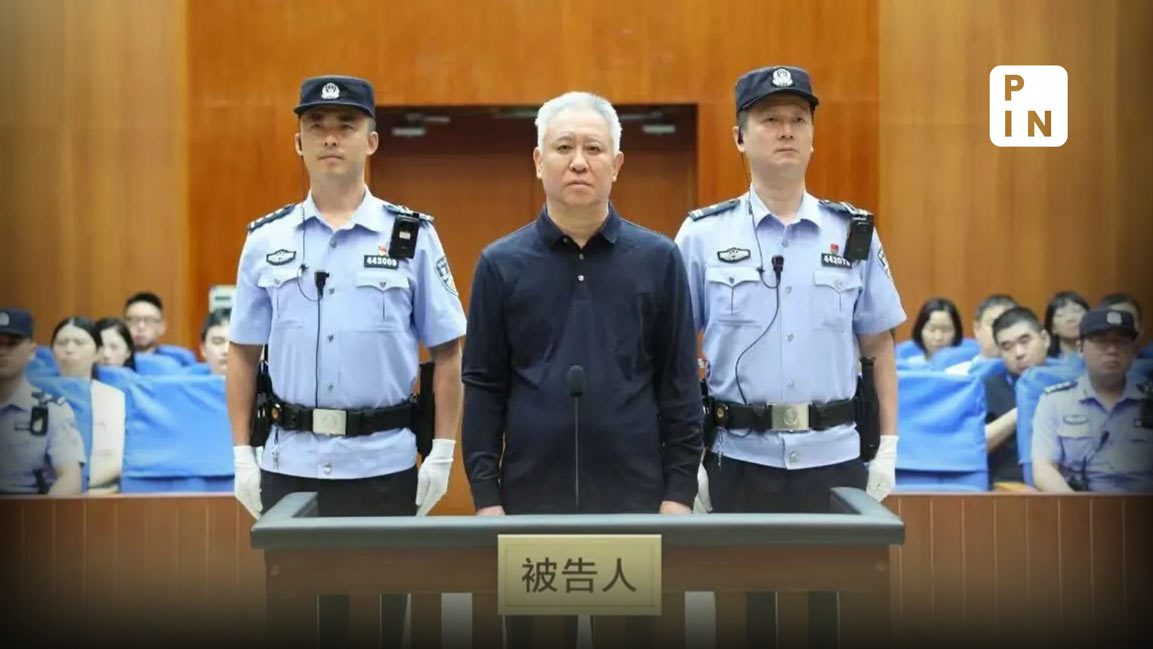


A Chinese court has sentenced Evergrande founder Hui Ka Yan to life in prison and ordered the confiscation of his property, delivering the harshest punishment yet over the collapse of the world’s most indebted property developer.
The Shenzhen Intermediate People’s Court convicted Hui, also known as Xu Jiayin, of financial crimes including illegal fundraising, fraud, the unlawful taking of public deposits, illegal lending, fraudulent securities issuance and corporate bribery.
Hui, 67, had pleaded guilty and expressed remorse during his trial in April.
Evergrande Group was fined 8.82 billion yuan, or about $1.31 billion, while its main mainland property company, Evergrande Real Estate Group, was fined 7 billion yuan, or about $1.04 billion, the court said on Thursday, 20 August.
The two fines total 15.82 billion yuan, or $2.35 billion.
Hui was also stripped of his political rights for life. The court said illegal gains would continue to be recovered and restitution ordered where recovery proved insufficient, according to the official Xinhua account.
Five other senior executives received prison terms ranging from six to 18 years. State media said 56 people linked to the group were sentenced in related proceedings, with terms ranging from 22 months to 18 years.
The ruling completes Hui’s fall from one of Asia’s wealthiest and most politically connected businessmen to a prisoner whose personal fortune and corporate empire have largely disappeared.
Hui founded Evergrande in 1996 and built it into one of China’s biggest homebuilders by borrowing heavily, selling apartments before construction and recycling customer payments into new projects.
The group later moved into electric vehicles, insurance, health care, tourism and professional football. Its annual contracted sales approached $100 billion at the height of China’s property boom.
Hui’s fortune reached an estimated $45.3 billion in 2017. By 2023, after Evergrande’s default and collapse, it had fallen to about $3 billion.
The business unraveled after Beijing introduced limits on property-sector borrowing. Evergrande defaulted in 2021 with liabilities exceeding $300 billion, setting off losses among homebuyers, suppliers, banks, bondholders and purchasers of its wealth-management products.
The court found that Evergrande and its executives used false financial statements to inflate assets and conceal liabilities. An earlier regulatory investigation found that its mainland unit overstated revenue by about $78 billion in 2019 and 2020.
The criminal sentence will not itself resolve the company’s debts. Evergrande’s offshore holding company was ordered into liquidation by a Hong Kong court in January 2024 after repeated attempts to restructure about $23 billion of offshore debt failed.
Its shares were later delisted from the Hong Kong stock exchange.
Liquidators had received about $45 billion in creditor claims by August 2025, far above the $27.5 billion in liabilities shown in the company’s last audited accounts. They had sold only about $255 million of assets.
Many of Evergrande’s assets sit inside mainland subsidiaries over which the Hong Kong liquidators have limited control. Others are tied to unfinished housing projects that Chinese authorities have prioritized for completion rather than repayment of overseas bondholders.
The liquidators are separately seeking 57 billion yuan, or about $8.4 billion, from PwC and related entities over alleged audit negligence and misrepresentation. PwC is contesting the claims.
Hui’s assets may provide another source of recovery, but creditors will have to compete with Chinese authorities and domestic claimants. The court’s confiscation order also raises questions over how much of his property will remain available to the Hong Kong liquidation.
More Top Stories: