

- | 5:30 pm
Hague ruling deepens India-Pakistan rift over Indus Waters Treaty
An international tribunal says India cannot unilaterally suspend the water-sharing agreement, but New Delhi has rejected both the ruling and the court’s authority
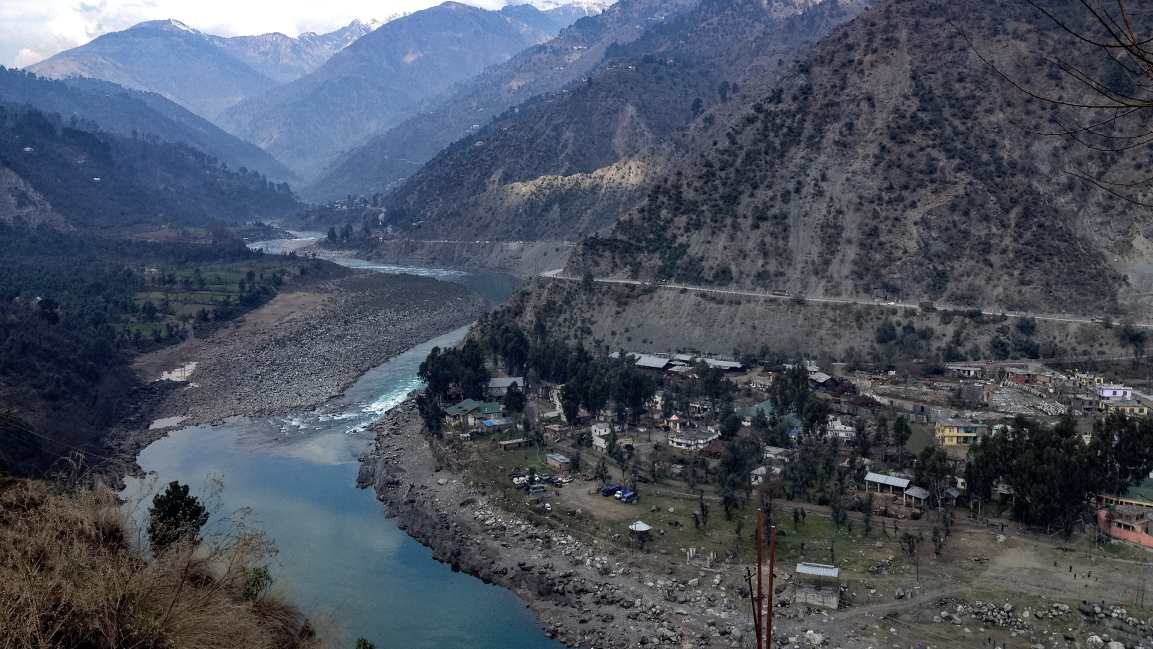


India and Pakistan’s dispute over the Indus Waters Treaty has widened after an international tribunal ruled that the 66-year-old agreement remains in force despite New Delhi’s decision to place it in abeyance.
The Court of Arbitration, in an award issued on Monday, 31 August, unanimously concluded that none of the grounds identified by India could justify suspending or terminating the treaty. The tribunal is administered by the Permanent Court of Arbitration in The Hague.
It also ordered interim restrictions on parts of India’s Ratle hydroelectric project in Jammu and Kashmir while a separate World Bank-appointed neutral expert considers whether the project complies with the treaty. That process is expected to continue until July 2027.
India rejected the award, describing the tribunal as an “illegally constituted so-called Court of Arbitration.” The Ministry of External Affairs said the court had no jurisdiction over India’s sovereign decisions and that its findings would not affect Indian hydroelectric projects.
The government said its decision to hold the treaty in abeyance remained in force.
India took that step on 23 April 2025, a day after a terrorist attack in Pahalgam killed 26 people. It said the agreement would remain suspended until Pakistan “credibly and irrevocably” ended its support for cross-border terrorism. Pakistan denies sponsoring terrorism.
The Indus Waters Treaty, signed in 1960 after negotiations supported by the World Bank, divides the six main rivers of the Indus system between the two countries.
India received primary rights over the Ravi, Beas and Sutlej, known as the eastern rivers. Pakistan received the Indus, Jhelum and Chenab, or western rivers, while India retained limited rights to use their waters for irrigation, domestic needs and run-of-river hydroelectric projects.
The western rivers are critical to Pakistan’s food supply and irrigation network. The system supplies water to about 80% of the country’s farms.
Disputes have centered on whether the design and operation of Indian hydroelectric projects give New Delhi more control over the western rivers than the treaty permits. Pakistan has challenged the Kishenganga and Ratle projects, while India says its projects comply with the agreement.
The legal process itself is contested. Pakistan sought arbitration, while India asked for a neutral expert to examine what it regarded as technical questions. The World Bank appointed both mechanisms in 2022 after years of delay, acknowledging the complications created by parallel proceedings.
India has declined to participate in the arbitration. Its absence, however, has not prevented the tribunal from continuing or issuing decisions.
The ruling does not give the court a practical means to force India to reverse its policy. Nor can India immediately stop the western rivers, given the scale of their flows and the infrastructure that would be needed to divert or store them.
The dispute nevertheless matters because new dams, reservoir operations and the suspension of data-sharing arrangements could affect the timing and predictability of flows into Pakistan, analysts said.
More Top Stories: