- | 9:30 pm
Lula wins fourth term in Brazil as Bolsonaro contests result, markets plunge
The Brazilian president defeated Flávio Bolsonaro in a closely contested runoff, but a disputed voting extension, a sharp market selloff and a conservative Congress threaten to complicate his next term
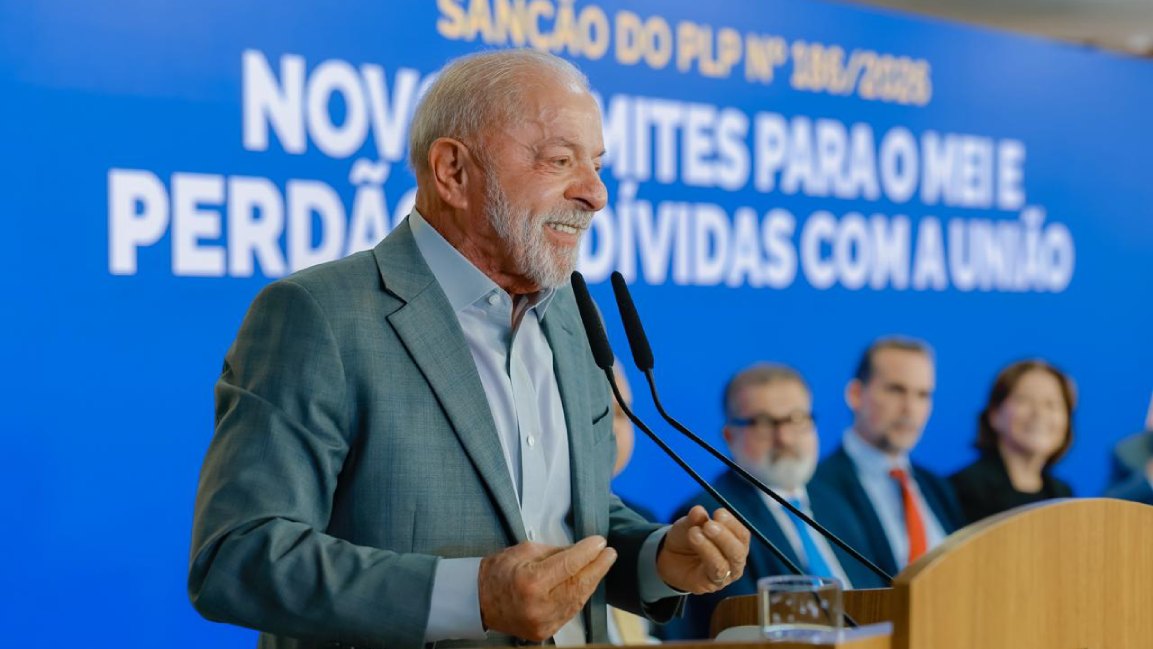


Brazilian President Luiz Inácio Lula da Silva secured an unprecedented fourth term on Sunday, 25 October, defeating right-wing challenger Flávio Bolsonaro in a closely contested runoff that has triggered an electoral dispute and a sharp selloff in financial markets.
Lula received 51.79% of valid votes against Bolsonaro’s 48.21%, according to official results published by Brazil’s Superior Electoral Court (TSE).
The 80-year-old president secured 64,256,232 votes, compared with 59,826,041 for Bolsonaro, a margin of 4.43 million votes.
Bolsonaro, a senator and son of former President Jair Bolsonaro, refused to recognize the result and said he would seek to have the election annulled, citing a Supreme Court decision to extend voting by two hours.
The result also triggered heavy selling in Brazilian financial markets on Monday, 26 October. The country’s benchmark Ibovespa stock index fell 10%, forcing a 30-minute trading suspension, while the Brazilian real weakened nearly 12% against the US dollar in early spot trading.
Lula’s victory followed a remarkable electoral recovery after Bolsonaro finished ahead in the first round earlier this month. It gives the Workers’ Party another four years in power but leaves the president facing a strengthened conservative opposition and mounting concerns over Brazil’s public finances.
Bolsonaro seeks to overturn election result
The dispute centers on a decision by Supreme Court Justice Cristiano Zanin to extend voting from 5 p.m. to 7 p.m. Brasília time on Sunday. The extension followed complaints about inadequate public transportation in parts of Bahia state, which had raised concerns that some voters could not reach polling stations before the scheduled closing time.
The decision was issued just as voting was due to end, creating confusion because thousands of electronic voting machines had already been closed. The TSE temporarily suspended the receipt of electronic voting reports while adapting its counting procedures to the extended timetable.
Court President Kassio Nunes Marques subsequently acknowledged the operational difficulties caused by the late decision.
According to the TSE, 499,248 electronic voting machines were used during the runoff, of which 1,551, or 0.31%, required replacement.
The court said about 128.2 million voters participated, representing a turnout of 80.8%. Abstention fell to about 19.2%, compared with 21.08% in the first round.
Bolsonaro has questioned the legitimacy of the voting extension and announced plans to challenge the result.
“It is impossible to recognize the election results, given the circumstances under which things unfolded,” Bolsonaro told journalists.
His position has drawn comparisons with his father, who rejected his defeat to Lula in 2022.
Jair Bolsonaro was subsequently convicted and sentenced to 27 years in prison for plotting a coup to remain in power.
However, Flávio Bolsonaro’s challenge faces significant obstacles. His losing margin exceeds four million votes, while his campaign had also sought additional voting time because of heavy rains in conservative-leaning southern Brazil.
The TSE has declared Lula the winner, and the existence of procedural complaints does not, by itself, establish that the election outcome was improperly determined.
Financial markets tumble after unexpected victory
Brazilian stocks, bonds and the currency came under heavy pressure on Monday as investors unwound positions built around expectations of a Bolsonaro victory.
The Ibovespa index fell 10% from its previous close, triggering a 30-minute suspension of trading under the B3 exchange’s circuit-breaker rules.
The real weakened nearly 12% against the dollar in early trading, while Brazilian stock index futures fell almost 15%.
Brazilian government bonds also declined, particularly longer-dated securities, as investors reassessed the country’s fiscal outlook.
The Treasury canceled scheduled auctions of inflation-linked and fixed-rate government bonds planned for 27 and 29 October.
The selloff followed a rally earlier this month after Bolsonaro’s first-round performance strengthened expectations of a change in government.
Investors had anticipated that a Bolsonaro administration would pursue tighter spending controls and more business-friendly economic policies.
Instead, Lula’s victory has revived concerns over government borrowing, fiscal deficits and the scope for further interest-rate reductions.
Attention is now turning to the president’s choice of finance minister and whether his next administration will present a credible plan to stabilize public debt.
Brazil’s public debt exceeds 82% of gross domestic product (GDP), while the government expects economic growth of approximately 2.3% in 2027.
The administration has indicated an ambition to achieve a budget surplus of about 1.3% of GDP by 2030, although investors remain uncertain about the spending reductions needed to reach that goal.
Higher borrowing costs could also weigh on businesses and households already facing expensive credit.
A comeback that defied expectations
Lula’s victory is particularly significant because he finished behind Bolsonaro in the first round.
Lula is the first presidential candidate since Brazil’s return to democracy in the 1980s to win the presidency after finishing second in the opening round.
The president campaigned on poverty reduction, employment protections and continued support for social welfare programs.
He also pledged measures to improve living standards, including expanded public transportation support and increases in welfare benefits.
Bolsonaro appealed to conservative voters seeking a change in government, emphasizing economic liberalization and opposition to the Workers’ Party.
His campaign benefited from concerns about rising prices, corruption scandals and dissatisfaction with Lula’s administration.
Lula’s comeback indicates that his political appeal remains substantial more than two decades after he first became president, although the close result demonstrates the continued strength of the conservative opposition.
The latest victory follows his previous presidential terms from 2003 to 2010 and his return to office in January 2023.
His fourth term is scheduled to begin on 5 January 2027.
Conservative Congress threatens Lula’s agenda
Winning the presidency does not guarantee Lula sufficient legislative support to implement his economic and social policies.
Brazil’s fragmented political system requires presidents to negotiate with parties across the political spectrum, often trading political concessions for support on legislation and budget measures.
The newly elected Congress is expected to be among the most conservative since Brazil’s return to democracy.
Reuters reported that Bolsonaro’s Liberal Party and allied parties could command more than 280 seats in the lower house and as many as 50 Senate seats, giving the opposition considerable influence over legislation.
That would complicate Lula’s plans for social spending, public investment and reforms requiring congressional approval.
It could also strengthen lawmakers seeking tighter budget controls and greater limits on government intervention in the economy.
Lula’s ability to negotiate with congressional leaders will therefore be central to the direction of his fourth term.
The administration must balance demands for social spending with pressure to contain public debt, inflation and borrowing costs.
Modi congratulates Lula
Prime Minister Narendra Modi congratulated Lula on Monday, 26 October, and expressed confidence in further strengthening the India-Brazil strategic partnership.
In a statement released by the Prime Minister’s Office, Modi called Lula’s victory a “remarkable re-election victory” and said he looked forward to expanding cooperation between the two countries.
He also emphasized shared priorities involving developing economies, multilateral institutions and cooperation across strategic sectors.
Lula’s reelection provides continuity for New Delhi at a time when India and Brazil are pursuing closer commercial and diplomatic ties.
The two leaders met in New Delhi in February 2026 during Lula’s state visit, which coincided with India’s AI Impact Summit.
The visit produced agreements covering critical minerals, digital cooperation, pharmaceuticals, mining, education and other sectors.
The countries have also been working to expand their preferential trade arrangements and strengthen cooperation through BRICS.
India and Brazil target $30 billion in trade
The economic relationship between India and Brazil has expanded significantly in recent years.
Bilateral trade reached $15.07 billion in fiscal 2026, according to the Ministry of Commerce and Industry.
At the eighth India-Brazil Trade Monitoring Mechanism meeting in Brasília in August 2026, officials from the two countries reaffirmed their objective of increasing bilateral trade to $30 billion by 2030.
The meeting focused on market access for pharmaceuticals, chemicals, engineering goods and machinery, as well as agricultural trade and investment.
The two sides also reviewed plans to expand the India-Mercosur Preferential Trade Agreement.
Mercosur, the South American trading bloc that includes Brazil, offers India opportunities to expand exports to regional markets, although further liberalization will depend on negotiations over tariffs and market access.
Indian exports to Brazil include refined petroleum products, chemicals, pharmaceuticals, agrochemicals and engineering goods.
Brazil supplies India with crude oil, soybean oil, gold, sugar, cotton and other commodities.
According to India’s embassy in Brasília, Indian investments in Brazil exceed $15 billion, spanning energy, automobiles, information technology, pharmaceuticals and manufacturing.
Indian companies with a presence in Brazil include Tata Consultancy Services, Infosys, Wipro, Mahindra, Royal Enfield and several pharmaceutical manufacturers.
Lula’s continuation in office could provide policy continuity for these businesses and for ongoing bilateral trade negotiations, although Brazil’s economic performance and currency volatility remain important commercial considerations.
Critical minerals and energy cooperation
One of the most significant developments in India-Brazil relations this year was an agreement on rare earths and critical minerals during Lula’s February visit.
The agreement aims to expand cooperation in mineral exploration, mining, investment and supply chains.
Brazil holds substantial mineral reserves, including materials needed for electric vehicles, renewable energy equipment and advanced manufacturing.
For India, access to more diversified mineral supplies is becoming increasingly important as it expands domestic manufacturing and seeks to reduce dependence on concentrated international supply chains.
The countries also signed an agreement covering mining cooperation for the steel industry.
India’s growing steel production and infrastructure requirements create demand for reliable sources of iron ore and other industrial raw materials.
Energy cooperation is another area of interest.
Indian companies have investments in Brazil’s oil and gas sector, while the two countries are also involved in biofuel initiatives, including cooperation under the Global Biofuels Alliance.
Brazil is a major producer of ethanol and has extensive experience integrating biofuels into transport fuel supplies.
India’s growing ethanol blending program offers opportunities for technical cooperation and exchanges involving biofuel production, feedstocks and related infrastructure.
BRICS and global diplomacy
Lula’s reelection is also significant for India’s diplomatic engagement with Brazil through BRICS.
Both countries support reforms to international financial institutions and seek greater representation for developing economies in global decision-making.
India holds the BRICS presidency in 2026, following Brazil’s chairmanship in 2025.
The two governments have cooperated on trade, development finance, digital technology and institutional reform, although members of the expanded grouping do not always share the same positions on international disputes.
Lula has generally favored diplomatic autonomy and stronger relations with emerging economies, while maintaining commercial ties with the United States, European Union and China.
His reelection could prolong differences with US President Donald Trump’s administration over tariffs, regional politics and multilateral institutions.
Brazil’s economic dependence on commodity exports and overseas investment nevertheless requires the government to maintain workable relations with its major trading partners.
China remains particularly important as a buyer of Brazilian agricultural and mineral exports.
Amazon and climate policy remain important
Environmental policy will remain central to Brazil’s international relationships during Lula’s next term.
The country is home to most of the Amazon rainforest and plays a major role in global efforts to reduce deforestation.
Lula has emphasized stronger environmental enforcement, climate finance and protection of Indigenous communities.
However, his administration must balance conservation commitments against demands from Brazil’s agricultural, mining and energy industries.
A conservative Congress could complicate efforts to tighten environmental rules and restrict development in sensitive regions.
International climate agreements and foreign investment in conservation and clean energy may influence the government’s ability to meet its commitments.
For India, Brazil remains an important partner in climate negotiations and renewable energy cooperation, even as the two countries pursue different approaches to managing their domestic energy needs.
More Top Stories: