
- | 6:10 pm
PM meets Pezeshkian as renewed Middle East tensions threaten oil supplies
The meeting shifted the focus of Modi’s Central Asia tour from trade and investment to wartime energy security
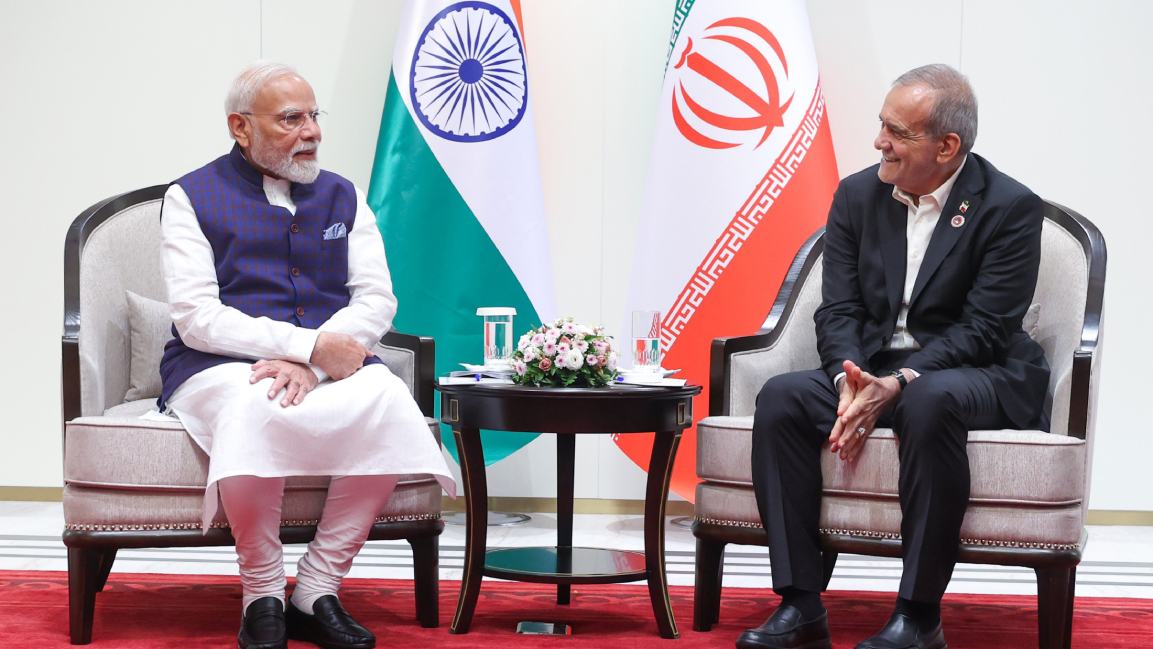


Prime Minister Narendra Modi shifted the focus of his Central Asia tour from trade and investment to wartime energy security on Monday, meeting Iranian President Masoud Pezeshkian as renewed fighting threatened shipping through the Strait of Hormuz.
The meeting in Bishkek, on the sidelines of the Shanghai Cooperation Organisation summit, was the leaders’ first face-to-face discussion since the Iran conflict began in February.
Pezeshkian briefed Modi on the regional situation, while the Indian leader reiterated New Delhi’s support for efforts to establish lasting peace. The two sides also discussed the safety of shipping, energy supplies and commercial traffic through the Strait of Hormuz, according to the government’s account.
India has sought to keep diplomatic channels open with Tehran and Washington while emphasizing freedom of navigation through the strait. The waterway is crucial to India because of its dependence on imported crude and liquefied natural gas.
The talks acquired greater urgency after the US struck Iranian military positions and rocket launchers near Larak Island, close to the strait over the weekend. Iran subsequently fired missiles toward US forces in the region, raising fears that the conflict could again disrupt oil supplies and commercial shipping.
“India will continue to support all efforts aimed at ensuring lasting peace,” Modi said after his meeting with Pezeshkian.
The two leaders also reviewed bilateral relations. Modi said India wanted to expand and diversify its trade with Iran, indicating that New Delhi intends to preserve its longer-term economic relationship with Tehran despite the war and international sanctions.
The meeting followed a series of telephone conversations between the two leaders during the conflict. India’s immediate priorities have included the safety of its citizens and seafarers, the continuity of energy supplies and the protection of commercial routes.
Earlier on Monday, Modi met Armenian Prime Minister Nikol Pashinyan. Their discussions covered economic cooperation, defense, pharmaceuticals, science and technology, education and developments in West Asia.
Modi’s Bishkek engagements followed a two-day state visit to Uzbekistan, where economic ties dominated his talks with President Shavkat Mirziyoyev.
The two countries elevated their relationship to a Comprehensive Strategic Partnership and set a target of raising bilateral trade to more than $5 billion by 2030. They also agreed to deepen cooperation in critical minerals, digital technology, artificial intelligence, energy, pharmaceuticals, agriculture and connectivity.
India and Uzbekistan signed or announced 11 agreements covering tourism, higher education, environmental protection, traditional medicine, geological exploration, archival cooperation and the restoration of Buddhist sites. The two sides also reported progress toward a long-term arrangement for Uzbek uranium supplies to India.
Other announcements included a $1 million Indian grant for afforestation in the Aral Sea region, 100 scholarships for the study of Hindi and a Sanskrit chair supported by the Indian Council for Cultural Relations.
The joint statement also recorded Uzbekistan’s support for India’s candidature for permanent membership of a reformed UN Security Council. Both sides called for a free, open and rules-based international order.
Mirziyoyev conferred the Oliy Darajali Do’stlik Order, Uzbekistan’s highest honor for foreign leaders, on Modi during the visit.
Modi also paid tribute to former prime minister Lal Bahadur Shastri in Tashkent and visited the Tashkent State University of Oriental Studies before departing for Kyrgyzstan.
The SCO leaders’ main session is scheduled for Tuesday. Modi is expected to share the platform with Chinese President Xi Jinping, but no formal bilateral meeting between the two leaders had been announced as of filing. A scheduled meeting with Russian President Vladimir Putin was also awaiting official confirmation.
More Top Stories: