- | 11:30 am
PM revives austerity call on gold, foreign travel
The prime minister renewed his household spending appeal less than four months after first making it, with gold imports still climbing despite higher tariffs
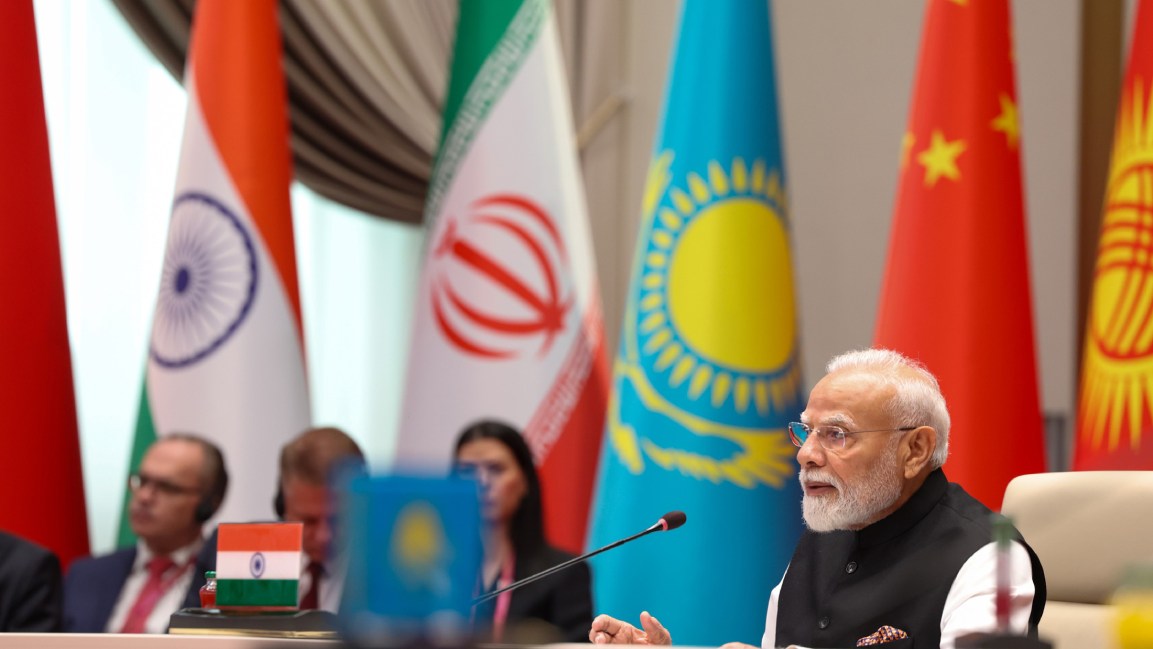


Prime Minister Narendra Modi has again asked Indians to avoid unnecessary gold purchases, foreign holidays and overseas weddings, reviving an appeal he first made less than four months ago as part of a broader campaign to keep spending within India.
In a video posted on Tuesday, 1 September, Modi linked the request to his push for swadeshi, or domestic production and consumption, rather than presenting it solely as an emergency measure to conserve foreign exchange.
“If you travel abroad, you should not do so just for sightseeing. If you hold weddings abroad, you should not do so. We should live by the mantra of ‘Wedding in India’,” Modi said.
“If there is no need, then one should not even buy gold,” he added. “The more we emphasize swadeshi, the more we emphasize self-reliance, I have firm faith that when India completes 100 years of independence, we will present a developed India to our young generation.”
7.8% growth.
Strong numbers.
Even stronger confidence. pic.twitter.com/ZVPpnAXrVU
— Narendra Modi (@narendramodi) September 1, 2026
The remarks were part of a message celebrating India’s stronger-than-expected economic growth. Gross domestic product expanded 7.8% from a year earlier in the April-to-June quarter, accelerating from 6.9% in the same period last year and exceeding the Reserve Bank of India’s 7% projection.
Modi described the performance as evidence of India’s resilience amid wars, disrupted supply chains and global instability. He also accused domestic critics of spreading pessimism and said maintaining the pace of growth would require a more self-reliant economy.
Real private consumption rose 7.1%, while gross fixed capital formation increased 11.9%, according to the Ministry of Statistics and Programme Implementation. Financial, real-estate, information technology and professional services grew 12.1%.
The appeal marks the second time since May that Modi has directly asked households to change how they spend money.
He had earlier urged Indians to defer nonessential gold purchases for a year, postpone foreign vacations and destination weddings, use public transportation and reduce petrol, diesel and cooking-oil consumption.
That appeal was explicitly framed as an attempt to preserve foreign currency as soaring energy prices and disruptions around the Strait of Hormuz increased India’s import costs.
“The nation spends significant foreign currency on cooking oil and gold imports while destination weddings consume reserves that could strengthen national resilience,” Modi said in May..
He also asked offices to use virtual meetings and work-from-home arrangements where possible to reduce fuel consumption.
The government followed the appeal with policy action. On 13 May, it increased import tariffs on gold and silver to 15% from 6%, seeking to reduce imports and support the rupee. It also tightened rules for duty-free gold brought in by jewelry exporters, including a 100-kilogram limit on individual import authorizations.
The economic backdrop has changed since then. India’s foreign exchange reserves reached a record $729.33 billion in the week ended 21 August, increasing by $38.22 billion from the end of March, according to the Reserve Bank of India.
The country also reported a $7.1 billion current-account surplus in the January-to-March quarter, although it recorded a deficit of $25.2 billion, equivalent to 0.6% of GDP, for fiscal year 2026 .
Gold nevertheless remains a substantial source of dollar demand.
India’s gold imports rose 24% to a record $71.98 billion in 2025-26, from $58 billion a year earlier, according to commerce ministry data. The increase was driven by higher international prices rather than greater quantities. Import volumes declined 4.8% to 721 tons from 757 tons.
Gold imports accounted for more than 5% of India’s merchandise imports and helped push the trade deficit to $333.2 billion during the fiscal. India is the world’s second-largest gold consumer after China and depends on imports for most of its requirements.
The higher tariff and Modi’s earlier appeal have not eliminated the outflow. Gold imports reached $15.17 billion between April and July, an increase of 32.4% from the corresponding period last year. Imports in July rose 4.8% to $4.16 billion, according to Commerce Ministry data.
Official import volumes have declined, however. The World Gold Council estimated that net imports fell 23% to 98.1 tons in the June quarter, their lowest quarterly level since September 2020.
The sharp increase in import duties has also reopened concerns about smuggling. Bullion dealers and refiners have reported growing discounts in the unofficial market, while the World Gold Council has warned that illegal imports could exceed 100 tons during 2026.
Foreign travel represents a smaller but rapidly visible source of household foreign-currency spending. Indians remitted about $29 billion overseas under the RBI’s Liberalized Remittance Scheme in 2025-26, with travel remaining the largest category. Travel-related remittances stood at about $1.3 billion in June alone.
The RBI scheme permits a resident to remit as much as $250,000 in a fiscal year for approved purposes, including private visits, education, medical treatment and overseas investments.
Modi’s comments were directed at discretionary tourism and destination weddings, not essential, educational or business travel. He announced no new legal restrictions on overseas travel or household gold purchases.
Jewelry shares fell after his latest remarks. Kalyan Jewellers declined as much as 4.5% in early trading on Tuesday, while Titan fell more than 1%, reflecting concern that another high-profile appeal could weigh on demand ahead of India’s festival and wedding season.
More Top Stories: