

- | 8:15 am
Nepal flood toll climbs to 157, at least 133 Indians missing
India sends emergency aid and evacuates thousands along the Gandak as Nepal and China resume searches for hundreds missing after the Himalayan disaster.


At least 133 Indian citizens remained unaccounted for early Thursday, 27 August, after Nepal revised its list of travelers missing in the catastrophic flash floods along its border with Tibet.
Nepal Police said 157 bodies had been recovered by late Wednesday. Chinese authorities reported another three deaths at the Gyirong border port in Tibet, taking the combined toll on both sides of the border to at least 160.
The latest Nepal Tourism Board list contains 403 travelers, including 341 foreign citizens and 62 Nepalis, who had been heading toward Kailash Mansarovar or Gosaikunda when the flood struck. Indians form the largest national group, with 133 reported missing, the board said.
The board’s updated breakdown does not separately list the 37 non-resident Indians identified in the earlier data or explain whether they are included in the new count.
The list of missing people include those whom tour operators and authorities have been unable to contact because roads, electricity and mobile networks have been destroyed.
Indian relief reaches Kathmandu
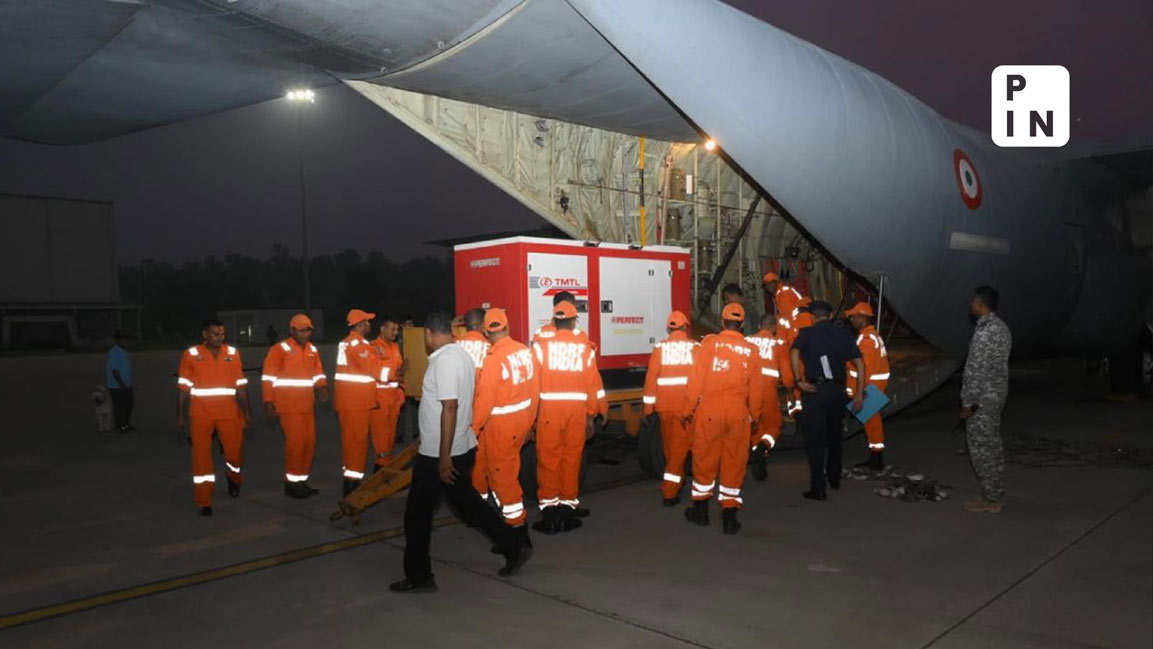
India’s first consignment of humanitarian assistance reached Kathmandu overnight aboard an Indian Air Force C-130J transport aircraft. The 10-tonne shipment contained temporary shelters, blankets, hygiene kits, solar lamps, medicines and other emergency supplies.
“India’s HADR and medical assistance has reached Kathmandu. More assistance is being mobilized to support relief efforts,” external affairs minister S. Jaishankar said early Thursday.
The IAF said additional C-17 and C-130 aircraft would carry more supplies, while helicopters had been earmarked for rescue and evacuation operations. It had not said by early Thursday whether the Indian helicopters had begun operating inside Nepal.
Prime Minister Narendra Modi spoke with Nepalese Prime Minister Balendra Shah and offered “all possible humanitarian assistance.” The Indian embassy in Kathmandu said it was coordinating with Nepal’s government to locate and rescue Indian citizens.
The embassy’s emergency numbers, both available on WhatsApp, are:
+977 985 131 6807
+977 970 910 7500
Indians affected on the Tibetan side can contact the Indian Embassy in Beijing at 0086 185 1428 4905, including through WhatsApp. Chinese officials in the affected area can be reached at 0086 139 8999 0012.
States try to trace pilgrimage groups
Indian state governments and travel operators continued trying to reconcile passenger lists overnight.
In Tamil Nadu, officials said 20 members of a 57-person group from Thanjavur district had been accounted for, while the whereabouts of 37 remained unknown. The pilgrims had been traveling in three buses toward Tibet when the flood disrupted the route.
A travel operator said the 20 were safe and would be airlifted when conditions allowed. Tamil Nadu officials were working through the Ministry of External Affairs and the Indian embassy to trace the others, according to The New Indian Express.
A group of 32 travelers and tour managers from Kolkata also remained out of contact. They had reached the Rasuwagadhi immigration facility shortly before the flood struck, according to PTI.
The Isha Foundation said it had lost contact with 77 members who were at an immigration center, while 495 others connected with its pilgrimage program had returned safely.
A separate 36-member group from Kerala was contacted and found to be safe outside the disaster zone. Maharashtra had established contact with four of seven residents believed to be in Nepal and was trying to locate the other three.
Bihar evacuates thousands
India also stepped up precautions along the Gandak, the downstream continuation of the Trishuli-Narayani river system. About 5,000 people had been evacuated from vulnerable parts of six Bihar districts by early Thursday, and authorities were preparing to move a total of 10,000 to 12,000 if necessary.
West Champaran, East Champaran, Gopalganj, Saran, Muzaffarpur and Vaishali were under close watch. Bihar also opened all 36 gates of the Valmikinagar Gandak Barrage to manage the incoming flow.
The National Disaster Response Force has 20 teams deployed across Bihar and Uttar Pradesh, including nine in Bihar and 11 in Uttar Pradesh. Two Bihar teams were sent to West Champaran and Muzaffarpur, while additional personnel were kept on standby.
Maharajganj and Kushinagar in Uttar Pradesh remained on alert. Administrations in low-lying villages were instructed to prepare evacuation routes, shelters, boats and emergency supplies.
The Central Water Commission said early Thursday that water levels in Nepal-side reservoirs were declining and that the downstream situation was under control, although continued monitoring was necessary. “No panic-like situation has arisen,” it said, according to the Times of India.
The Sashastra Seema Bal continued monitoring the 1,751-kilometer India-Nepal border, with rescue and relief teams available to assist local administrations.
Nepal resumes airlifts at daybreak
The Nepali Army maintained ground searches through the night with 11 teams and resumed helicopter operations on Thursday morning.
A large group stranded above Timure was due to be evacuated by air, while rescuers were also trying to reach workers trapped in tunnels at hydropower sites.
Six military helicopters rescued 94 people on Wednesday, five civilian helicopters rescued another 12 and ground teams brought out 27, taking the army’s reported rescue total for the day to 133.
The helicopters also delivered tents, medical supplies, food and water. Medical camps were established at army facilities in Dhunche and Bidur, with critically injured people to be flown to Kathmandu after triage, Nepal News reported.
Nepal deployed 1,697 soldiers on Wednesday, with another 656 on standby. Police said 3,318 officers had joined the response. At least 41 injured people were being treated in hospitals, while 28 police officers remained missing.
The damage to Nepal’s electricity system also became clearer overnight. Twelve operating hydropower plants with combined capacity of 431 megawatts were disconnected from the grid, while 15 projects under construction, representing another 470 MW, sustained damage.
More than 196 workers and employees at power-project sites were out of contact, according to Nepal’s Energy Ministry.
China reports 265 missing in Tibet
China said three people had been confirmed dead and 265 remained missing at Gyirong port as of 8 pm Wednesday. Roads, telecommunications and electricity connecting the border facility had been cut.
Chinese authorities activated a level-two national emergency response for geological disasters and disaster relief. Beijing allocated 30,000 relief items and 220 million yuan, about $32.4 million, for rescue work and initial reconstruction.
The package included 120 million yuan in disaster-relief funding and 100 million yuan for emergency restoration and reconstruction.
Firefighters, engineering units, armed police and military personnel were sent toward Gyirong, although damaged roads and unstable slopes were slowing access. Power-repair teams had reached parts of the affected area, according to the official Xinhua news agency.
President Xi Jinping ordered rescuers to search for the missing, evacuate people at risk and guard against further landslides and floods. Vice premier Zhang Guoqing was sent to direct the response.
Seismic signal traced to avalanche
Evidence gathered overnight weakened the initial suggestion that an earthquake triggered the disaster. The US Geological Survey said an event first recorded as a magnitude 4.4 earthquake was actually seismic energy produced by a massive landslide.
Satellite analysis indicates that ice and rock collapsed from high altitude into the Lhende river valley, producing a debris-filled surge that traveled toward the Nepal-Tibet crossing.
The International Centre for Integrated Mountain Development said an ice and rock avalanche was the suspected trigger, although the precise sequence remained under investigation. It warned that material lodged upstream could still be obstructing the river, creating a risk of another sudden release.
Nepal’s Flood Forecasting Division estimated that about 20 million cu. m of excess water moved through the Bhote Koshi-Trishuli-Narayani system. The surge traveled about 168 kilometers to Devghat and reached a peak discharge of 5,850 cu. m per second on Wednesday afternoon.
The division said it sent more than 679,000 emergency text alerts to downstream communities. Residents in Nepal and India were advised to remain away from riverbanks until the upstream blockage and water flow could be fully assessed.
More Top Stories: