

- | 6:50 pm
Nepal flood toll tops 350 as more than 1,300 remain missing
More than 1,300 people are listed as missing across Nepal and Tibet as India tries to trace 288 nationals and authorities warn that an expanding barrier lake could unleash another flood


At least 356 people had been confirmed dead by Thursday evening, 27 August, after Nepal Police raised its toll to 353 and China reported three deaths in Tibet.
More than 1,300 people remained listed as missing or out of contact across Nepal and Tibet. Nepal’s disaster authority put its total at 826, while China said 558 people were missing in Tibet’s Gyirong county.
Some Nepali media carried a higher death toll of 359. The Nepal Tourism Board said 644 tourists and travelers remained out of contact at noon on Thursday. The list included 127 Nepalis and 517 foreign citizens from 33 countries.
The largest foreign groups were 178 Indians, 65 Americans, 53 Ukrainians, 51 Malaysians, 35 Australians, 33 Britons and 25 Canadians, according to the board’s latest breakdown.
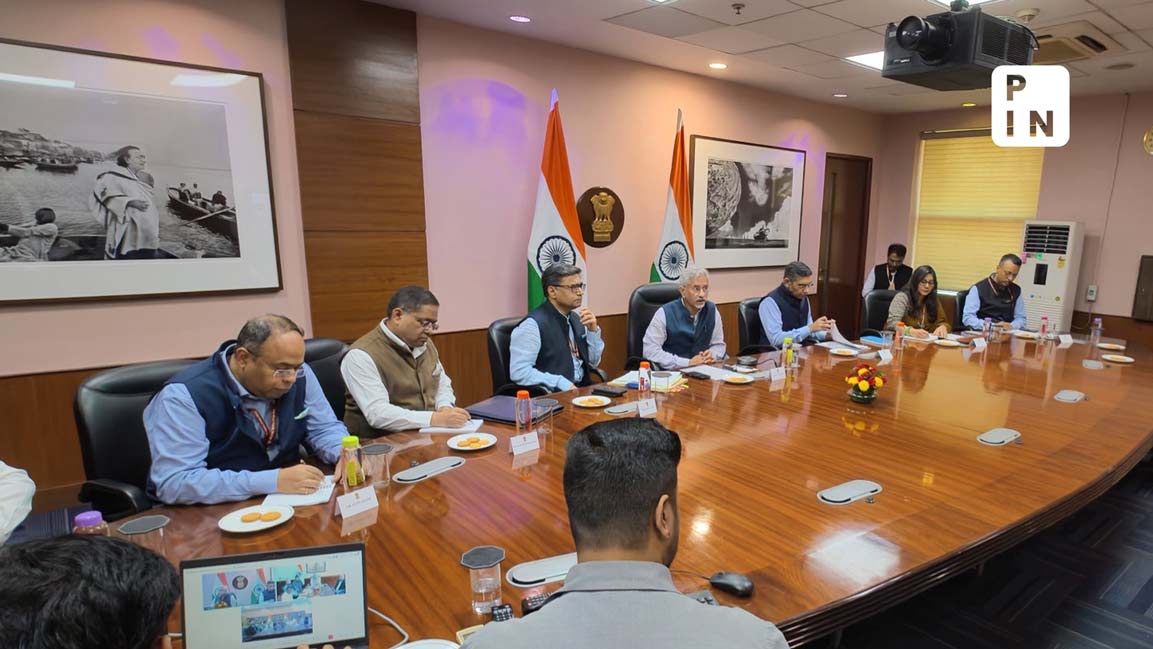
India’s Ministry of External Affairs (MEA) gave a substantially higher figure, saying 288 Indian nationals remained uncontactable. The ministry said disrupted communications and uncertainty over whether some travelers had crossed into China were complicating the count.
Nepal’s home minister Sudhan Gurung separately told Reuters that rescuers had located about 100 Indian visitors and 25 Chinese workers. India said 21 Tamil Nadu residents had been rescued by 1 pm and were being brought to Kathmandu before their return home.
Update on Indian nationals rescued in Nepal.
21 Indian nationals from Tamil Nadu, who travelled for the Kailash Mansarovar Yatra, have been rescued in Nepal.
Details below ⬇️ pic.twitter.com/L0SGOWqvga
— Randhir Jaiswal (@MEAIndia) August 27, 2026
The larger groups India is trying to trace include:
73 Indians working at the Trishuli-1 hydropower project.
Two Tamil Nadu pilgrimage groups of 37 and 49 people.
32 West Bengal residents who had reached Timure.
61 people from several states traveling with Richa Tours.
33 Kerala residents.
The MEA said some of the people listed as uncontactable in Nepal may have entered China before the disaster.
Two hundred Indians stranded in China
About 200 Indians on the Kailash Mansarovar pilgrimage had sought help leaving the Chinese side, the MEA said.
Ninety-five were traveling from Darchen toward Hilsa, four were in Guilin, 30 were moving from Zutulpuk toward Saga and another 60 to 70 were also heading to Saga. The Indian Embassy in Beijing was coordinating with Chinese authorities.
A Tamil Nadu travel operator told Reuters that one bus carrying about 20 members of a 57-person group had passed through safely. Survivors reported seeing another bus plunge into a gorge. Authorities had not independently confirmed what happened to that vehicle.
The Isha Foundation said 77 pilgrims of several nationalities and three staff members remained uncontactable after reaching an immigration facility on the Chinese side. Contact was lost within about 10 minutes on Wednesday morning. Another 495 people connected with its pilgrimage program were safe.
Nepal expands rescue operation
Nepal deployed 7,415 security personnel, including 3,318 police officers, 2,355 soldiers and 1,742 Armed Police Force members, according to the National Disaster Risk Reduction and Management Authority.
Nepali Army and private helicopters had flown 239 search, rescue and supply sorties by Thursday afternoon. More than 100 people had been rescued by helicopter, while medical teams were stationed in Nuwakot and other affected districts.
Bodies were recovered as far downstream as Chitwan and Nawalparasi, more than 100 kilometers from the hardest-hit settlements. Chitwan alone accounted for more than 100 recoveries at one point in the operation.
The Nepal Red Cross said about 1,200 people had been displaced from at least three villages. Temporary shelter, food, drinking water and medical supplies were being distributed from army facilities.
Prime Minister Balendra Shah traveled to Nuwakot to review the operation and ordered immediate relief and restoration of blocked infrastructure.
Nepal’s Cabinet declared affected local areas in Rasuwa, Nuwakot and Dhading disaster crisis zones for three months. It also ordered free treatment for victims and released 25 million Nepalese rupees, about $164,000, in immediate district assistance.
Roads and power projects destroyed
At least 19 road bridges and about 43 kilometers of highway were destroyed, cutting off Timure, Syabrubesi and other settlements. Some assessments put the number of damaged bridges higher as district reports continued to arrive.
Twelve operating hydropower plants with combined capacity of 431.1 megawatts were disconnected from Nepal’s grid. Fifteen projects under construction, representing another 470 MW, were also damaged.
More than 196 employees and workers at power-project sites remained out of contact. The missing include Indians employed at the Trishuli-1 project.
The Trishuli 220-kilovolt substation and several transmission lines and towers were damaged. Nepal sent solar power banks and temporary equipment to districts where electricity and communications remained unavailable.
Tibet missing count doubles
China raised the number missing in Gyirong county from 265 to 558, including 260 foreign nationals. Two villagers had been rescued, while more than 300 people from settlements considered at risk had been evacuated.
Premier Li Qiang traveled to Gyirong on Thursday to oversee the response. Beijing mobilized fire, engineering, military and armed-police units, including teams sent from Beijing and Chengdu.
China activated level-two emergency responses for disaster relief and geological hazards, the second-highest level in its four-tier system.
The central government allocated 220 million yuan, about $32 million, for rescue, relief and initial reconstruction. It also sent 30,000 items including tents, stoves, clothing, quilts, beds and moisture-resistant mats.
Roads approaching Gyirong Port remained destroyed. Power and telecommunications were only partly restored, and mud around parts of the crossing was more than 1.5 meters deep.
Barrier lake threatens second flood
Authorities in Nepal and China warned that a barrier lake created by debris upstream of the border crossing was expanding and could breach.
China’s Ministry of Water Resources estimated that the lake held about 2 million cu. m of water on Thursday morning and was already overflowing. Another 3 million cu. m could enter over the next three days, with peak inflow expected around 1 September.
The lake is near the meeting point of the Chhochen Khola and Purepu Tsangpo river systems northeast of Gyirong Port. Monitoring was intensified because a sudden breach could send another surge toward the border and into Nepal’s Bhotekoshi and Trishuli valleys.
Rain was forecast in Gyirong through Sunday, increasing the risk of landslides, slope collapses and further debris flows. Chinese authorities warned that secondary mudslides could occur with little notice.
Nepal’s disaster authority told residents, volunteers and rescue workers to stay away from riverbanks. Rasuwa, Nuwakot, Dhading, Gorkha and Chitwan remained under heightened alert.
The Tourism Board asked pilgrims returning from Gosaikunda not to use the regular Dhunche route until authorities declare it safe.
Bihar and Uttar Pradesh remain on alert
The main flood wave passed through Nepal’s Narayani river system on Wednesday and the initial surge in India’s Gandak receded overnight. Indian officials said embankments had held and there was no immediate reason for panic.
The danger has not passed, however, because of the upstream barrier lake and continued rain. The Central Water Commission said the next 48 hours would remain important for Bihar and eastern Uttar Pradesh.
About 5,000 people were evacuated from vulnerable areas in West Champaran, East Champaran, Gopalganj, Saran, Muzaffarpur and Vaishali. Bihar was prepared to move between 10,000 and 12,000 people if water levels rose again.
All 36 gates at the Valmikinagar Gandak Barrage were opened to regulate the flow. Nine National Disaster Response Force teams were operating in Bihar, with additional teams deployed or on standby in Uttar Pradesh.
Maharajganj and Kushinagar remained on alert. Local administrations used loudspeakers to tell residents in low-lying villages to move people, livestock and essential belongings to higher ground.
Uttarakhand also placed the State Disaster Response Force post at Tanakpur on alert and advised people to stay away from the Sharda river.
Glacier collapse replaces quake theory
The evidence no longer supports the early claim that an earthquake triggered the disaster.
The US Geological Survey initially recorded a magnitude 4.4 earthquake. It later said analysis of long-period seismic waves showed that the energy came from a massive collapse of glacial ice and rock, equivalent to a magnitude 5.2 seismic event.
Satellite imagery indicates that an ice-rock avalanche fell from the northern slopes of the Langtang Lirung area into the Lhende Khola river system. The debris temporarily obstructed the river before producing a high-speed surge of water, mud and boulders.
A Chinese government geologist estimated that the debris flow traveled at about 50 meters per second, or 180 kilometers per hour, and continued for more than 20 kilometers before striking the border facilities.
Nepal’s river monitoring showed the Trishuli rising by as much as nine meters within 30 minutes. The Flood Forecasting Division estimated that the event added about 20 million cu. m of water to the Bhotekoshi-Trishuli-Narayani system.
The flood traveled from the border to Devghat in about 10 hours. Nepal sent more than 600,000 warning messages as monitoring stations failed or recorded rapidly rising water.
Scientists said rising temperatures, glacier loss, melting permafrost and changing freeze-thaw cycles were making high-mountain rock and ice less stable. They cautioned that more investigation was needed before climate change could be identified as the sole immediate cause.
International assistance expands
India has delivered 47.5 tons of relief supplies in two consignments aboard a C-130J and a C-17 aircraft. The material included shelters, blankets, hygiene kits, lamps, medicines and food packets. New Delhi was considering another shipment that could include temporary bridges.
China offered supplies and financial assistance to Nepal in addition to its domestic operation in Tibet.
The United Nations released $2 million for medical care, shelter and water. The US announced $500,000 and sent a disaster-response adviser, while South Korea pledged $1 million and dispatched response teams.
The UK pledged £5 million, about $6.8 million, and offered emergency responders. The International Federation of Red Cross and Red Crescent Societies released 1 million Swiss francs, about $1.24 million.
The World Health Organization sent medicines and multipurpose medical tents. Médecins Sans Frontières deployed an emergency medical team, while the World Bank said up to 25 billion Nepalese rupees, about $164 million, could be mobilized through emergency financing channels.
Safety warnings and contacts
People in affected areas should move immediately to higher ground if instructed, avoid riverbanks, bridges and unstable slopes, and not attempt to cross floodwater on foot or in vehicles. Drinking water should be boiled or treated where supply and sanitation systems have been damaged.
The Indian Embassy in Kathmandu can be contacted around the clock on WhatsApp and telephone:
+977 985 131 6807
+977 970 910 7500
+977 981 032 6117
The MEA control room in New Delhi can be reached at:
+91 11 2308 8718
+91 11 2308 8719
WhatsApp: +91 99682 91988
Indians affected on the Chinese side can contact the Indian Embassy in Beijing on WhatsApp or telephone at:
+86 185 1428 4905
Nepal’s emergency numbers are 1234 and 1144. The Tourist Police can be contacted at:
+977 985 128 9445
The latest official travel advice says conditions may change rapidly and travelers should follow local evacuation instructions and check with airlines and tour operators before moving through affected districts.
More Top Stories: