
- | 4:15 pm
King Harald V, Norway’s popular modernizer, dies at 89
The popular monarch helped modernize Norway’s royal family and became a symbol of national unity during crises. His son Haakon has succeeded him as king
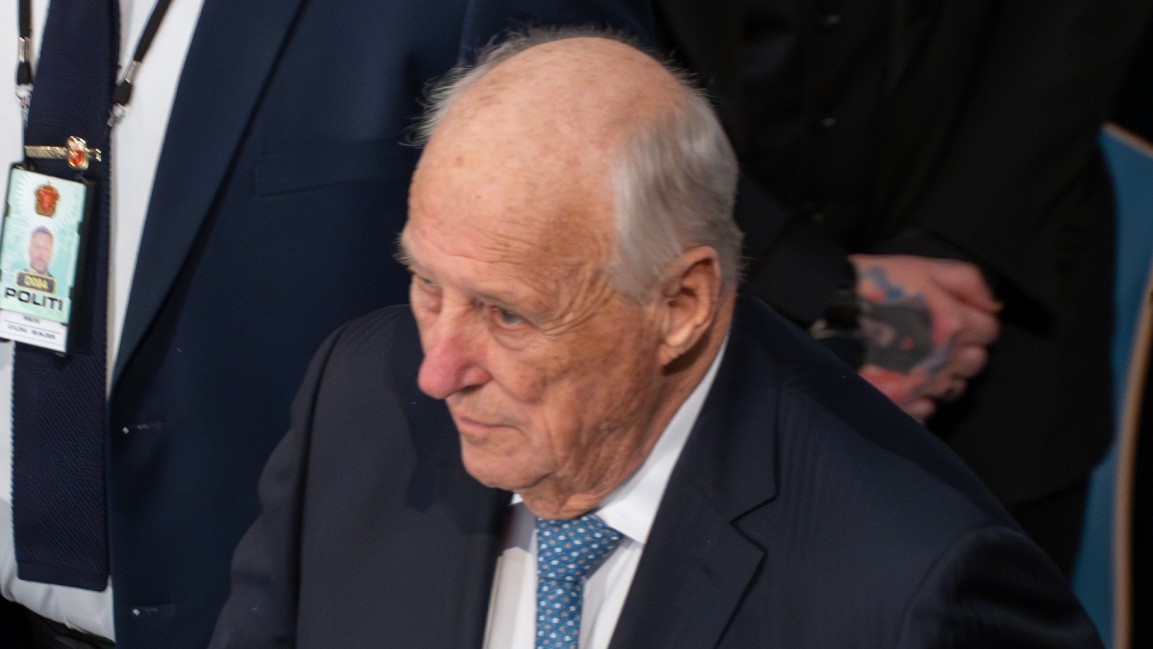


King Harald V of Norway, who guided the Scandinavian country through 35 years of social change while turning its monarchy into a more open and inclusive institution, died on Friday, 28 August. He was 89.
“It is with deep grief that we announce that His Majesty King Harald has passed away,” the Norwegian Royal House said. He died peacefully at Oslo University Hospital Rikshospitalet at 6:35 am local time.
Harald had been admitted to hospital on 17 August. The palace had said he was suffering from hemolytic anemia and receiving treatment for a bacterial infection in his blood. It did not give a separate cause of death in Friday’s announcement.
His 53-year-old son Haakon became king immediately under Norway’s constitutional arrangements. He is expected to use the title King Haakon VIII, although his regnal name and motto are formally declared at an extraordinary meeting of the Council of State.
Norwegian flags were lowered to half-staff and church bells rang across the country as people began gathering outside the Royal Palace in Oslo.
“A whole nation is in mourning,” Prime Minister Jonas Gahr Støre said, describing Harald as a monarch who “found the words to bind us together when we needed them the most.”
Norway will observe several days of mourning before Harald’s funeral at Oslo Cathedral. He is expected to be buried in the royal mausoleum at Akershus Fortress alongside his parents, King Olav V and Crown Princess Märtha, and his grandparents, King Haakon VII and Queen Maud. The funeral date had not been announced.
Britain’s King Charles described Harald as a friend and relative who had served Norway with warmth and humility. Tributes also came from Sweden’s King Carl XVI Gustaf, European Commission President Ursula von der Leyen, French President Emmanuel Macron and other European leaders.
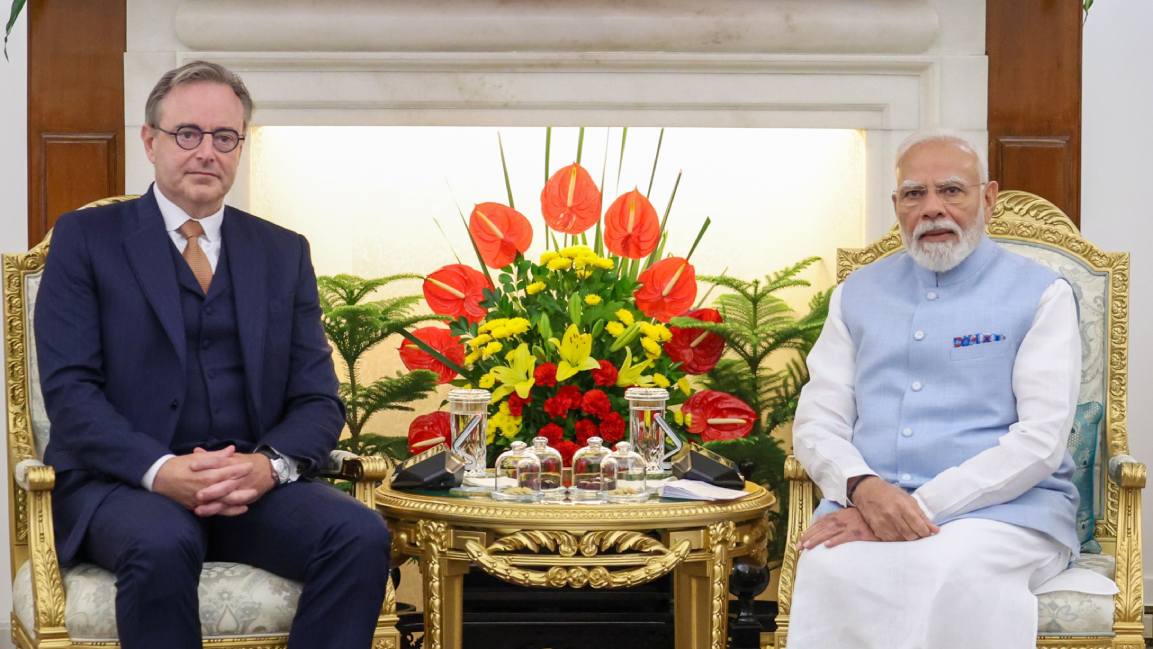
Recent meeting with Modi
Harald’s final major engagement involving India came in May, when Prime Minister Narendra Modi met him at the Royal Palace during the first visit to Norway by an Indian prime minister in more than four decades.
Modi and Harald discussed growing cooperation between Indian and Norwegian companies, particularly in technology and innovation. The king hosted a luncheon for the prime minister and conferred on him the Grand Cross of the Royal Norwegian Order of Merit.
The award is the highest grade of the order and Norway’s highest honor for foreign heads of government. Modi dedicated it to the relationship between India and Norway.
“In Oslo, called on His Majesty King Harald V of Norway,” Modi said after the meeting on 18 May. “We had an excellent conversation on the India-Norway friendship and how our nations can keep working together across sectors for the benefit of our people.”
Harald’s association with India extended over four decades. He and Sonja visited India in February 1986, when they were crown prince and crown princess, according to the Indian Embassy in Oslo.
In October 2014, Harald and Sonja hosted President Pranab Mukherjee during the first state visit to Norway by an Indian president.
Harald accompanied Mukherjee to a business seminar attended by more than 100 Indian and Norwegian executives and government representatives. They witnessed the signing of agreements covering business, research and education, while the two countries also signed a cultural cooperation agreement.
A wartime childhood
Harald was born at the Skaugum royal estate near Oslo on 21 February 1937, the only son of Crown Prince Olav and Crown Princess Märtha.
His birth was a national event. He was the first prince born in Norway in nearly 570 years, after centuries in which Danish and Swedish monarchs had ruled the country.
His childhood was soon overtaken by war. Nazi Germany invaded Norway in April 1940, when Harald was three. His grandfather King Haakon VII and father Crown Prince Olav fled to Britain, from where they supported the Norwegian government in exile.
Harald, his mother and his elder sisters Ragnhild and Astrid initially escaped to Sweden before traveling to the United States. The family lived in the Washington area and spent time with President Franklin D. Roosevelt, whom Harald later said had been like a grandfather to him.
He returned to Norway after the war in 1945 and became the first member of the royal family to attend an ordinary state school.
Harald graduated from the Norwegian Military Academy in 1959 and later studied history, economics and politics at Balliol College, Oxford.
He became crown prince in 1957 after the death of his grandfather and began assuming constitutional duties as his father’s heir.
A royal marriage that changed tradition
Harald’s marriage to Sonja Haraldsen helped establish his reputation as a royal willing to challenge convention.
Sonja was the daughter of a clothing merchant and had no royal or aristocratic background. King Olav initially opposed the relationship, leaving the couple to conduct a largely secret courtship for nine years.
Harald eventually told his father that he would remain unmarried if he could not marry Sonja. Because he was the only male heir, that decision could have brought his family’s royal line to an end.
Olav relented, and Harald and Sonja married at Oslo Cathedral on 29 August 1968. They had two children, Princess Märtha Louise, born in 1971, and Haakon, born in 1973.
Harald succeeded his father on 17 January 1991. He took the constitutional oath before Norway’s Parliament and received a royal benediction alongside Queen Sonja at Nidaros Cathedral in Trondheim.
He retained the motto used by his father and grandfather, “Alt for Norge,” meaning “Everything for Norway.”
A constitutional and unifying monarch
Norway’s monarch holds little political power. Harald’s duties included formally opening Parliament, presiding over meetings of the Council of State, receiving ambassadors and representing the country at home and abroad.
His influence came largely from his ability to act as a nonpartisan national figure.
That role became particularly important after far-right extremist Anders Behring Breivik killed 77 people in a bombing in Oslo and a mass shooting on Utøya island on 22 July 2011.
Harald addressed grieving families at a national memorial and told the country that “freedom is stronger than fear.” His emotional response helped establish him as a source of reassurance during one of Norway’s worst peacetime tragedies.
He regularly visited communities affected by floods, storms and landslides and spoke openly about grief, fear and personal hardship.
Harald also gradually broadened the monarchy’s representation of Norwegian identity as immigration changed the country.
In a widely praised speech in 2016, he referred to Norwegians whose families had come from Afghanistan, Pakistan, Poland, Somalia and Syria.
“Norwegians are girls who love girls, boys who love boys, and girls and boys who love each other,” he said.
The speech was seen as an unusually direct royal endorsement of religious, ethnic and sexual diversity.
Sailor and environmentalist
Harald was also one of the most accomplished athletes among Europe’s modern royals.
He represented Norway in sailing at the 1964 Tokyo Olympics, the 1968 Mexico City Games and the 1972 Munich Games. He carried Norway’s flag at the opening ceremony in Tokyo.
He continued competitive sailing well into later life and captained teams that won world and European championship titles.
Harald was also closely associated with nature conservation. He supported the Norwegian branch of the World Wide Fund for Nature and traveled to environmentally sensitive regions including the Amazon and Antarctica.
His informal manner, enthusiasm for outdoor life and habit of driving himself to some engagements helped distinguish him from more ceremonially distant European monarchs.
Health problems and family controversies
Harald suffered a series of health problems during his later years.
He received treatment for bladder cancer in 2003 and underwent surgery for aortic stenosis in 2005. He had a heart valve replaced in 2020.
In 2024, he was hospitalized with an infection while vacationing in Malaysia and received a temporary pacemaker before being flown back to Norway. A permanent device was subsequently implanted in Oslo.
Harald reduced his official engagements but repeatedly rejected suggestions that he should abdicate. He said his oath to Parliament “lasts for life.”
His personal popularity remained strong even as scandals involving other members of the family weakened support for the monarchy.
Crown Princess Mette-Marit, who becomes queen following Haakon’s accession, faced criticism over her past association with convicted sex offender Jeffrey Epstein. Her son from a previous relationship, Marius Borg Høiby, was convicted in June of two rape counts and domestic violence and sentenced to four years in prison. Both he and prosecutors have appealed.
Harald’s daughter Märtha Louise also attracted criticism over commercial use of her royal connections and her marriage to Durek Verrett, an American who describes himself as a shaman.
Support for retaining the monarchy fell to 60% in a February poll before recovering to 64% in May. Harald remained considerably more popular than the institution. Respondents in the February survey gave him a score of 9.2 out of 10 when asked which royal best represented the family.
Haakon now inherits the task of protecting the monarchy’s standing without the personal authority his father accumulated during 35 years on the throne. His daughter, Princess Ingrid Alexandra, becomes the heir apparent.
More Top Stories: