

- | 8:30 am
Parliament opens high-stakes debate on women’s quota, delimitation
The government is seeking quick passage of bills to operationalize women’s reservation and expand the Lok Sabha, while the opposition warns the move could reopen a broader fight over representation and federal balance
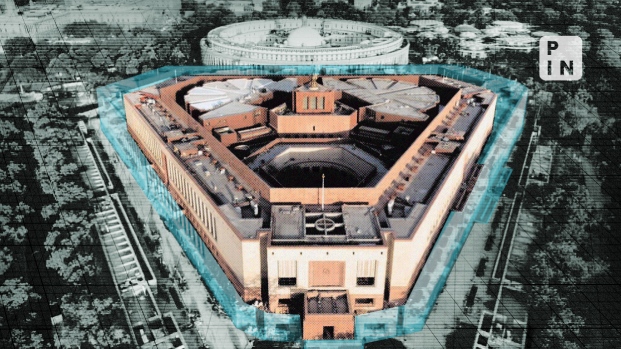


Parliament begins a high-stakes debate on Thursday, 16 April, on bills that would operationalize women’s reservation and expand the Lok Sabha, with the government seeking quick passage and the opposition warning that the move could reopen a broader fight over India’s political map.
The government’s push, compressed into a three-day special sitting, has created an unusual alignment where nearly all parties publicly back one reform but sharply diverge on the other.
Prime Minister Narendra Modi has framed the moment as historic, calling the proposed amendments “the fulfillment of an important responsibility towards the women of our country,” while urging parties to support the legislation in “one voice.”
At the center is the operationalization of the Nari Shakti Vandan Adhiniyam, passed in 2023, which mandates 33% reservation for women in the Lok Sabha and state assemblies.
Historic push
The law inserts Articles 330A and 332A into the Constitution, reserving one-third of seats across general, Scheduled Caste and Scheduled Tribe categories.
Yet the fine print has always been the catch. The law cannot be implemented until a fresh census is conducted and delimitation, the redrawing of constituency boundaries, is completed.
The current legislative push seeks to revise that sequencing while expanding the Lok Sabha, with the bill likely to include a state-wise schedule for seat allocation that broadly preserves the existing share of seats across states, The Indian Express reported, citing people aware of the matter.
The proposed amendment would raise the Lok Sabha ceiling to 850 seats from 543, with 815 seats allocated to states and 35 to Union Territories, while enabling one-third reservation for women under the new structure.
That combination, expansion plus reservation, is where the politics hardens, with the government arguing that the new framework will not alter the existing balance of representation among states.
But opposition leaders argue that the women’s reservation bill is being used as political cover for delimitation.
Congress Parliamentary Party chair Sonia Gandhi, writing in The Hindu on 13 April, said the government’s push was not really about women’s reservation but about delimitation, which she called “extremely dangerous” and “an assault on the Constitution itself.”
Her article turned what had been a procedural debate over implementation into a broader fight over federal balance, census timing and the rules for redrawing India’s electoral map.
She added that “delimitation, not women’s reservation, is the core issue,” underscoring concerns that the sequencing and data basis of the exercise could distort political representation.
Opposition faultline
Leader of Opposition Rahul Gandhi has taken a sharper political line, accusing the government of using delimitation to rebalance power across regions and communities.
Gandhi characterized the proposal as “hissa chori,” or an unfair appropriation, warning that it could disadvantage other backward castes, Dalits, Adivasis and states with slower population growth.
The Congress position, echoed by party president Mallikarjun Kharge, attempts to hold two positions simultaneously.
Kharge said, “We all are in favor of the Women’s Reservation Bill. But the way in which they have brought it, we have reservations about that,” calling the move “politically motivated.”
That dual stance, supporting gender quotas but opposing the accompanying institutional mechanism, reflects a broader opposition strategy to avoid being seen as blocking women’s representation while still resisting a restructuring of electoral arithmetic.
Southern anxiety
Regional parties, particularly in southern India, have been more explicit about the federal implications.
Tamil Nadu chief minister M. K. Stalin has emerged as one of the most vocal critics, warning that delimitation based on population risks penalizing states that have achieved lower population growth through decades of social policy.
His position reflects a wider southern fear that delimitation could eventually shift parliamentary weight toward northern states, even though the government now says the current proposal will preserve each state’s share.
In Telangana, opposition Bharat Rashtra Samiti party leader K. T. Rama Rao sharpened the same argument, warning against linking women’s reservation to delimitation and urging immediate implementation of quotas without redrawing constituencies.
The Trinamool Congress, along with other INDIA bloc allies, has aligned with this framing, supporting reservation in principle but opposing the delimitation bill.
Opposition leaders have also argued that the absence of a recent census weakens the basis for any redistricting exercise, although the government’s emerging formulation suggests that inter-state allocation may not be recalculated on a pure 2011 Census basis.
The government, for its part, has sought to blunt the federal backlash by moving toward a state-wise schedule that, according to current reporting, would preserve the existing share of seats for each state while expanding the House.
Rather than redistributing existing seats on a strict population basis, the broad approach now appears to involve a proportionate increase across states, potentially by about 50%, while delimitation is used mainly to redraw constituencies within states.
Union Home Minister Amit Shah has consistently defended the linkage between reservation and delimitation as a matter of administrative necessity.
The Delimitation Commission, he said, ensures a “transparent system” for identifying which constituencies are reserved, with quasi-judicial procedures and public hearings across states.
He has also framed the women’s quota as a non-partisan reform.
“Women reservation is not at all a political issue… We want to ensure the participation of women in policy-making,” Shah said during earlier parliamentary debates, urging unanimous support.
That framing is echoed by the prime minister, who has repeatedly cast the reform as a long-overdue structural change.
Modi wrote to party leaders that the amendment is “an opportunity to further strengthen Indian democracy,” positioning it as both a governance reform and a symbolic step toward gender parity.
Bigger house
He has also sought to elevate the political stakes, saying Parliament stands “on the verge of making history,” and urging all parties to share credit for the measure.
The government’s argument rests on three pillars. First, that women’s representation in India’s legislatures remains structurally low and requires constitutional intervention.
Second, that delimitation is a necessary administrative step to operationalize reservation in a consistent and legally defensible manner. Third, that expanding the Lok Sabha aligns with demographic and institutional realities, particularly with the new Parliament building designed to accommodate a larger House.
The opposition’s counterargument is equally layered. It questions the sequencing, arguing that tying reservation to delimitation delays implementation. It challenges the data basis, pointing to the absence of a recent census. And it raises federal concerns, even as the government now seeks to reassure states that the expanded House will not alter their current share of representation.
These competing narratives intersect in a deeper constitutional question about how representation should evolve in a country marked by uneven demographic trends.
Since the 1970s, India has effectively frozen the allocation of parliamentary seats across states, in part to avoid penalizing those that successfully controlled population growth. The current proposals reopen that debate over delimitation, but may stop short of reopening the inter-state balance itself if the reported state-wise schedule is adopted.
Expanding the Lok Sabha would not only alter the size of constituencies but also recalibrate coalition dynamics, legislative majorities and the balance between large and small states.
Reserving one-third of those seats for women would, in turn, reshape candidate selection, party structures and electoral competition across the board.
The political calculus is equally complex. For the ruling Bharatiya Janata Party, the reforms offer a chance to claim ownership of a landmark gender initiative while trying to neutralize opposition charges that delimitation would tilt representation toward its northern strongholds.
For the opposition, particularly parties rooted in southern states, the risk is a structural erosion of influence that cannot be easily reversed.
Even under the current framework, women’s reservation is expected to take effect from the 2029 general election, given the need for census and delimitation processes.
That delay has become a focal point of criticism. Opposition leaders argue that if the political will exists, reservation could be implemented immediately without waiting for a full-scale redrawing of constituencies.
The government, in contrast, maintains that the institutional integrity of the process requires sequencing.
Outside the immediate legislative battle, the debate has broader implications for India’s political economy.
Changes to representation affect fiscal transfers, policy priorities and the distribution of central resources, particularly in a federal system where parliamentary strength shapes bargaining power.
For investors and policy observers, the outcome of the current session will be read as a signal of how the government balances reform ambition with federal sensitivities.
A swift passage would reinforce the perception of a government willing and able to push through structural changes, even on contentious issues. A more protracted debate or compromise could indicate limits to that approach.
The immediate question, though, is procedural. With a party whip in place and a compressed session calendar, the government has the numbers to move quickly.
More Top Stories: