
- | 9:00 pm
Prashant Kishor wins Bankipur in mixed bypoll results
Jan Suraaj wins its first Assembly seat in Bihar, Congress retains Datia and the BJP holds Manjalpur, in results shaped more by local candidates and party organization than by any national swing
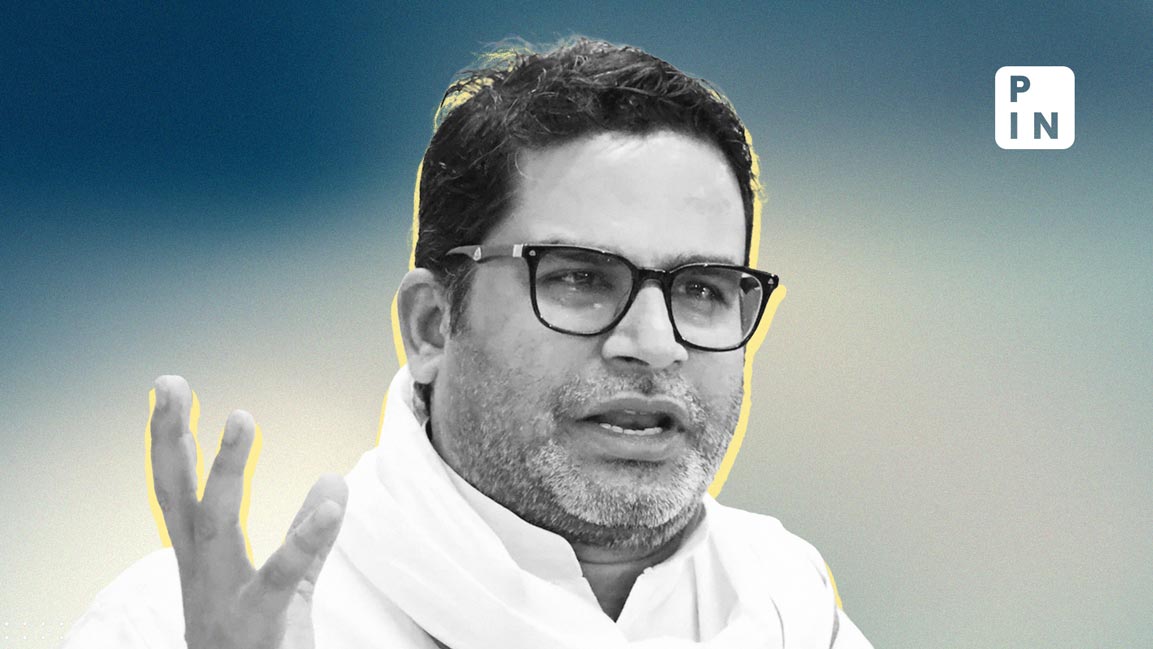


Prashant Kishor won his first election and ended the Bharatiya Janata Party’s (BJP’s) long hold over Bankipur on Monday, 3 August, while Congress retained Datia in Madhya Pradesh and the BJP comfortably held Manjalpur in Gujarat.
Kishor, the founder of the Jan Suraaj Party, received 64,151 votes in Bankipur, defeating the BJP’s Neeraj Kumar by 19,324. Rashtriya Janata Dal (RJC) candidate Rekha Kumari was a distant third with 14,273 votes.
In Datia, Congress candidate Ghanshyam Singh defeated the BJP’s Ashutosh Tiwari by 6,016 votes. Singh received 66,757 votes against Tiwari’s 60,741, while Aazad Samaj Party candidate Damodar Yadav ‘Mandal’ finished third with 22,527.
The BJP retained Gujarat’s Manjalpur, where Satendrabhai Patel defeated Congress candidate Bhikhabhai Rabari by 30,630 votes. Patel received 55,481 votes against Rabari’s 24,851.
Congress defended a seat it already held, while the BJP’s decisive Manjalpur victory showed that its electoral organization remains formidable in parts of urban Gujarat.
Bankipur, however, carries political weight beyond the addition of one opposition legislator to the Bihar Assembly. It gives Kishor and Jan Suraaj the electoral foothold they failed to secure in the 2025 state election and turns a political project built around organization, public meetings and Kishor’s personal profile into a legislative presence.
Kishor gains the most
Jan Suraaj contested 238 of Bihar’s 243 Assembly constituencies in 2025 but failed to win a seat, securing about 3.4% of the statewide vote. Kishor accepted full responsibility for the defeat and described the party’s effort as completely unsuccessful.
Bankipur changes the terms of that argument. Kishor can now present Jan Suraaj as a party capable of winning an actual constituency, rather than merely affecting the margins between Bihar’s established parties.
The symbolism is particularly damaging for the BJP. The party had held Bankipur since the constituency was created following delimitation and had controlled its predecessor, Patna West, since 1995. Nitin Nabin represented Bankipur for five consecutive terms before vacating it after his election to the Rajya Sabha, triggering the bypoll.
The BJP also entered the contest after a last-minute candidate change. Abhishek Kumar Sinha withdrew a day after filing his nomination, citing family reasons, and the party replaced him with Neeraj Kumar Sinha. Kishor used the reversal to portray the BJP as uncertain in a constituency it had long treated as secure.
The result does not establish Jan Suraaj as a statewide alternative. Kishor was personally on the ballot, allowing the party to concentrate its campaign workers, resources and public attention in one urban seat.
Turnout was only about 34%, down from more than 41% in the 2025 Assembly election. Low-turnout bypolls are particularly sensitive to candidate appeal and the ability of parties to mobilize committed supporters.
The harder test will be whether Jan Suraaj can win constituencies where Kishor is not the candidate and where its resources cannot be concentrated in a single contest.
The result also hurts the RJD
The RJD’s third-place finish may prove almost as politically significant as the BJP’s defeat.
Rekha Kumari received 14,273 votes, less than a quarter of Kishor’s total. The result does not show where Kishor’s support came from, but it establishes that Jan Suraaj, rather than the RJD, emerged as the BJP’s principal challenger in this contest.
For the BJP, the defeat can be attributed partly to the late candidate change, low turnout and the absence of Nabin from the ballot. The RJD has no comparable explanation for finishing so far behind in a constituency in Patna.
Jan Suraaj does not need to displace the RJD across Bihar immediately to alter the state’s politics, anaysts said, adding that it needs enough concentrated support to win selected seats and persuade voters that supporting it is no longer a wasted ballot.
Bankipur provides the first evidence for that case.
One victory cannot settle whether Kishor has built a durable political organization. It does, however, make it harder for rivals to dismiss Jan Suraaj solely on the basis of its 2025 failure.
Congress survives its own disorder
The Congress victory in Datia has a different political meaning. The party retained a constituency it won in 2023 despite the circumstances that triggered the bypoll and a public internal dispute during the campaign.
The seat fell vacant after Congress legislator Rajendra Bharti was disqualified following his conviction in a case involving forged bank documents and fraudulent financial transactions.
Hours before counting began, Congress suspended Bharti after Ghanshyam Singh accused him of working against the party candidate. Bharti denied the allegation and made counterclaims against Singh.
Retaining the constituency after that spectacle is useful for the state Congress leadership. It suggests the party was able to separate its campaign from the disqualified incumbent and consolidate support behind a replacement with his own local standing.
Singh was not an experimental candidate. He had represented Datia twice, winning in 1993 and 2003, while the BJP fielded first-time candidate Ashutosh Tiwari.
The result should not be inflated into evidence of a broad Congress revival in Madhya Pradesh. Datia was already a Congress-held seat, turnout fell to 71.44% from 80.2% in 2023 and Singh brought a personal base built over several elections.
Still, the outcome is uncomfortable for the BJP because the bypoll initially appeared to offer it a clear opportunity. The Congress incumbent had been disqualified, party leaders were quarrelling openly and the BJP governs Madhya Pradesh with a large Assembly majority. Congress held the seat despite those disadvantages.
The Aazad Samaj Party’s performance also deserves attention. Yadav received 22,527 votes, or about 14.3% of the total, confirming that a third party can attract a sizeable vote in a constituency usually described as a direct BJP-Congress contest.
Manjalpur provides the BJP with a counterargument
The BJP’s victory in Manjalpur prevents the three bypolls from being presented credibly as a broad rejection of the ruling party.
Patel received 67.19% of the vote and more than twice the Congress candidate’s total. The scale of the victory suggests that the BJP successfully consolidated its support behind a new candidate.
The bypoll was held after the death of veteran BJP legislator and former Gujarat minister Yogesh Patel. Voting took place on 30 July and turnout was 37.5%.
The contrast with Bankipur is striking. The BJP replaced its candidate at the last minute in Bihar and lost a constituency it had dominated for decades. In Manjalpur, its succession produced no comparable public disruption and the party won decisively.
The immediate lesson for the BJP is therefore organizational rather than ideological, analysts said. A strong national brand and central campaign machinery cannot always compensate for uncertainty over local candidates, dissatisfied workers or poorly handled succession.
Manjalpur also provides an important restraint on broader conclusions. A party facing a national wave against it would be unlikely to retain an urban constituency with more than two-thirds of the vote, even allowing for the peculiarities of a low-turnout bypoll.
Exam anger forms the wider backdrop
The bypolls were counted after weeks of student protests over examination leaks and the government’s response.
A CVoter snap poll reported by ThePrint on Sunday found that more than half of respondents were dissatisfied with the Modi government’s handling of the paper-leak crisis. Dissatisfaction was lower, but still significant, among people identified as NDA voters, at 40%.
The computer-assisted telephone survey covered 1,349 adults across India on 29 and 30 July. It was a small snap poll rather than a national voting-intention survey and should be treated accordingly.
The examination controversy has become politically dangerous for the BJP because it combines three sources of youth anxiety: the integrity of competitive tests, access to scarce professional and government opportunities, and unemployment.
The government invalidated the results of the national medical entrance examination for about 2 million candidates after investigators discovered that questions had been leaked. The scandal triggered nationwide protests and contributed to the resignation of education minister Dharmendra Pradhan.
The government subsequently moved to strengthen the law against examination leaks, announced a panel to review the testing system and adopted a more conciliatory approach towards protesters.
To be sure, bypolls are heavily influenced by candidates, turnout and local organization.
The polling evidence nevertheless suggests a vulnerability. Dissatisfaction with one issue does not necessarily amount to a transfer of political loyalty, but repeated examination failures risk weakening the BJP’s appeal among younger voters.
An India Today-CVoter Mood of the Nation survey published in January projected 352 Lok Sabha seats for the NDA and recorded a 57% approval rating for Modi. That survey predates the examination crisis and cannot measure its electoral effect, but it provides an important reminder that the BJP entered the controversy from a position of considerable national strength.
The more defensible conclusion is narrower. The BJP retains a strong national position, but its support is not immune to administrative failures, weak candidates or local factionalism.
A warning rather than a national wave
Kishor emerges as the clear political beneficiary of the bypolls. Bankipur gives him personal legitimacy, a seat in the Assembly and an answer to critics who treated Jan Suraaj’s 2025 failure as conclusive.
Congress gains reassurance rather than momentum. Retaining Datia shows that it can still compete when it chooses a candidate with local standing, even while its own leaders are engaged in public warfare.
The BJP leaves with one decisive victory and two setbacks. Manjalpur confirms the continuing strength of its organization in Gujarat. Bankipur exposes the cost of disrupted candidate management, while Datia represents a missed opportunity to take advantage of Congress’s internal disorder.
Featured Videos
Preserving the dying memories of Partition
More Top Stories: