- | 2:30 pm
Rubio’s India visit to focus on energy, investment, strategic ties
The US secretary of state will meet S. Jaishankar in Mumbai and visit Reliance Industries’ Jamnagar refinery as Washington pushes energy and investment ties
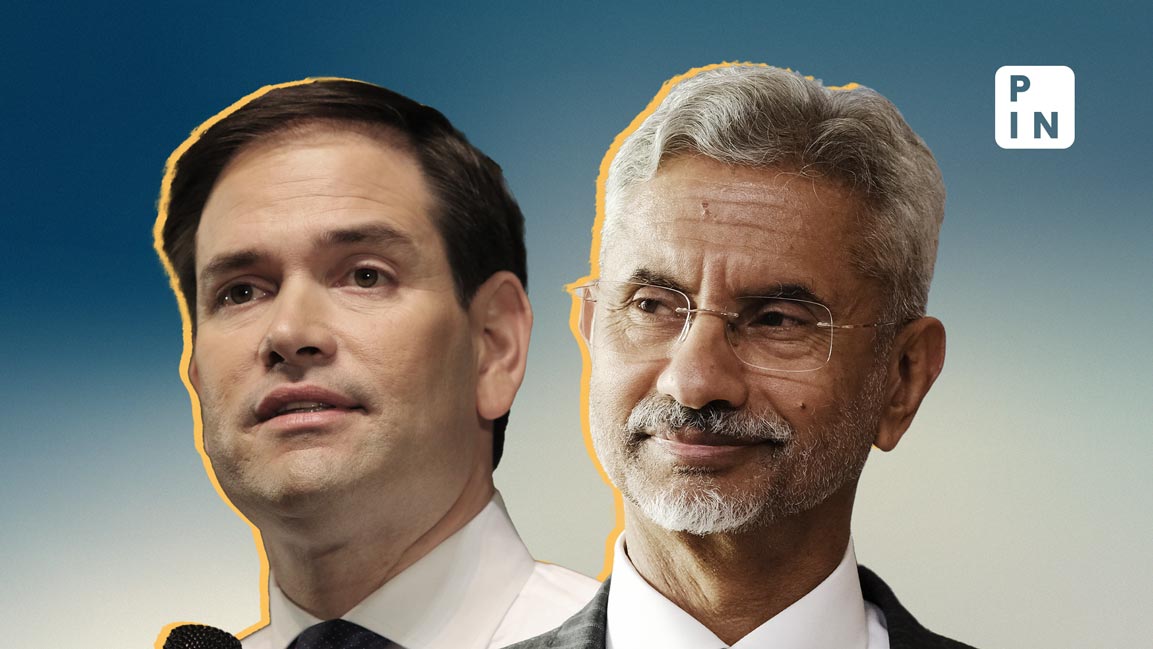


US Secretary of State Marco Rubio will visit India next week for talks centered on energy, investment and the two countries’ strained strategic relationship, making an unusual itinerary through Mumbai and Jamnagar while skipping New Delhi.
Rubio will travel to India as part of an 17-22 October trip that begins in Samarkand, Uzbekistan, the US State Department said. India will be his second official visit to the country this year.
Unlike most visits by a US secretary of state, Rubio is not scheduled to travel to the Indian capital.
External affairs minister S. Jaishankar is expected instead to travel to Mumbai for a bilateral meeting with Rubio. Rubio will also meet senior Indian government officials and business leaders.
The itinerary indicates Rubio is not currently scheduled to meet Prime Minister Narendra Modi, who he met during his previous India visit in May.
Rubio is expected to visit Reliance Industries’ refining complex in Jamnagar, Gujarat, one of the world’s largest refining centers. The complex can process about 1.4 million barrels of crude a day.
The State Department said Rubio would meet Indian officials to strengthen the strategic partnership, exchange views on regional and global developments and discuss prospects for deeper energy cooperation. He will separately meet business leaders to promote commercial investment and economic cooperation.
The Jamnagar stop comes as energy has become one of the most difficult issues in India-US relations.
India remains a major buyer of Russian crude, while President Donald Trump’s administration is pressing countries purchasing Russian energy to reduce those flows as Washington seeks to increase economic pressure on Moscow.
Trump last month signed legislation allowing the US to impose tariffs of as much as 100% on imports from countries that continue significant energy trade with Russia and Iran. India has raised concerns with Washington about the measure and its possible effect on the country’s energy security.
Jaishankar raised those concerns directly with Rubio when the two met on the sidelines of the UN General Assembly in New York in September, arguing that India must ensure affordable energy supplies for its population and economy.
New Delhi is now awaiting clarity from Washington over how the sanctions legislation will be applied to Indian purchases of Russian oil, including whether exemptions or waivers could be available.
Reliance’s refinery therefore sits at the intersection of two competing strands in the relationship. Indian refiners have benefited from discounted Russian crude since Moscow’s invasion of Ukraine, while Washington wants greater Indian purchases of US energy and deeper investment between the two countries.
At the same time, Reliance has emerged as a prospective investor in a new US refining project in Texas. Trump announced in March that Reliance planned to invest in a refinery at Brownsville, a project the administration has presented as part of its push to expand domestic energy capacity.
Meeting with Jaishankar
The key confirmed political engagement reported so far is Rubio’s meeting with Jaishankar in Mumbai. The two have met repeatedly this year as Washington and New Delhi try to manage a relationship that remains strategically important to both governments but has been unsettled by disputes over trade, Russian oil and Trump’s repeated public assertions that he helped broker an India-Pakistan ceasefire.
Jaishankar said this week that negotiations on an India-US trade agreement were moving toward a “landing point,” although several issues remained unresolved.
Trade negotiations had stalled again this month after the two sides reached a framework agreement earlier in the year. India is seeking greater certainty over US tariffs while resisting demands that could expose politically sensitive sectors, particularly agriculture, to greater American competition.
Washington has also linked the wider economic relationship increasingly closely to India’s Russian oil purchases.
Rubio’s visit gives the two governments another opportunity to separate those disputes from areas where cooperation remains relatively strong, including defense, critical technologies, energy and the Quad grouping of India, the US, Japan and Australia.
Modi and Trump have also been communicating directly. They spoke on 30 September about trade, defense, energy and critical technologies, with both leaders agreeing to remain in contact.
A higher-level encounter could come soon afterward.
Modi is expected to travel to the US in December for the G20 Leaders’ Summit in Florida, and officials have explored the possibility of a Quad leaders’ meeting on the sidelines.
The visit comes at a sensitive time for another American billionaire with interests in India.
Elon Musk recently attacked Ambani on social media over regulatory delays affecting Starlink, Musk’s satellite broadband business, referring sarcastically to the Reliance chairman as India’s “real boss.”
Before India, Rubio will travel to Samarkand for a C5+1 ministerial involving the US and Kazakhstan, Kyrgyzstan, Tajikistan, Turkmenistan and Uzbekistan.
He is expected to hold bilateral talks with officials from all five Central Asian countries. A US commercial delegation of more than 200 business leaders will also travel to the region as Washington seeks greater access to Central Asian markets and resources.
More Top Stories: