
- | 7:20 pm
UAE halts all trade with Iran as Gulf tensions rise
Abu Dhabi suspended commercial and financial dealings with Tehran as a missile dispute added to mounting tensions around the Strait of Hormuz
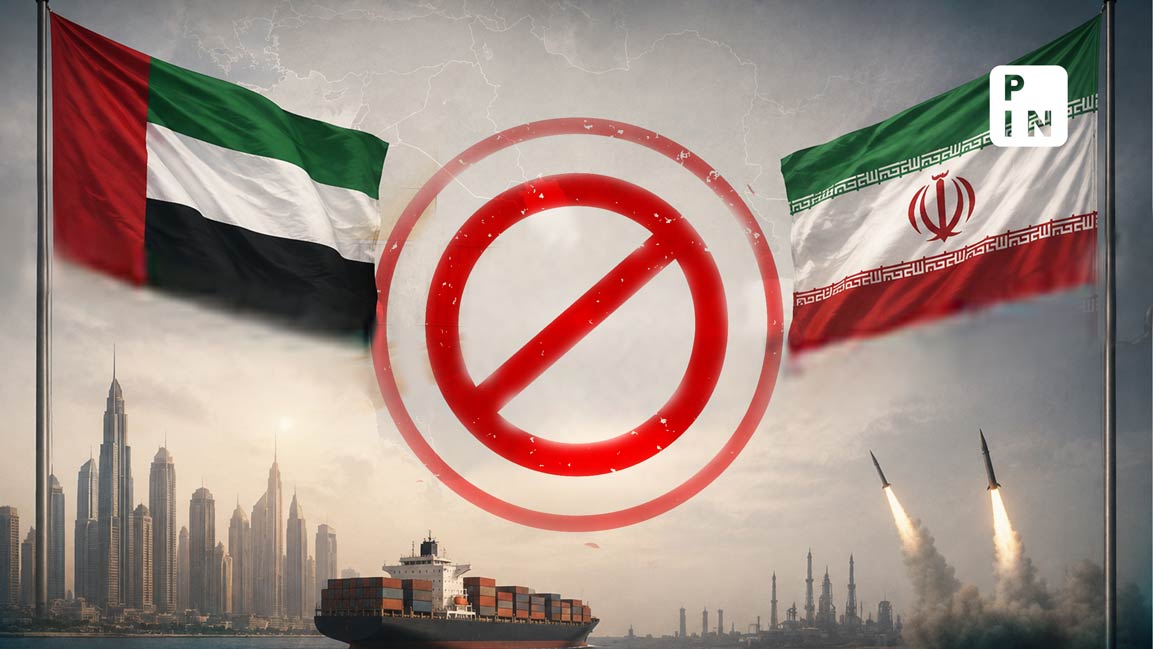


The United Arab Emirates (UAE) suspended all trade, commercial exchanges and financial transactions with Iran on Wednesday, 19 August, after accusing Tehran of launching two ballistic missiles that fell into the Gulf and appeared to target maritime traffic.
The decision formally shuts one of Iran’s most important regional trade relationships, although commerce between the two countries had already been badly disrupted by the war. Direct cargo shipments through Dubai’s Jebel Ali Port had resumed only in late June after being suspended in early March.
The UAE Foreign Ministry said transactions with Iran would remain halted “until further notice,” citing regional escalation that it said was undermining regional and international peace and security.
The announcement followed a missile alert on Tuesday. The UAE Defense Ministry said it had detected two ballistic missiles launched from Iran, the first such incident reported since a 4 May strike on Fujairah port.
Both missiles fell into the sea. The ministry later said its assessment was that they had been aimed at maritime traffic. No casualties or damage from the missiles were reported.
Iran denied firing them. Foreign ministry spokesperson Esmaeil Baghaei rejected the UAE’s account as “baseless” and said such accusations were damaging efforts to build trust and prevent further regional escalation. Iran also raised the possibility of false-flag operations, without presenting evidence that one had occurred.
The trade ban matters because of the unusual economic relationship the two countries maintained despite years of political tension and Western sanctions on Tehran.
Before the war, the UAE supplied more than 30% of Iran’s imports, worth about $21 billion, according to 2024 World Trade Organization figures. Nearly 13% of Iranian exports, worth about $7 billion, went to the UAE. Dubai in particular had long provided Iranian businesses with access to shipping, finance and international markets.
That trade was already a fraction of its normal level after fighting began. Most commerce between Iran and the UAE ground to a halt early in the conflict, according to AP. Some maritime trade resumed in late June as hostilities eased, but it was unclear how much business had returned before Wednesday’s suspension.
The missile dispute comes as shipping through the Strait of Hormuz remains severely disrupted.
Iran says the waterway will stay restricted until Washington meets conditions Tehran says were contained in an interim June agreement. Those include ending the blockade of Iranian ports, lifting oil sanctions, releasing frozen Iranian assets and ending military threats and operations.
US President Donald Trump said on Tuesday that no talks with Iran were taking place or scheduled and insisted the strait was open and operating.
Actual commercial traffic remains far below normal levels. Preliminary shipping data showed crossings through Hormuz were still in the single digits on Monday. Separate maritime data compiled by the Joint Maritime Information Center also showed only a handful of cargo ships and tankers making non-US-facilitated crossings on recent days.
The danger to ships has not disappeared either. UK Maritime Trade Operations reported that a commercial vessel transiting southbound through the strait was struck by an unknown projectile in its engine room. One crew member was killed, and the Omani Coast Guard assisted the vessel.
Oil prices have remained elevated as the dispute drags on. Brent crude settled on Tuesday at $91.02 a barrel, its highest close since 24 July, after Iran said the strait would remain closed and Trump ruled out extending the previous ceasefire arrangement.
There have been some attempts to work around the disruption. Saudi Aramco has resumed loading oil from inside the strait and is offering cargoes through ship-to-ship transfers off Fujairah. Two Chinese shipping companies have also begun collecting oil outside the Gulf, according to Reuters. But traffic through Hormuz itself remains thin.
The missile scare weighed on UAE stocks on Wednesday morning. Abu Dhabi’s benchmark index fell 0.9%, with First Abu Dhabi Bank down 1.4% and Aldar Properties losing 1.2%. Dubai’s index slipped 0.2%, while Emirates NBD fell 1.5%.
More Top Stories: