

- | 4:45 pm
UN warns rising seas could displace millions across Mumbai, Kolkata
More than 14 million people across Mumbai, Kolkata and Dhaka face displacement risks, although the UN report gives no timeline or city-level breakdown
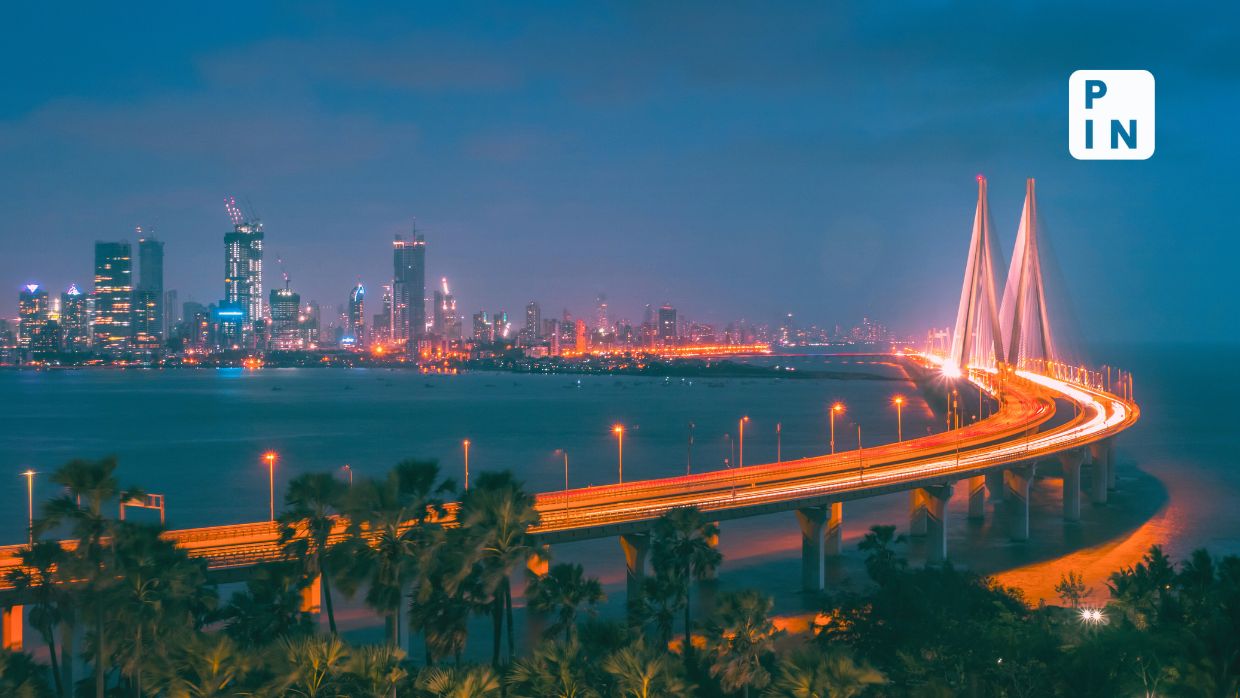


The United Nations has identified Mumbai and Kolkata among the South Asian cities facing large-scale displacement from rising seas, warning that homes, infrastructure and essential services are increasingly exposed to permanent inundation.
A report by UN Secretary-General António Guterres says more than 14 million people across low-lying parts of Mumbai, Kolkata and Dhaka are at “immediate risk” of losing their homes as sea levels rise.
The estimate applies to the three South Asian cities together. The report does not say how many people are at risk in Mumbai or Kolkata individually, nor does it give a date by which the displacement is expected to occur.
The report’s use of “immediate risk” describes an existing and growing exposure rather than a forecast that large parts of the two Indian cities will be permanently submerged in the next few months or years.
The document, titled Challenges Related to Sea Level Rise and Ways and Approaches to Address It, is dated 22 May but was publicly launched on Monday, 31 August. It describes rising seas as a current development and infrastructure emergency rather than a distant environmental problem.
“Rising seas are no longer a distant threat,” the report said.
Global sea level rose by an average of 4.7 millimeters a year between 2014 and 2023 before increasing by a record 5.9 millimeters in 2024, according to the report. The global mean in 2025 remained close to the record level reached the previous year.
The acceleration is being driven by the melting of glaciers and ice sheets and by the expansion of seawater as oceans absorb heat from human-induced global warming.
What the 14 million figure means
The UN report does not provide a source, methodology or timeframe alongside its estimate that more than 14 million people face permanent inundation in Mumbai, Kolkata and Dhaka.
An earlier report published by the C40 Cities climate network said the three cities had among the world’s largest populations exposed to coastal inundation. That analysis looked toward 2050 and estimated that 800 million people in 570 cities globally would be vulnerable to sea-level rise and coastal flooding.
The similarity in the figures and wording suggests the UN assessment may draw on that earlier work, although the latest report does not make the connection explicit.
At a UN briefing on Monday, assistant secretary-general Navid Hanif reiterated that Mumbai, Kolkata and Dhaka were among the coastal cities at risk.
“Please treat sea level rise as a systemic threat,” Hanif said, pointing to its effects on health, food security, infrastructure, human rights and cultural identity.
Why the two cities are vulnerable
Mumbai is particularly exposed because of its coastal location, dense development, extensive reclaimed land and the interaction between high tides and intense monsoon rainfall. Higher sea levels make it harder for stormwater to drain into the sea and can amplify flooding even before any area is permanently inundated.
A 2025 study led by researchers at Princeton University and the University of Chicago found that even a five-centimeter increase in sea level could raise the share of Mumbai’s monsoon deaths attributable to rainfall from 8.5% to 9.1%.
A 15-centimeter increase could push the share to 10%, the researchers estimated. Residents of informal settlements, children and women were found to face disproportionately high risks because of differences in drainage, sanitation, housing and access to healthcare.
Mumbai adopted a climate action plan in 2022 covering urban flooding, water management, land use, transport, buildings, waste and air quality. The plan provides a roadmap toward net-zero emissions by 2050 while seeking to strengthen the city’s resilience to floods, extreme heat, cyclones and landslides.
Kolkata faces a different combination of risks. Its location in the Ganges-Brahmaputra delta, proximity to the Bay of Bengal, low elevation and aging drainage systems make it vulnerable to heavy rainfall, river flooding, cyclones and storm surges. Land subsidence can further increase the relative rise in sea level experienced locally.
The Kolkata Climate Action Plan identifies the city as one of the 20 large coastal cities projected to face the highest flood losses by 2050. It says subsidence and storm surges could add to the damage unless drainage, disaster preparedness and urban resilience are improved.
A separate 2025 study published in Scientific Reports assessed eight Indian coastal cities and found Mumbai and Kolkata faced the highest modeled flood risks, particularly under high-emissions scenarios.
How far seas could rise
The UN report cites projections showing global mean sea level could rise by about 0.23 meters by 2050 even under a very low-emissions scenario.
By 2100, the likely increase is projected at between 0.28 and 0.55 meters under very low emissions and between 0.63 and 1.01 meters under very high emissions, compared with the 1995 to 2014 average.
A low-probability but high-impact scenario could produce a rise approaching two meters by the end of the century because of uncertainty over the stability of major ice sheets.
Almost 770 million people, or roughly one in 10 people worldwide, already live in coastal areas less than five meters above the high-tide line, according to the report.
The effects will extend beyond the gradual loss of land. Higher sea levels can worsen storm surges, contaminate freshwater with salt, damage drainage and sanitation networks, erode coastlines and increase the frequency of flooding that previously occurred only during unusually severe weather.
The UN has urged governments to incorporate sea-level risk into land-use rules, infrastructure design, public investment, disaster planning and fiscal assessments. Its recommendations include better local data, universal early-warning coverage by 2027, flood-resilient infrastructure and greater protection for communities that may eventually need to move.
Financing remains a major constraint. Developing countries require an estimated $310 billion to $365 billion annually for climate adaptation, while international adaptation finance amounted to only about $26 billion in 2023, the report said.
Featured Videos
Preserving the dying memories of Partition
More Top Stories: