
- | 4:00 pm
Xi’s likely India visit for BRICS summit to test fragile border thaw
The expected September visit would symbolize a diplomatic recovery, but recent border tensions and a record Indian trade deficit show how limited that recovery remains
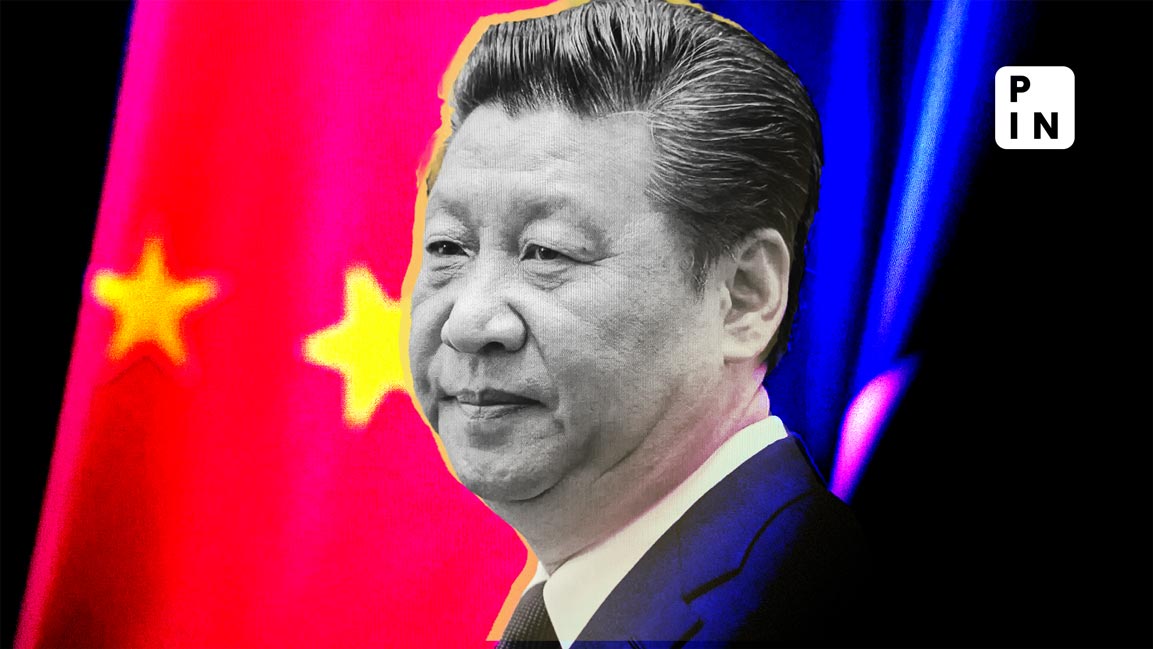


Chinese President Xi Jinping is likely to attend the BRICS summit in New Delhi in September, a visit that would bring him back to India for the first time in nearly seven years and provide the clearest test yet of the two countries’ cautious diplomatic thaw.
Xi is expected to attend the 12 and 13 September summit with a delegation of about 400 officials, Reuters reported, citing three people familiar with the preparations.
One person said Chinese officials were finalizing hotel and security arrangements. Two others put the expected delegation at about 400 people, compared with fewer than 200 during Xi’s previous visit in 2019.
Neither government has confirmed the trip. China’s foreign ministry said Beijing supported India’s hosting of the summit but had no information to provide about Xi’s attendance. India’s foreign ministry did not comment.
Xi’s final travel plans and the agenda for any bilateral meeting with Prime Minister Narendra Modi also remain unsettled, according to Reuters.
A return nearly seven years in the making
Xi last visited India on 11 and 12 October 2019 when he and Modi held their second informal summit at Mamallapuram, near Chennai.
Relations deteriorated sharply the following year after fighting in the Galwan Valley killed 20 Indian soldiers. China later acknowledged the deaths of four of its troops.
Modi returned to China for the Shanghai Cooperation Organization summit in Tianjin in August and September 2025, his first visit to the country since 2018.
During their meeting, Modi and Xi said India and China should regard each other as development partners rather than rivals and prevent their differences from becoming disputes.
Modi said relations should not be viewed “through a third country lens.”
Xi thanked him for an invitation to the 2026 BRICS summit and offered China’s support for India’s presidency, according to the Indian government’s account.
Those statements reflected an effort to stabilize relations.
India and China reached an agreement on 21 October 2024, covering patrolling arrangements in Depsang and Demchok in eastern Ladakh. The agreement enabled disengagement at the last two friction points associated with the military standoff that began in 2020. Verification patrols subsequently resumed under the agreed arrangements, according to India’s foreign ministry.
It did not resolve the larger boundary dispute or eliminate competing territorial claims.
India says its border with China extends for 3,488 kilometers through Ladakh, Himachal Pradesh, Uttarakhand, Sikkim and Arunachal Pradesh. Beijing does not accept that measurement or India’s description of the boundary.
Both countries have retained extensive military infrastructure and substantial deployments near the Line of Actual Control, although the emergency buildup associated with the 2020 confrontation has eased.
The fragility of the situation was underlined by reports that Indian and Chinese patrols came face to face near Taksing in Arunachal Pradesh in late July.
An Indian defense spokesperson described the reports as unsubstantiated and uncorroborated, while China said the border situation remained generally stable. India nevertheless reiterated that conditions at the border would affect the wider relationship, Reuters reported.
National Security Adviser Ajit Doval was in Beijing for the 25th round of talks with Chinese foreign minister Wang Yi on the boundary question, scheduled for 25 August, according to the Indian foreign ministry.
Diplomatic links have returned faster than trust
The two governments have restored several connections suspended during the pandemic and border confrontation.
Direct passenger flights resumed in late 2025 after a five-year interruption. India again began issuing tourist visas to Chinese citizens, and the Kailash Manasarovar pilgrimage restarted in 2025.
Indian external affairs minister S. Jaishankar said in July that relations were gradually normalizing through the restoration of flights, changes to visa arrangements and renewed official contacts.
Strategic tensions remain. They include the unresolved border, China’s close military and economic relationship with Pakistan, India’s growing security cooperation with the US and its partners, and New Delhi’s restrictions on Chinese investment and technology companies.
A visit by Xi would therefore be politically important but would not, by itself, demonstrate that either side had changed its position on the most difficult issues.
Trade dependence continues to deepen
Economic ties have expanded even as political trust has weakened. India-China goods trade reached $151.10 billion in the fiscal year ended March 2026, according to Indian government figures. India exported $19.47 billion in goods to China and imported $131.63 billion, producing a record trade deficit of $112.16 billion.
Chinese machinery, electronics, computers, integrated circuits, telecommunications equipment, batteries and industrial inputs remain important to Indian manufacturing. India’s principal exports include ores, petroleum products, chemicals, seafood and agricultural commodities.
New Delhi has sought better access to the Chinese market while attempting to reduce dependence in strategically sensitive supply chains. The latest figures show that this diversification effort has not yet substantially reduced the overall imbalance.
Meanwhile, India is hosting the 18th BRICS summit under its chairship theme, “Building for Resilience, Innovation, Cooperation and Sustainability.”
BRICS now has 11 full members and 10 partner countries, giving the New Delhi summit greater logistical and diplomatic weight than meetings of the original five-member group.
Xi’s participation, alongside the expected attendance of Russian President Vladimir Putin, would allow Modi to hold separate talks with the leaders of India’s two largest continental neighbors while presenting New Delhi as an independent center of power within an increasingly divided international system.
More Top Stories: