
- | 5:30 pm
India approves 31 electronics projects worth $824 million
The proposals involve Rs7,877 crore ($824 million) of investment as India seeks to move beyond device assembly and build a deeper domestic supply chain
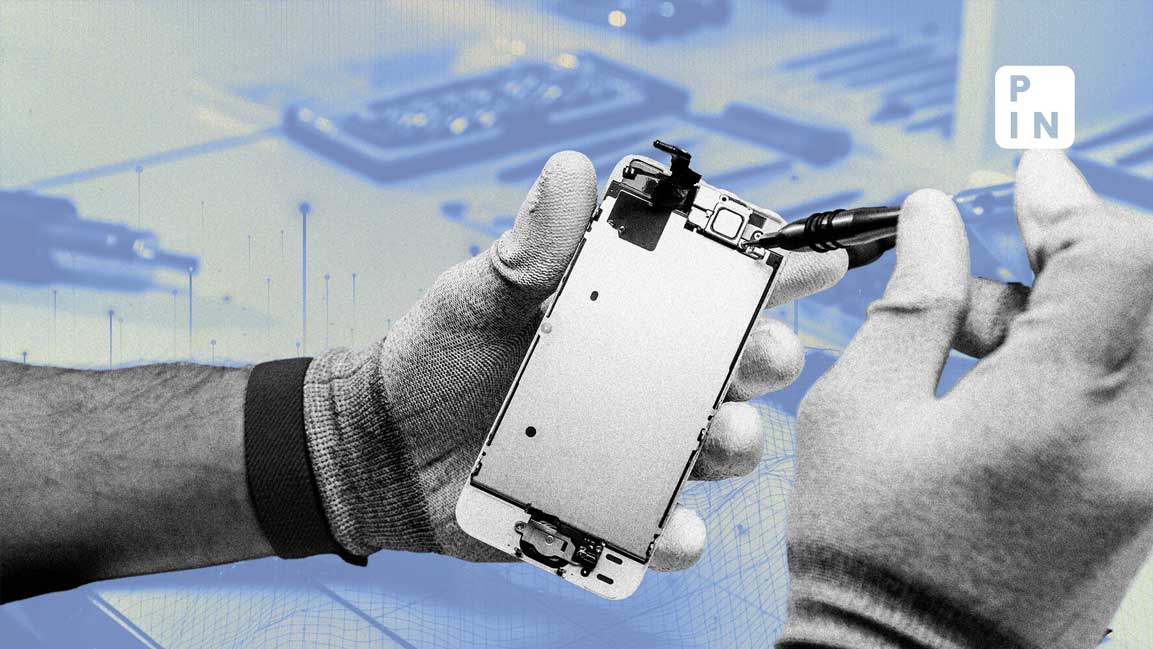


India has approved 31 electronics component manufacturing proposals involving Rs7,877 crore, about $824 million, on Monday, 17 August, electronics and information technology secretary S. Krishnan said.
The approvals are the latest under the Electronics Component Manufacturing Scheme, or ECMS, which offers incentives for making parts, materials and production equipment used across the electronics industry.
The government had not published the names of the 31 beneficiaries, their proposed locations, production estimates or employment commitments at the time of publication. Those details will be needed to assess how much new capacity the latest round is expected to create and which parts of the supply chain it covers.
Added to the ministry of electronics and information technology’s (MeitY’s) previously disclosed total, Monday’s approvals would bring the number of cleared applications to 106 and proposed investment to Rs69,548 crore ($7.27 billion).
The earlier 75 projects through March involved Rs61,671 crore ($6.45 billion) of investment and projected production of Rs4.51 trillion ($47.17 billion). They were expected to create 65,040 direct jobs.
Approved investment has therefore moved beyond the scheme’s original target of Rs59,350 crore ($6.21 billion). Companies must meet investment, production, sales and employment conditions before receiving the full incentives.
The Union Cabinet approved ECMS on 28 March 2025, and MeitY notified it on 8 April with an initial outlay of Rs22,919 crore, or $2.40 billion.
The original plan sought to attract Rs59,350 crore, or about $6.21 billion of investment, generate production worth Rs4.56 trillion ($47.70 billion) and create 91,600 direct jobs over its tenure.
Industry demand quickly exceeded those expectations. By the end of the main application window in September 2025, companies had submitted proposals involving about Rs1.15 trillion ($12.07 billion), nearly twice the initial investment target.
Finance minister Nirmala Sitharaman responded in the Union Budget on 1 February by increasing the scheme’s outlay to Rs40,000 crore, or $4.18 billion. The budget announcement placed the expansion alongside India Semiconductor Mission 2.0, rare-earth corridors and other measures intended to strengthen manufacturing in strategic industries.
How the approvals built up
The government announced its first seven ECMS projects in October 2025 involving an investment of Rs5,532 crore ($579 million). Another 17 projects, involving Rs7,172 crore, or about $750 million, followed in November. The two rounds covered products such as multilayer printed circuit boards, camera modules, polypropylene film, optical transceivers and electronic components used in consumer and industrial equipment.
The largest round came in January, when the government approved 22 proposals involving Rs41,863 crore ($4.38 billion). Samsung, Tata Electronics, Foxconn and Dixon-linked companies were among the beneficiaries.
Those projects covered mobile-phone enclosures, camera modules, circuit boards and other components. They were expected to generate production of about Rs2.58 trillion ($26.99 billion) and create almost 34,000 jobs.
A fourth round was approved on 30 March comprising 29 projects with a planned investment of Rs7,104 crore ($743 million), projected production of Rs84,515 crore ($8.84 billion) and 14,246 jobs.
Those approvals extended the scheme into parts of the supply chain that India has rarely produced at scale. Dixon Display Technologies was cleared to manufacture display modules, while Lohum Cleantech received approval for the country’s first project to make rare-earth permanent magnets from rare-earth oxide.
Other projects covered surface-mount passive components, flexible circuit boards, connectors, relays, antennas, heat sinks, copper-clad laminates and metallized film used in capacitors. Six companies also received approvals for electronics manufacturing equipment.
The official list included Foxconn subsidiaries, TDK India, Syrma, Molex, Amphenol, Indo-MIM, ASM Technologies, NeST, VVDN and several domestic component manufacturers.
The full list for Monday’s round will show whether that shift toward materials, machinery and upstream components has continued.
How ECMS incentives work
ECMS is designed to address a gap left by India’s earlier electronics policies. Production-linked incentives helped the country attract large smartphone and device-assembly plants, but many of the higher-value components used by those factories continued to come from overseas.
The new scheme supports five broad areas: subassemblies, basic components, selected advanced components, supply-chain materials and manufacturing equipment, and telecom subassemblies.
Eligible products include display and camera modules, multilayer and flexible circuit boards, surface-mount and non-surface-mount passive components, connectors, lithium-ion cells for digital devices, mobile and computer enclosures, optical transceivers and the equipment needed to manufacture them.
The government uses three types of support: incentives based on incremental sales, reimbursement of part of the capital expenditure, or a combination of the two.
Sales-linked rates vary by product and decline over six years. They begin at between 4% and 10% for most categories. Projects involving advanced circuit boards and surface-mount passive components can also receive a capital subsidy of 25%.
Projects making supply-chain materials or production equipment are eligible for a 25% capital subsidy. The sales-linked incentives run for six years, with an optional one-year gestation period, while capital-expenditure support is available over five years.
Minimum investment requirements also vary. Display and camera module projects generally require at least Rs250 crore ($26 million). The threshold is Rs50 crore ($5.2 million) for several basic component categories and Rs500 crore ($52 million) for lithium-ion cells and electronic-device enclosures.
Advanced circuit-board projects can require Rs1,000 crore ($105 million), while the threshold for eligible supply-chain and capital-equipment projects is Rs10 crore ($1 million).
These thresholds are meant to draw both large global manufacturers and smaller specialized suppliers. New factories and expansions of existing plants can qualify, but applicants must meet their approved investment and production commitments.
The main application window for subassemblies and components closed on 30 September 2025. Applications for supply-chain products and manufacturing equipment can continue until 30 April 2027.
From assembly to design and materials
The government is also pressing beneficiaries to bring more engineering work into India. IT minister Ashwini Vaishnaw warned companies in March that incentive payments could be stopped if they failed to develop product-design capabilities, improve quality standards, train workers and build domestic supplier networks.
The warning reflected concern that subsidies should not produce factories limited to labor-intensive assembly while product development, tooling and critical materials remain overseas.
India’s progress in finished electronics has been much faster than its progress in components. Electronics production rose from Rs1.90 trillion ($19.87 billion) in the fiscal 2015 to an estimated Rs13.11 trillion ($137.13 billion) in fiscal 2026, according to government figures.
Exports increased from Rs38,263 crore ($4.00 billion) to R4.24 trillion ($44.35 billion) over the same period. India is now the world’s second largest mobile-phone manufacturer, and almost all phones sold domestically are assembled in the country.
Much of the value inside those products, however, depends on imported circuit boards, displays, camera systems, passive components, specialized materials and factory equipment. That leaves manufacturers vulnerable to shipping disruptions, export controls and shortages overseas.
ECMS is meant to bring more of that value chain into India. It also supports the government’s goal of raising annual electronics production to about Rs47.80 trillion ($500 billion) by fiscal 2031.
More Top Stories: