
- | 5:30 pm
India-UK trade deal cuts tariffs, but hurdles remain
The agreement cuts tariffs, opens services and procurement markets, and exempts eligible temporary workers from double social-security contributions
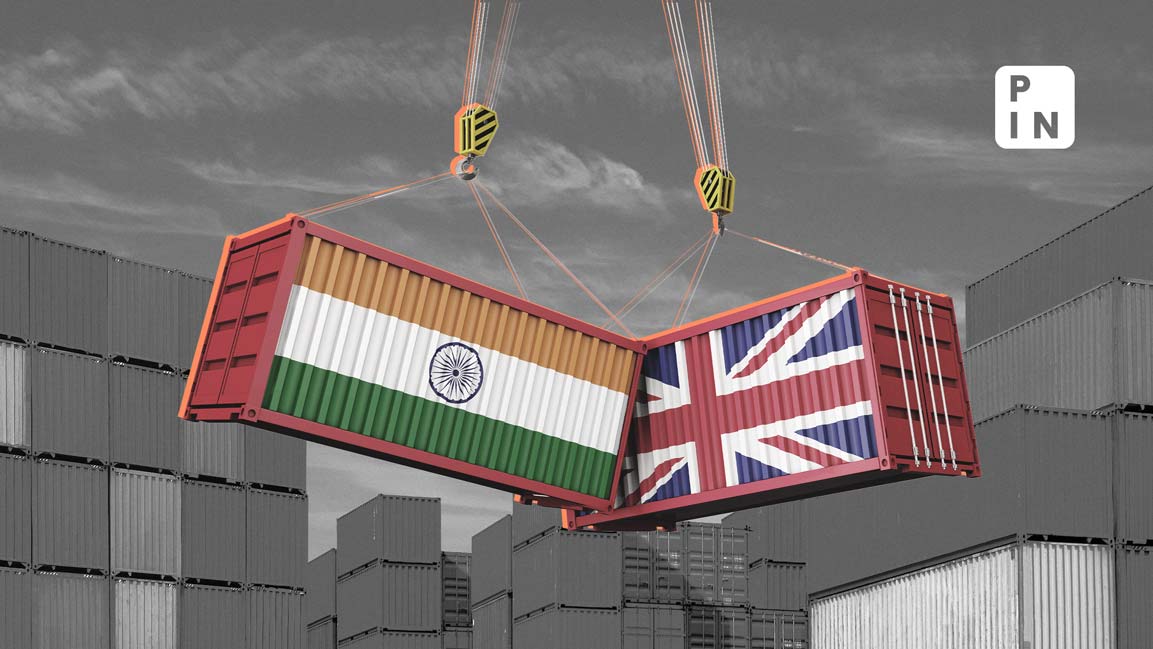


The India-UK trade agreement took effect on Wednesday, 15 July, cutting tariffs on thousands of products and widening market access for services companies and professionals in both countries.
The Comprehensive Economic and Trade Agreement (CETA) gives Indian exporters immediate duty-free access to 96.8% of British tariff lines, covering 97.7% of the value of India’s exports to the UK, according to India’s commerce ministry.
Labor-intensive sectors including textiles, leather, footwear, marine products, processed food, gems and jewelry are expected to be among the main beneficiaries.
Commerce and industry minister Piyush Goyal said the agreement would open new avenues for trade, investment and innovation and create opportunities for Indian businesses. He has described it as India’s most comprehensive trade agreement and a possible template for future deals.
India will immediately remove tariffs on 64.1% of its tariff lines and phase out duties on another 21%, while retaining protection for sensitive products.
British exporters will gain lower tariffs and wider access in areas including automobiles and alcoholic beverages. A quota will allow 37,000 fully built British passenger vehicles a year to enter India at preferential tariff rates.
The agreement also expands access across 137 services sub-sectors, including information technology, telecommunications, finance, education and business services.
It eases temporary entry for business visitors, investors, employees transferred within companies, contractual service suppliers and independent professionals.
A linked social-security agreement will exempt eligible Indian employees and their employers from paying into the UK’s National Insurance system for assignments of up to five years. The provision is expected to benefit about 75,000 workers and 900 employers.
Indian suppliers will also be able to compete for contracts in the UK’s government procurement market, estimated at about £90 billion. India will offer reciprocal access to procurement opportunities worth about $114 billion.
India exported $13.44 billion of goods to the UK and imported $11.68 billion in the year ended March 2026, commerce ministry data showed. Bilateral services trade stood at $35.44 billion in 2024, with India recording a surplus of nearly $7.9 billion.
Prime Minister Narendra Modi called the implementation of the trade and social-security agreements a significant moment that would deepen economic ties and create opportunities for businesses, workers and farmers.
Delhi-based think tank Global Trade Research Initiative (GTRI) cautioned that tariff reductions alone would not guarantee a sustained increase in Indian exports.
GTRI founder Ajay Srivastava said free-trade agreements can improve market access but cannot by themselves address high logistics and input costs, regulatory burdens, weak infrastructure and limited research spending.
India will need better product standards, certification systems, logistics and buyer networks to convert the agreement’s tariff benefits into higher exports, according to the trade research group.
The agreement was signed in July 2025 after more than three years of negotiations.
Its implementation gives Indian exporters better tariff terms in the UK but leaves the commercial outcome dependent on whether companies can meet British standards, build distribution networks and compete on cost.
More Top Stories: