
- | 5:30 pm
Modi, Prabowo seal missile deals as India deepens Indonesia defense ties
The agreements cover BrahMos cruise missiles and Astra air-to-air missile cooperation, giving New Delhi a stronger defense export foothold in Southeast Asia
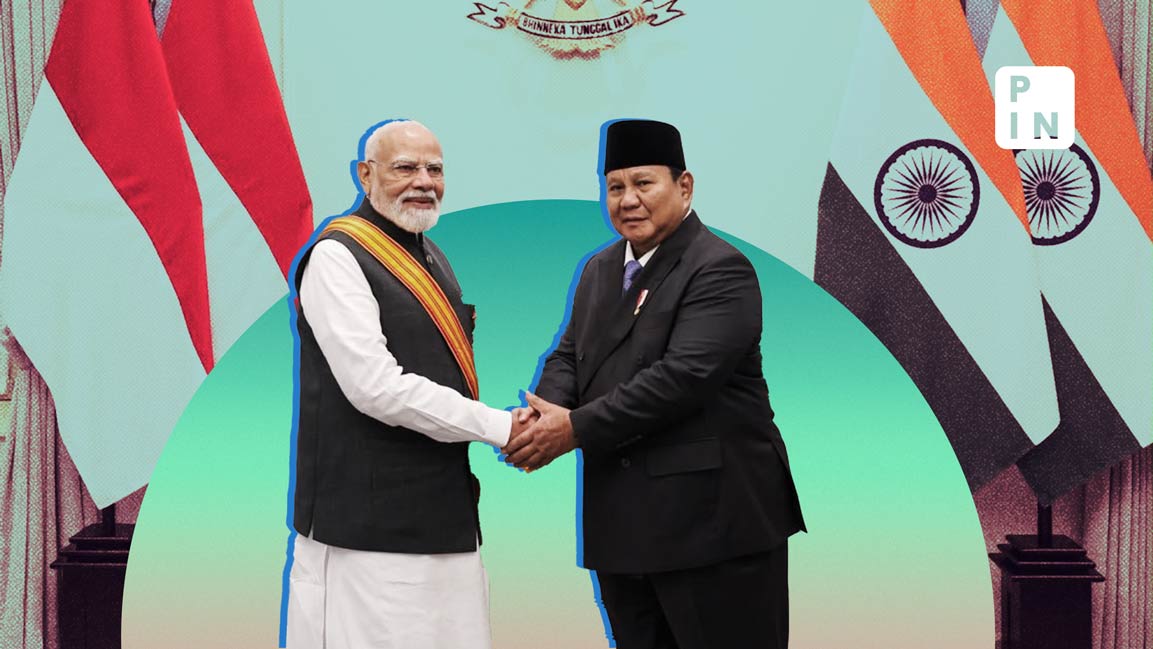


India and Indonesia have signed a major defense agreement for the BrahMos supersonic cruise missile system, while also moving ahead on cooperation involving India’s Astra air-to-air missile, marking one of New Delhi’s most significant defense export advances in Southeast Asia.
The agreements were announced during Prime Minister Narendra Modi’s visit to Jakarta, where he held talks with Indonesian President Prabowo Subianto on Tuesday. The two sides also agreed to expand cooperation in maritime security, critical minerals, steel, agriculture, health, education, digital infrastructure and technology.
The BrahMos agreement was signed between BrahMos Aerospace and Indonesia’s Ministry of Defense, according to an announcement from Jakarta. Details of the contract were not disclosed.
The broader missile package was worth about $630 million and would include BrahMos cruise missiles and Astra beyond-visual-range air-to-air missiles, Reuters reported, citing people aware of the developments.
The deal gives India a larger strategic opening in Southeast Asia and adds Indonesia to a growing list of countries turning to Indian defense systems. It also strengthens Jakarta’s maritime strike capabilities at a time when regional powers are investing heavily in long-range precision weapons, coastal defense and air combat systems.
Indonesia is the third country to sign an agreement for BrahMos after the Philippines and Vietnam. The missile, jointly developed by India and Russia, can be launched from land, sea and air platforms and is among the world’s fastest cruise missiles.
The Astra component is also important for India’s defense industry. Reuters reported that Astra missiles can be integrated with the Russian-made Sukhoi fighter jets used by the Indonesian Air Force. Separately, Indonesia’s defense holding company Republikorp and India’s Bharat Dynamics Ltd signed an agreement on air-to-air missiles.
For India, the agreements fit into a wider push to turn defense exports into a strategic tool. New Delhi has spent years trying to move beyond being one of the world’s largest arms importers to becoming a supplier of missiles, artillery, radars, aircraft components and naval systems.
A successful Indonesia deal would strengthen the credibility of that export push in a region where countries are diversifying suppliers and trying to avoid excessive dependence on any one major power.
The strategic geography matters as much as the hardware. Indonesia sits across key maritime routes between the Indian and Pacific oceans, including approaches to the Strait of Malacca.
India’s Andaman and Nicobar Islands face this wider maritime space, making Indonesia central to New Delhi’s Indo-Pacific calculations.
Modi said the two countries would work to promote maritime safety and security in the Indian Ocean. Prabowo said India and Indonesia were two of the world’s largest democracies and that their partnership would benefit the wider region.
Neither leader referred directly to the BrahMos deal in their public remarks, reflecting the usual caution around sensitive defense contracts. But the agreements signed alongside the visit made clear that defense and maritime cooperation are now central to the India-Indonesia relationship.
Reciprocal visit
The talks come after Prabowo visited India as the Republic Day chief guest last year, when the two countries signed a wide range of agreements and pushed defense cooperation higher on the bilateral agenda. Modi’s Jakarta visit builds on that momentum and comes as India seeks a stronger role in the eastern Indian Ocean and the wider Indo-Pacific.
The two countries also signed memorandums of understanding to strengthen supply chains in critical minerals and steel, along with cooperation in agriculture. Steel Authority of India Ltd and Indonesia’s Krakatau Steel will establish a joint venture for stainless steel slab production in Indonesia.
Critical minerals are emerging as another strategic layer in the relationship. Indonesia is one of the world’s most important nickel producers and has been trying to move up the value chain in battery materials and metals processing. India, meanwhile, is seeking more secure access to minerals needed for electric vehicles, clean energy, electronics and defense manufacturing.
Economic ties are already substantial. Bilateral trade with Indonesia reached $28.15 billion in 2024–25, making the country India’s second-largest trading partner in ASEAN, Reuters reported. The two leaders also agreed to accelerate talks on a preferential trade agreement.
Both sides also finalized cooperation in maritime safety, disaster management, health workforce collaboration, medical products regulation, telecommunications, technology, election management, research and innovation, and the conservation and restoration of the Prambanan Temple complex in Indonesia.
IIM Bangalore to open campus in East Java
Modi said India and Indonesia were taking important steps in development, security, technology, culture and education, adding that a “golden chapter” in the partnership was beginning. He also said India would help establish an overseas campus of the Indian Institute of Management Bangalore in Indonesia’s Singhasari Special Economic Zone in East Java.
The visit also carried a strong political and symbolic element. Modi received a ceremonial welcome at the Merdeka Palace, and his aircraft was escorted into Indonesian airspace by Indonesian Air Force fighter jets. Prabowo also conferred Indonesia’s Bintang Adipurna medal of honor on Modi, underlining the political importance Jakarta is attaching to the relationship.
For Indonesia, the agreements support Prabowo’s effort to modernize the country’s armed forces and diversify defense partnerships. Jakarta has already been expanding its procurement relationships with France, South Korea, Turkey and others. Adding Indian missiles gives Indonesia another supplier and strengthens its ability to build a more layered defense posture across its islands and maritime approaches.
For India, the BrahMos deal carries a different message. The Philippines deal first showed that India could sell a major missile system into Southeast Asia. The Indonesia agreement, if implemented fully, would show that such exports are no longer isolated successes but part of a broader defense diplomacy strategy.
A boost for India’s Act East policy
The Astra agreement could be even more significant over time because it points to India’s ability to export not only marquee systems such as BrahMos but also a wider portfolio of indigenous air combat weapons. Bharat Dynamics Ltd, the Indian state-owned missile manufacturer, is likely to play a central role if the air-to-air missile cooperation progresses into full-scale supply and integration.
The deals also come against the backdrop of intensifying competition in the Indo-Pacific. India has avoided framing its Southeast Asia outreach solely through the China lens, but the logic is clear. Stronger defense ties with Indonesia help New Delhi deepen its Act East policy, reinforce maritime partnerships and build strategic weight across sea lanes that are crucial for trade, energy and regional security.
Still, several details remain to be watched. The final structure, delivery timelines, financing terms and exact configuration of the BrahMos package have not been officially disclosed. The Astra arrangement will also depend on integration requirements, training, certification and long-term support for Indonesia’s fighter fleet.
Even with those caveats, Tuesday’s announcements mark a clear step up in India-Indonesia ties. What began as a long-running conversation over BrahMos has moved into a wider defense and industrial partnership, backed by cooperation in minerals, steel, digital infrastructure and maritime security.
More Top Stories: