- | 7:00 pm
SC questions voter roll changes, seeks records on revisions to Form 6
India’s top court says it never approved changes to the voter registration form and will examine who authorized them
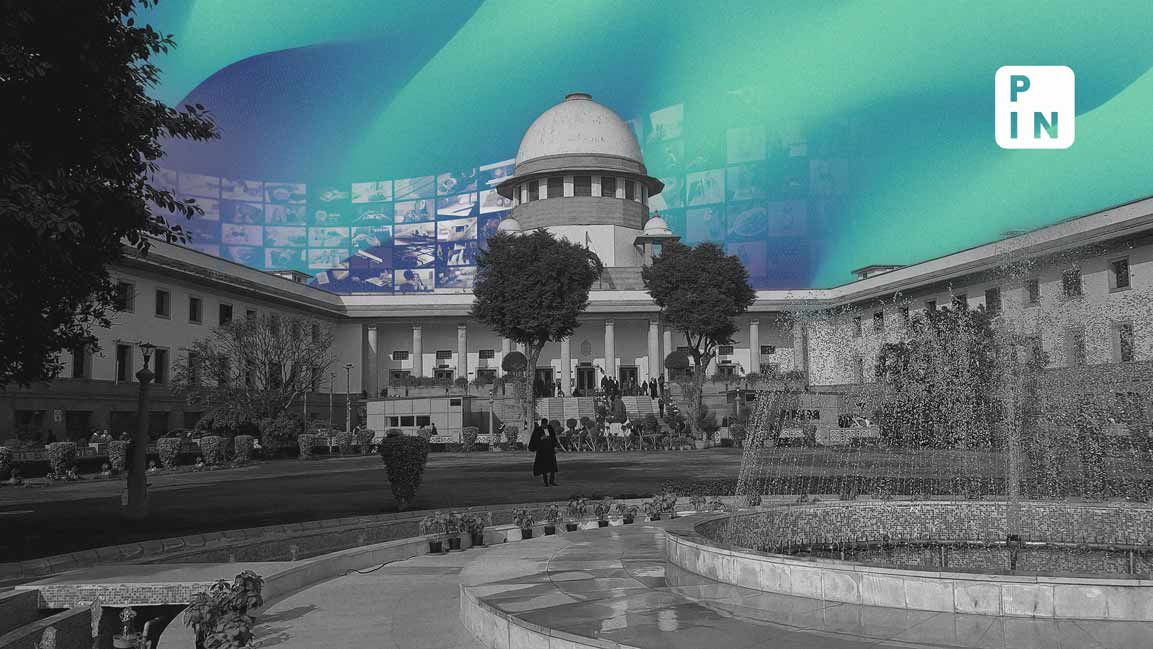


India’s Supreme Court on Monday, 5 October, questioned voter roll changes introduced during the Election Commission’s nationwide revision exercise, saying it had never approved a modified version of Form 6 and would examine who authorized the changes.
“Any modified Form 6 has not been approved by us. Let’s be clear,” Chief Justice of India Surya Kant said during a hearing in New Delhi. “When the record is produced, we would like to see who has modified.”
Form 6 is the statutory application used by eligible citizens seeking inclusion in an electoral roll.
The dispute concerns an additional declaration introduced during the Election Commission’s Special Intensive Revision, or SIR, which asked applicants for information linking themselves, a parent or a grandparent to an electoral roll from an earlier intensive revision.
The court’s comments are significant because the Election Commission said after a meeting on 26 September that the declaration attached to Form 6 for the SIR had been upheld by the Supreme Court.
The commission has maintained that it did not alter the statutory Form 6 itself and that the declaration was a separate requirement used during the SIR.
The Supreme Court has now made clear that its earlier judgment upholding the SIR did not amount to approval of subsequent changes to Form 6.
The court issued notices to the Election Commission, the central government and other respondents on petitions challenging decisions taken during the revision and seeking action against Chief Election Commissioner Gyanesh Kumar.
It declined to immediately suspend Kumar.
The bench, comprising Kant and Justices Joymalya Bagchi and V. Mohana, said it would examine the commission’s records before deciding whether disputed measures had received the approval required within the three-member Election Commission.
The court indicated that decisions could be struck down if the records showed they were taken without the necessary concurrence.
Supreme Court upheld SIR in May
The latest dispute is separate from the larger legal challenge to the Election Commission’s power to conduct an intensive revision.
The Supreme Court ruled on 27 May that the commission had the authority to conduct the SIR in Bihar under Article 324 of the Constitution and Section 21(3) of the Representation of the People Act, 1950.
The revision began in Bihar in June 2025 before being extended elsewhere.
The commission argued that an intensive revision was required after years of migration, deaths, duplicate entries and other demographic changes had affected the accuracy of electoral rolls. Bihar’s previous intensive revision had been held in 2003.
The Supreme Court accepted that rationale. It also upheld the commission’s authority to seek documents from voters and conduct a limited examination of citizenship when deciding eligibility for inclusion in electoral rolls.
But the additional Form 6 declaration at the center of Monday’s hearing was introduced later and was not before the court when it delivered its May judgment.
Two commissioners had objected
Questions over Form 6 widened after The Indian Express reported in September that Election Commissioners Sukhbir Singh Sandhu and Vivek Joshi had objected to changes introduced on the commission’s ECINet portal.
Applicants were asked whether they appeared in an electoral roll used in an earlier SIR, whether a parent or grandparent appeared in that roll, or whether neither did.
While the section was not described as mandatory, applicants could not complete the online application without responding to it, the newspaper reported.
Sandhu and Joshi described the change in internal communications as “illegal” and “unauthorized” and argued that any change to the statutory form required the proper legal process, according to the report.
A broader Indian Express investigation found that the two commissioners had recorded objections at least 14 times over 10 months to decisions involving voter enrolment, deletion and the commission’s digital systems.
The Election Commission has rejected suggestions that its institutional decision-making was compromised.
It said differences of opinion were normal in a multi-member body and maintained that final decisions on the SIR were taken unanimously.
On 26 September, the commission also announced a review of its voter-roll software. A committee comprising a senior election official and an independent technology expert was asked to examine whether the system complied with election laws and rules, Reuters reported.
The commission also changed procedures for voters whose records were flagged for discrepancies, allowing local officials to contact them rather than requiring them in every case to appear at government offices.
Days later, the Election Commission removed the additional SIR declaration from the online Form 6 in states and Union Territories where the revision had been completed. It remains available as a separate declaration where SIR is continuing.
BJP defends Election Commission
The Bharatiya Janata Party (BJP) has backed the revision exercise and rejected opposition claims that it is being used to disenfranchise voters.
After Monday’s Supreme Court hearing, BJP spokesperson Sambit Patra said the notices issued by the court demonstrated that institutions remained independent.
“The country is moving in a very democratic way,” Patra said, adding that established procedures were being followed.
The party has also defended the Election Commission’s handling of Form 6, arguing that the statutory form itself was not changed and that an additional declaration was attached specifically for the SIR.
The BJP has disputed opposition claims about the scale of voter deletion, saying names identified during the revision include people who have died, shifted residence or appeared more than once on the rolls and that eligible voters have access to claims and appeals.
The Election Commission has similarly maintained that removal from a draft roll does not necessarily amount to permanent disenfranchisement and that voters can seek restoration where they remain eligible.
Rahul Gandhi targets election chief
Opposition parties have treated Monday’s hearing as further evidence for their campaign against Kumar and the SIR. Congress leader Rahul Gandhi said after the hearing that it was “established beyond doubt” that Kumar had changed Form 6 “illegally and unilaterally”.
“This is just one more proof of him abusing his position to help the BJP,” Gandhi said.
Congress general secretary Jairam Ramesh also accused Kumar of misleading the public over the Form 6 changes after the Election Commission’s 26 September statement said the declaration had been upheld by the Supreme Court.
Congress president Mallikarjun Kharge has separately called for Kumar to leave office and accused the Election Commission of acting to benefit the ruling party.
The Election Commission and BJP have rejected allegations of partisan manipulation.
Opposition parties have also demanded greater disclosure of names added to and removed from electoral rolls and safeguards for voters facing deletion during the SIR.
Thousands joined protests in Delhi and Mumbai over the past several days demanding Kumar’s resignation and opposing the SIR, with demonstrators accusing the Election Commission of removing eligible voters from the rolls. The commission and BJP have rejected those allegations.
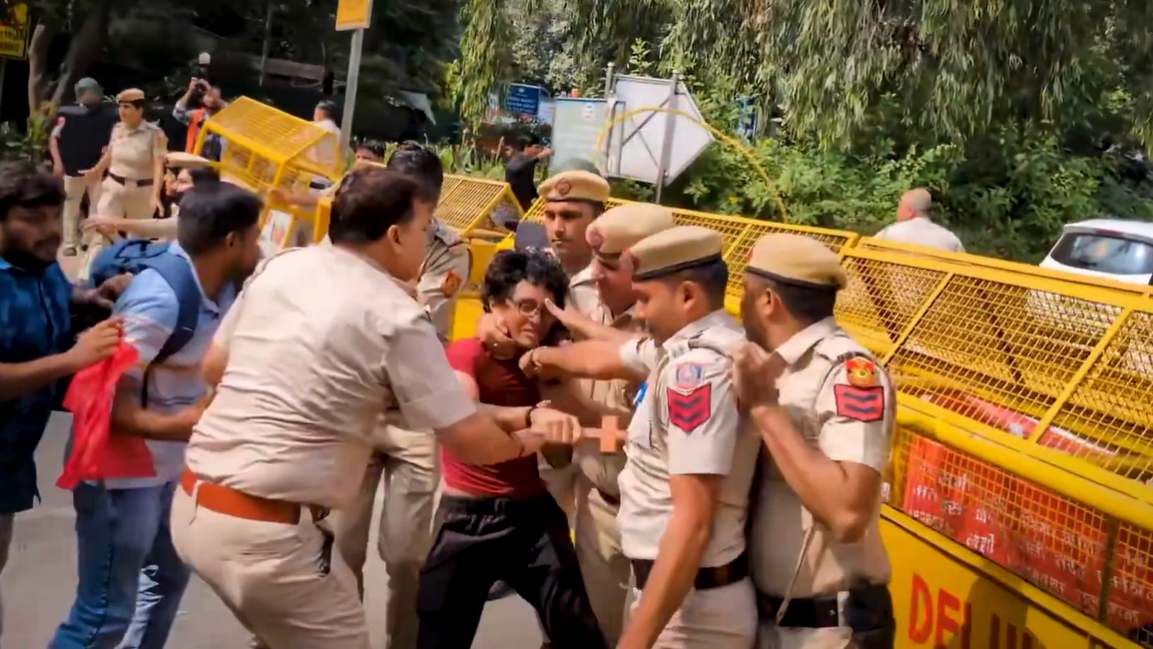
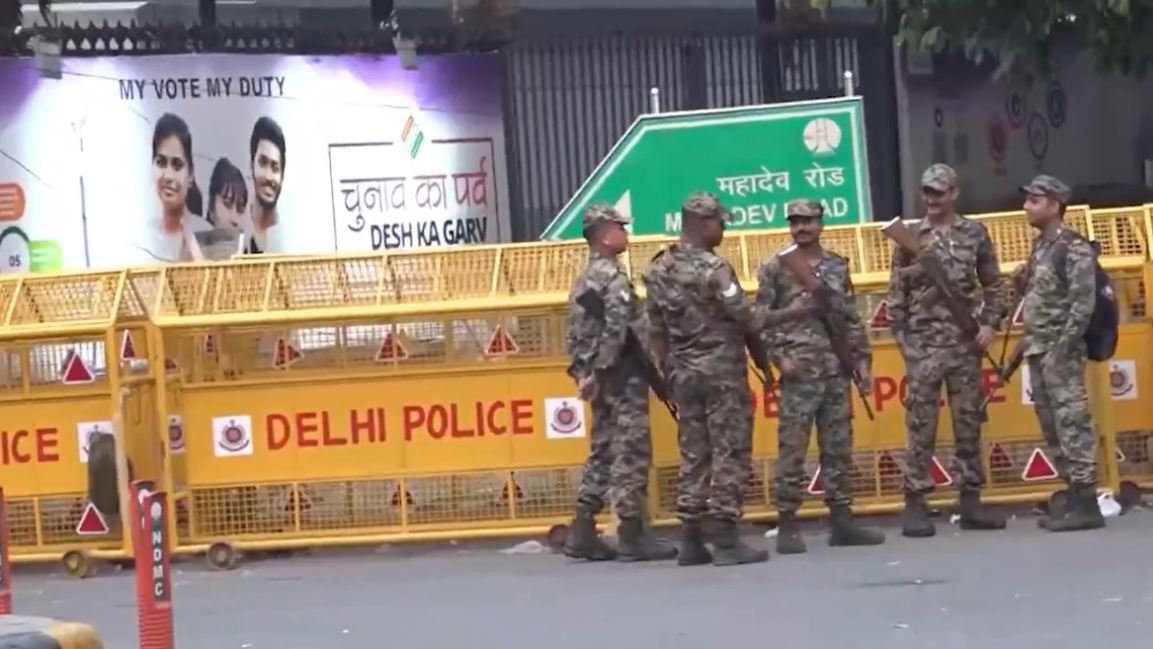
In Delhi, police denied permission for a protest at Jantar Mantar and tightened security across central parts of the capital. Several protesters were detained after groups tried to breach barricades, and police later registered three cases connected to attempts to hold the demonstration. Opposition politicians, student groups and civil-society activists have taken part in the protests.
In Mumbai on Sunday, Shiv Sena (UBT) leader Uddhav Thackeray and Maharashtra Navnirman Sena chief Raj Thackeray led a joint march from Byculla to the Brihanmumbai Municipal Corporation headquarters, demanding Kumar’s resignation.
Congress and the NCP (SP) also joined the protest. Raj Thackeray called for the SIR in Maharashtra to be scrapped, while organizers asked participants to carry the national flag rather than party flags.
The campaign is set to continue. INDIA bloc parties are planning a joint protest outside the Election Commission in New Delhi on 7 October, while youth-led groups campaigning against the SIR have announced further demonstrations.
More Top Stories: