- | 12:00 pm
Trump’s transactional diplomacy is accelerating global disorder
From Iran and Ukraine to tariffs and Russian diesel, Trump’s transactional approach is weakening old rules faster than other powers are building anything to replace them
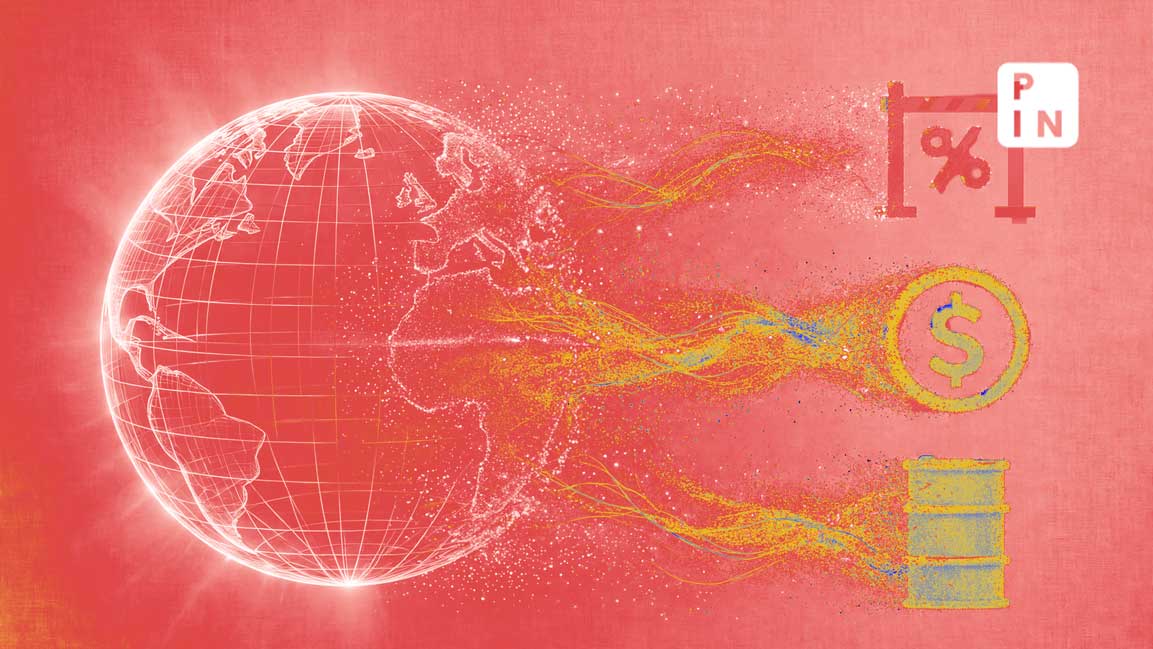


We need to take an unsentimental, hard look at the geopolitics and geoeconomics of our times.
We should begin with conceptual clarity. That requires precision in the use of words, a precision often absent even in expert commentary and textbooks on international relations.
There is, for example, frequent talk of replacing the international order established under American leadership after World War II. But before discussing its replacement, we should ask a more basic question. How much international order is there today?
The US attacked Iran’s nuclear facilities in June 2025 while diplomacy over Tehran’s nuclear program was still under way. On 28 February 2026, the US and Israel launched a much larger military campaign against Iran, again after a period in which Washington had been pursuing negotiations.
In January 2026, US forces captured Venezuelan President Nicolas Maduro and his wife, Cilia Flores, in Caracas and flew them to the US to face criminal charges. President Donald Trump subsequently asserted extensive American control over Venezuela’s oil sales and said tens of millions of barrels would be transferred for sale under US supervision.
Israel launched its genocidal war in Gaza after the Hamas-led terrorist attack of 7 October 2023. That attack killed about 1,200 people in Israel and resulted in 251 hostages being taken.
An important question remains over Israel’s failure to anticipate it.
The New York Times reported in November 2023 that Israeli officials had obtained Hamas’s detailed battle plan more than a year before the attack, but military and intelligence officials had dismissed the plan as too ambitious for Hamas to execute. This remains an extraordinary intelligence failure. We therefore live in a world rich in disorder.
The philosopher Francis Bacon understood the human tendency to imagine more order than actually exists. In Novum Organum, published in 1620, he wrote:
“The human understanding is of its own nature prone to suppose the existence of more order and regularity in the world than it finds.”
That observation is worth keeping in mind today.
One major source of the present disorder is the conduct of the US under Trump.
Trump has damaged the global trading system through his arbitrary use of tariffs. He also took the US into a major war with Iran despite substantial warnings within his own administration about the possible consequences.
One of the most disturbing episodes of that war was the American strike on the Shajarah Tayyebeh Elementary School in Minab.
Two Tomahawk missiles struck the school and its grounds on 28 February, killing more than 150, including at least 123 children. A Pentagon investigation subsequently found that outdated intelligence, stale imagery, and excessive reliance on artificial intelligence contributed to the targeting error.
A responsible state should have acknowledged the error clearly and expressed condolences to the bereaved families.
Instead, the initial American response was evasive. Trump came out with the disingenuous argument that one or two other countries, too, had Tomahawk missiles. The moral bankruptcy of the US under Trump is painfully evident
The larger problem was strategic.
The US carried out nearly 900 strikes against Iranian targets during the first 12 hours of the war. Yet Iran’s capacity to retaliate had been widely understood before the campaign began.
US intelligence agencies had long assessed that Iran could disrupt shipping through the Strait of Hormuz and strike US forces and American allies in the Gulf.
Then director of national intelligence Tulsi Gabbard declined to disclose the details of her private briefings to Trump, but acknowledged that Iran’s ability to use the strait as leverage was hardly a surprise.
General Dan Caine, chairman of the Joint Chiefs of Staff, had also warned before the war about shortages of critical munitions, insufficient support from regional allies, possible American casualties and the complexity of any prolonged campaign against Iran.
These warnings were justified.
Iran responded by severely disrupting shipping through the Strait of Hormuz and attacking American military facilities and energy infrastructure in the Gulf.
The strait is one of the most important energy arteries in the world. Before the war, roughly one-fifth of global oil and fuel supplies passed through it. The consequences of its disruption were therefore entirely predictable.
What followed demonstrated the limits of military power.
The Trump administration appears initially to have calculated, with inputs from Mossad, that the killing of Supreme Leader Ayatollah Ali Khamenei and other senior Iranian officials, combined with overwhelming air power, would rapidly weaken the regime and force Tehran to surrender or disintegrate.
It did neither.
Iran’s military capabilities were badly damaged, but the state survived and continued to retaliate.
Iran’s drones could not be intercepted always and the Pentagon suffered heavy losses in its bases in the Gulf Cooperation Council (GCC) states and in Jordan.
The US eventually moved toward negotiations.
After an April ceasefire and further diplomacy, Washington and Tehran reached a 14-point Memorandum of Understanding (MoU) in June. Trump signed the American copy at Versailles on 17 June, while Iranian President Masoud Pezeshkian signed separately.
In the meantime, Trump continued to threaten from time to time to ‘annihilate’ Iran.
The memorandum provided a road map for ending hostilities, restoring commercial passage through the Strait of Hormuz and negotiating a broader settlement.
But the agreement soon began to unravel.
Trump faced criticism from some of his MAGA (Make America Great Again) supporters for conceding too much to Iran. In July, the US again escalated military pressure, and the fragile arrangement effectively collapsed.
The US Central Command had also violated the MoU by providing air cover to ships that had switched off their transponders, disobeying Iran’s instructions on routing.
In short, Trump was not pursuing diplomacy seriously.
Indirect negotiations have nevertheless continued intermittently.
Trump said on 8 October that the US would not launch another major attack on Iran before the 3 November midterm elections and described continuing talks as productive.
Such statements are hardly reassuring to Tehran. Saying that military action will not occur before an election is not the same as abandoning military action. It gives Iran little reason to believe that concessions made today will produce a durable settlement tomorrow.
The same unpredictability is visible in Trump’s handling of the Russia-Ukraine war.
Since returning to office in January 2025, Trump has attempted to mediate an end to the conflict while repeatedly pressing Ukraine to compromise.
His approach has also been shaped increasingly by energy prices.
On 9 October, after speaking to Russian President Vladimir Putin, Trump announced that Russia would immediately supply more than 300,000 metric tons of diesel to American and global markets, followed by additional shipments.
Trump said the arrangement would help bring diesel prices down rapidly.
It is doubtful that it will.
The initial 300,000 metric tons works out to roughly 2.25 million barrels. The US consumes about 2.94 million to 3 million barrels of distillate fuel a day, meaning the first Russian shipment amounts to less than a single day of US demand.
Diesel prices have eased slightly, but the quantity is too small by itself to produce a substantial decline. Prices could remain elevated, or rise again, if the Iran war, shipping disruptions and damage to Russian refineries continue to constrain supply.
The decision is politically significant for another reason.
For years, Washington and its allies sought to deprive Russia of energy revenue in order to reduce Moscow’s ability to finance its war in Ukraine. Trump is now relaxing restrictions on Russian diesel to bring down fuel prices at home.
Several Republican as well as Democratic senators have criticized the deal, arguing that it undermines sanctions and provides Russia with additional revenue.
The Congress had passed an act that empowered the president to impose 100% tariff on the top five buyers of oil from Russia.
In his meeting with Chinese President Xi Jinping in September, Trump made it clear that he was not planning to impose tariffs on China, the top buyer of oil from Russia. That was expected as Trump seems to be prepared to have a G2 with China.
Trump has also pressed Ukraine to stop attacking Russian oil refineries.
President Volodymyr Zelensky responded that Ukraine would stop striking Russian energy facilities if Russia stopped attacking Ukrainian energy infrastructure.
Zelensky characterized Trump’s decision to buy diesel as ‘weak,’ to which the latter retorted that Ukraine needed another president who can agree to end the war.
Then, on 11 October, Trump announced that Russia and Ukraine had agreed to an immediate “energy ceasefire”.
The problem was that neither side had clearly confirmed such an agreement.
Zelensky said Ukraine had not been consulted about the announcement and reiterated that Kyiv was prepared to stop attacking Russian refineries only if Moscow reciprocated. The Kremlin initially declined to confirm Trump’s declaration.
This is diplomacy by announcement.
The danger is that a president begins treating the declaration of an agreement as if it were the agreement itself.
There is another uncomfortable reality in Ukraine.
Wars should not be continued indefinitely merely because ending them is politically painful.
Ukraine faces an acute shortage of air defense interceptors, particularly Patriot missiles. American stockpiles have themselves been depleted by the wars in Ukraine and the Middle East, while several European countries have been warned that deliveries of air defense weapons may be delayed.
Europe’s economic capacity is also under pressure.
The European Commission forecasts real gross domestic product (GDP) growth in 2026 of only 0.9% in the euro area and 1.1% in the European Union. Governments simultaneously face demands for greater defense spending, support for Ukraine and increased domestic expenditure.
How long European countries and the United Kingdom will be prepared to finance the war at existing levels is therefore a legitimate question.
In France and Belgium, students are protesting for more funds for schools.
The present disorder cannot, however, be attributed entirely to Trump.
Other powers have also failed to respond cohesively and collectively.
When Trump began imposing tariffs arbitrarily after returning to office, China, the European Union, Canada, Mexico, India and other major economies largely chose to negotiate individually with Washington.
That strengthened America’s bargaining position.
Canadian Prime Minister Mark Carney has spoken about the need for middle powers to cooperate more closely. The principle is sound.
But cooperation among middle powers requires more than speeches. It requires sustained and discreet diplomacy, common positions and a willingness to act collectively when major powers disregard established rules.
The international system is entering a period in which military power, economic coercion and transactional diplomacy increasingly take precedence over institutions and norms.
That is the disorder around us.
The more important question for India is how it should respond to it.
That will be the subject of the next article.
More Top Stories: