• | 7:30 pm

Trump’s war on Iran has become a trap of his own making

From broken ceasefires to sanctions and abandoned peace proposals, Trump has lurched between force and diplomacy without finding a way to win the war or end it.
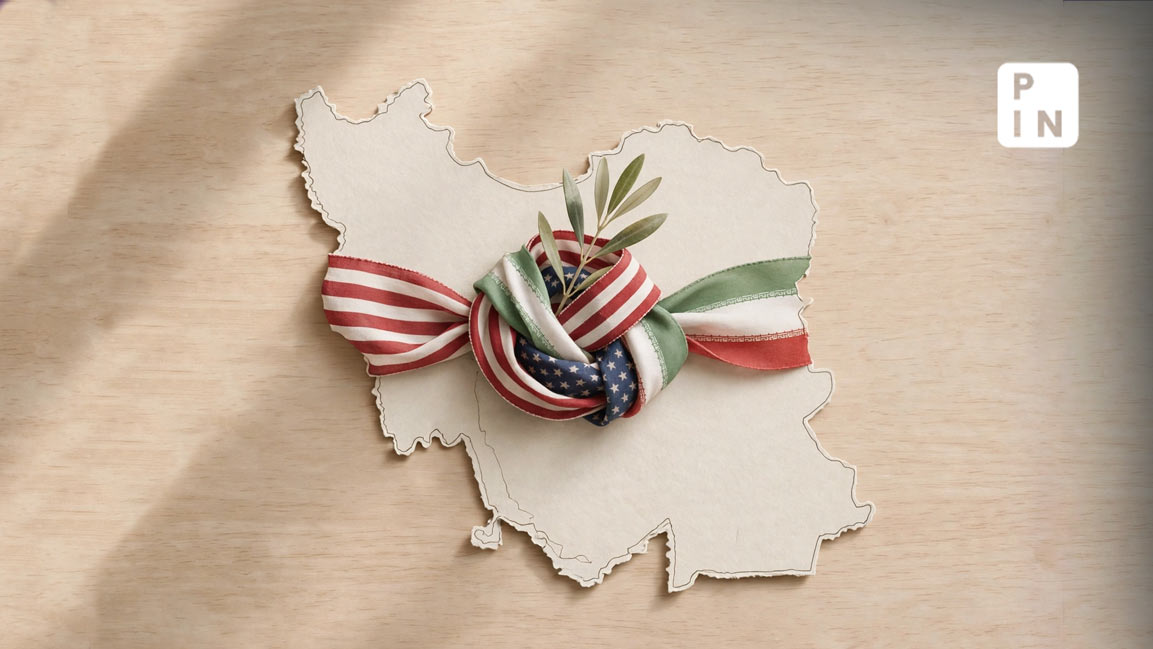
Trump’s war on Iran has become a trap of his own making
[Source photo: Nomita Samaiyar/Press Insider]

Trump’s self-created predicament in the war on Iran, which began on 28 February, brings to mind a warning from Winston Churchill. The war has seen broken ceasefires, an unimplemented 14-point Memorandum of Understanding and a grim toll running into the thousands. Churchill wrote in My Early Life, published in 1930:

“Let us learn our lessons. Never, never, never believe any war will be smooth and easy, or that anyone who embarks on the strange voyage can measure the tides and hurricanes he will encounter. The statesman who yields to war fever must realize that once the signal is given, he is no longer the master of policy but the slave of unforeseeable and uncontrollable events.”

Does the last sentence not apply perfectly to Trump’s war on Iran? Is Trump incapable of pursuing a diplomatic process consistently enough to end this war?

Essentially, this has been an asymmetrical war in which the weaker party is not destined to lose. The best example in recent history is America’s nearly 20-year war in Vietnam, which ended with the evacuation of Ambassador Graham Martin by helicopter from the US Embassy in Saigon on 30 April 1975, as North Vietnamese forces took the city.

It took years for opposition to the war to gather force in America. Young people, mainly students, were at the forefront of protests that helped turn public opinion against the conflict and eventually compelled an American withdrawal.

In the case of the 2003 invasion and occupation of Iraq, it took about four years for American public opinion to turn decisively against the war. By 2007, most Americans regarded the decision to invade as a mistake and wanted US troops brought home. The stockpiles of weapons of mass destruction (WMD) invoked to justify the invasion were never found. Indeed, critics of then president George W. Bush gave WMD another meaning: “Weapons of Mass Deception.”

The war on Iran never enjoyed broad popular support, mainly because Trump has been unable to offer any credible justification for it. It would be wrong to blame Trump merely for failing to explain the war, since there was no credible reason to start it in the first place.

His spurious argument that Iran would have built a nuclear bomb but for his attack has failed to convince anyone beyond a narrow band of MAGA followers.

Trump has been a study in inconsistency during his second term. The war on Iran has been the worst example. Having failed to force Iran’s surrender through the might of the Pentagon, one might have expected him to turn seriously to diplomacy. For a short while, he did.

On 17 June, he signed a 14-point Memorandum of Understanding at the Palace of Versailles. He soon appeared to have second thoughts. Central Command was ordered to provide air cover to tankers sailing with their transponders switched off and outside the routes prescribed by Iran for crossing the Strait of Hormuz. Iran regarded this as a violation of Articles 4 and 5 of the MoU. By 8 July, Trump had declared that the agreement was “over”.

By mid-August, Trump appeared to have concluded, ruefully and reluctantly, that depleted weapons stocks and Iran’s unexpected resilience had placed limits on what the Pentagon could achieve. He chose a new weapon: intensified sanctions.

Operation Economic Outcast began on 24 August. More than six weeks later, it has yet to deliver the intended result. There is no sign that Iran is ready to sign on the dotted line. In his speech to the UN General Assembly on 22 September, Trump accused Iran of stalling negotiations and threatened to “annihilate” it unless an agreement was reached soon.

The threat was extraordinary, even by the standards of Trump’s rhetoric at the United Nations.

What is even more intriguing is that, only hours after his speech, his son-in-law Jared Kushner and Steve Witkoff held mediated talks with Iranian officials, including foreign minister Seyed Abbas Araghchi. Trump described the discussions as “very good” and “very productive”.

Four days later, he rejected Iran’s seven-day peace proposal.

As explained by Iran’s Araghchi, the proposal would begin a seven-day countdown toward reopening the Strait of Hormuz.

The seven-day timeline

Days 1 to 5: The US lifts military and economic pressure, fighting stops, and preparations are made to reopen the waterway.
Day 6: The Strait of Hormuz reopens and normal commercial shipping resumes.
Day 7: Iran and the US begin official talks toward a final agreement on mutually agreed subjects, including Tehran’s nuclear program.

Taking a broader view of the situation, this was a reasonable basis for negotiation. Trump could have accepted it without losing face and, in the process, improved his position ahead of the midterms.

Two recent incidents suggest that Trump is itching to resume the war, despite clear signs that he cannot win it.

Flydubai Flight FZ1073 plunged more than 14,000 feet on 30 September 2026 during a flight from Dubai to Tel Aviv after the co-pilot, Hammam al-Hammami, an Omani national, attacked the captain, Smit Machchhar, an Indian national. According to officials familiar with the investigation, the co-pilot appears to have intended to crash the aircraft into Ben Gurion Airport. The flight was carrying 174 passengers, including 27 children.

It is indeed perplexing that an Omani national who had reportedly been barred from flying by his country’s airline because of concerns about extremist views was later cleared to operate flights to Israel. Oman has not normalized relations with Israel. At the very least, the episode points to serious failures in recruitment, vetting and aviation security. Investigations involving the UAE, Israel and Saudi Arabia are still under way and may eventually establish how these failures occurred.

Trump publicly threatened Iran with severe retaliation should proof of its involvement emerge. So far, however, investigators have not established an Iranian connection.

The other incident concerns a suspected plot near the US-operated base at RAF Fairford on 27 September. British police arrested five men but later released them on strict conditional bail. Trump was annoyed by their release and appeared keen to see Iranian involvement. British Prime Minister Andy Burnham partially obliged him by saying that there were strong indications Iran had played a part, while adding that the police investigation was continuing. Iran denied any involvement.

On 4 October, the Pentagon transferred about a dozen B-1 bombers stationed at the base back to the US. The aircraft were moved soon after the security incident, amid heightened concern about a possible attack.

It is true that the Islamic Revolutionary Guard Corps (IRGC) had threatened bases in Europe used by the Pentagon to attack Iran. Does the hurried withdrawal suggest that there is no reliable protection against the threats Iran can pose to such bases?

Meanwhile, the midterms are looming. Current polling suggests that Republicans are at serious risk of losing their majority in the House of Representatives. Control of the Senate remains uncertain. A defeat in Congress would raise the prospect of a lame-duck presidency and perhaps even renewed moves towards impeachment.

The average price of diesel in the US has risen by about 70% since the war began. Trump considered cutting off diesel exports to Europe. The G7 subsequently agreed to release 100 million barrels of crude oil and fuel products, beginning with substantial quantities of diesel.

Meanwhile, major fighting has resumed in Yemen after years of relative calm. Saudi oil installations have also come under attack.

Aramco chief Amin Nasser has pointed out that nearly three billion barrels of gross oil supply have been lost during the crisis. He has warned that, even after the Strait of Hormuz fully reopens, rebuilding depleted inventories while meeting demand could take up to two years.

What happens if there is no settlement between Iran and the US? Oil prices will continue to rise.

It is obvious that Trump could, if he wished, reach a settlement with Iran and limit his electoral losses. Why does he not do so?

Perhaps an old Indian saying provides the answer:

Vinashakale viparita buddhi (When doom approaches, judgement goes astray).

ABOUT THE AUTHOR

KP Fabian is a diplomat who served in the Indian Foreign Service between 1964 and 2000. He is currently a distinguished fellow at the Symbiosis Law School in Pune. More

More Top Stories: