- | 2:00 pm
Twenty months into Trump’s second term, the US faces a credibility test
With the midterms approaching, Trump’s record on Iran, NATO, Canada and India is putting US credibility and influence under scrutiny


US President Donald Trump, more than 20 months into his second term in the White House, addressed the 81st session of the United Nations General Assembly on 22 September. Pundits have not stopped unpacking the speech.
One of the most serious problems with the most powerful man in the world is his seemingly incorrigible urge, whether speaking from a prepared text or off the cuff, to deny inconvenient facts and construct an alternative version of events in which he is invariably right.
Let us fact-check just two assertions.
First, Trump said: “When you add the United States and Venezuela together, we have more than 60% of the oil reserves in the world.”
Venezuela has about 303 billion barrels of proven crude oil reserves and the US about 46 billion barrels. Together, that is roughly 349 billion barrels, or about 22% of the world’s approximately 1.57 trillion barrels of proven crude reserves. The figure is nowhere close to 60%.
Second, Trump said on 22 September, referring to US munitions: “We have more than we could ever possibly think of using, and we are building them at levels that we have done never before.”
The claim sits uneasily with what US and NATO officials have been saying about some of the most important weapons in their inventories. In August, officials told the Associated Press that the US military was facing a “beyond critical” shortage of advanced missile interceptors in Europe, with the war with Iran contributing to the strain on supplies.
One US defense official said the most worrying shortfall involved Patriot missile interceptors, while a NATO official confirmed low Patriot inventories among US and NATO forces in Europe. Both spoke on condition of anonymity because they were discussing sensitive military matters.
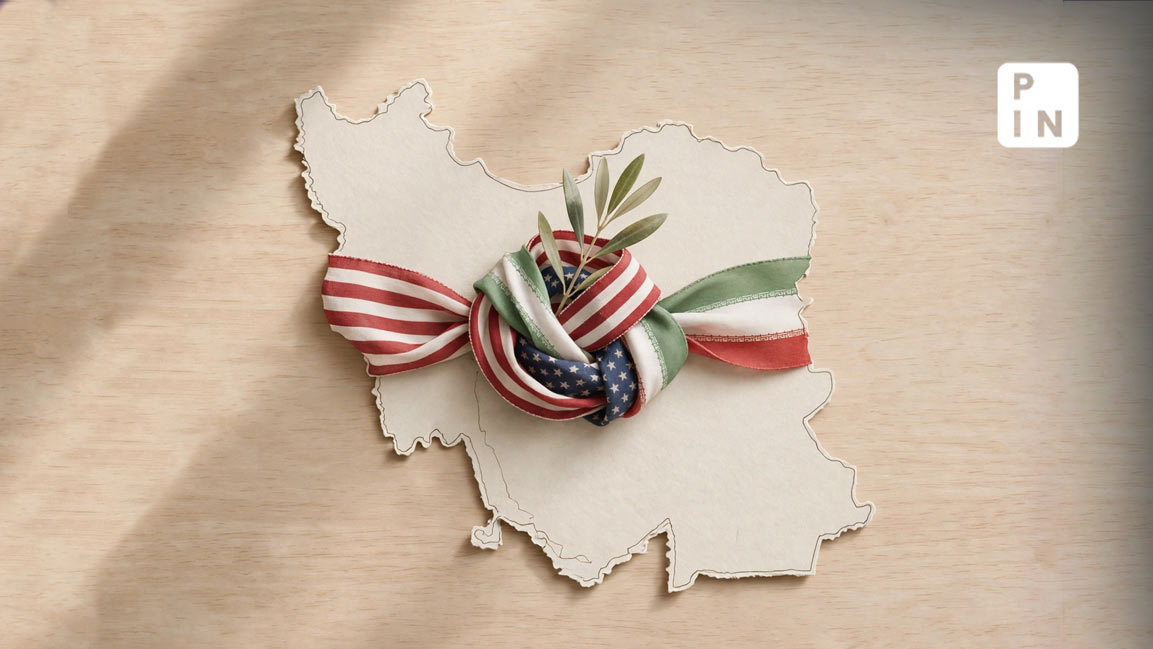
Trump’s boast about American munitions came against the backdrop of the war with Iran, launched by the US and Israel on 28 February. Trump and Israeli Prime Minister Benjamin Netanyahu appeared confident at the outset that Iran would surrender within weeks, or even days. Six months later, the conflict continues.
Trump devoted a substantial part of his UN address to Iran.
Claiming that he had a “big decision” to make, he said:
“Will a deal be made with Iran that lets them rebuild, and create a far greater country than it ever was before?… Or do I annihilate the Islamic Republic and do it quickly, never giving them a chance to kill and destroy people and countries again? Do I drive them into hell with no chance of survival and no hope of future greatness or generations?”
Later that day, US envoy Steve Witkoff and Jared Kushner held talks in New York with Iranian representatives, including foreign minister Abbas Araghchi, as diplomatic efforts continued alongside the increasingly bellicose rhetoric. Trump subsequently described the meeting as “very productive” and said there was momentum towards a deal.
The threat appeared designed, at least in part, to maintain pressure on Tehran while negotiations continued.
Trump also suggested at the General Assembly that a deal with Iran might become possible after the US midterm elections, implying that his falling popularity and support for the war do not matter.
He reminded his audience that he himself was not on the ballot, although his Republican Party certainly is. Only days earlier, he convened rather unconventionally a convention of the Republican Party aimed at energizing supporters before elections that will determine control of Congress.
The President also met leaders of the Gulf Cooperation Council (GCC) and other Arab states in New York. Gulf governments have solid reasons to press for diplomacy with Iran. A wider regional war threatens their cities, energy infrastructure, trade routes and economic ambitions.
Qatar has gone further, calling for a regional collective-security system. Qatari Amir Sheikh Tamim bin Hamad Al Thani used his own address to the General Assembly to argue that the dangerous situation in the Gulf stems from the absence of such an arrangement, one based on sovereignty, territorial integrity, peaceful resolution of disputes and non-interference.
Ideally, such a security framework should eventually encompass the GCC states, Iran, Iraq, Yemen and Israel. The region has spent decades moving from one confrontation to another, usually under the assumption that the next application of military force will produce the stability that the previous one failed to deliver.
Trump is unlikely to embark on such a project as he would not like to reduce the market for the Military-Industrial-Congressional Complex. His record has been marked by abrupt shifts between threats and negotiations, military action and restraint.
His handling of Yemen illustrates the point.
Saudi Crown Prince Mohammed bin Salman sought direct US military support against the Houthis as the Iran-aligned movement advanced against Saudi-backed forces in Yemen. Trump declined to authorize direct US strikes, although Washington agreed to provide intelligence and targeting assistance. Reports later said Trump had considered airstrikes before deciding against them.
Trump has often been inconsistent, and inconsistency carries a price in diplomacy: governments eventually become less certain about what an American commitment, warning or promise means.
India has experienced this unpredictability too.
Trump has repeatedly claimed credit for ending seven wars, including the military confrontation between India and Pakistan in May 2025, which followed India’s Operation Sindoor. He has cited Pakistan’s appreciation of the US role and claimed that millions of lives were saved.
He added that almost all the leaders of the country had thanked him. The word ‘almost’ implied that India had not thanked him.
Pakistan has publicly thanked Trump. India, by contrast, has consistently maintained that the cessation of hostilities was worked out directly between the two countries’ militaries and has rejected suggestions of third-party mediation.
Claims that 30 million lives were saved necessarily assume that the conflict would otherwise have escalated on an extraordinary scale, potentially even to the nuclear level.
The wider question is what Trump’s first 20 months back in office have done to the US and its standing abroad.
Far from delivering on the promise to Make America Great Again, Trump has diminished America. His credibility has suffered at home and abroad, while some of the institutions that helped underpin American influence for decades have been weakened.
Consider the executive order of March 2025 directing that the non-statutory functions of seven federal entities be eliminated “to the maximum extent consistent with applicable law” and that their statutory functions be reduced to the minimum required by law.
The agencies included the US Agency for Global Media, which oversees Voice of America and other US-funded broadcasters; the Institute of Museum and Library Services; the Woodrow Wilson International Center for Scholars; the Federal Mediation and Conciliation Service; the Community Development Financial Institutions Fund; the Minority Business Development Agency; and the US Interagency Council on Homelessness.
Whatever one thinks of the case for reducing federal spending, institutions of this sort were also instruments of American influence, research, public diplomacy and social policy. Weakening them has consequences beyond the federal payroll.
In foreign policy, Trump has seemed almost determined to disregard every lesson in Dale Carnegie’s How to Win Friends and Influence People, published in 1936.
Look at Canada.
Trump repeatedly talked about making Canada the 51st state of the US. In August, he went so far as to order US federal agencies to refer to Lake Ontario as “Lake America”, a designation Canada naturally does not recognize.
Canada, meanwhile, has been looking increasingly towards Europe. Prime Minister Mark Carney has spoken of developing a “unique alliance” with the European Union, while the EU has floated an unprecedented form of associate status for Canada. The precise shape of that relationship remains unsettled, but the political message is difficult to miss.
Across the Atlantic, European members of NATO are increasingly debating how much they can continue to depend on the US for their defense against Russian aggression. Discussions about greater European strategic autonomy are no longer theoretical, with countries including France, Germany, the United Kingdom, Italy and Poland expected to play central roles in whatever arrangements emerge.
India, too, has reason to question Washington’s approach.
Trump has imposed tariffs and repeatedly used the threat of further trade action while an interim trade agreement has remained elusive. Washington has also increased pressure on New Delhi over its purchases of Russian oil, even as the US wants India to deepen strategic and defense ties and buy more American military equipment.
The coming US midterm elections will determine whether Republicans retain control of Congress. A setback for Trump’s party would constrain his domestic agenda and change the political atmosphere in Washington, although it would not necessarily change the President himself.
Would a Trump chastened by electoral losses alter course? We do not know.
Will the next president whether Republican or Democratic be able to correct the errors of Trump? Perhaps, to an extent.
Shakespeare put it more elegantly in Julius Caesar:
“The evil that men do lives after them;
The good is oft interred with their bones.”
Historians may find it difficult to identify the good Trump has done.
More Top Stories: