
- | 2:10 pm
Gloria Steinem, defining voice of the modern women’s movement, dies at 92
From Ms. magazine to political organizing, Steinem spent six decades fighting for equality, guided by the grassroots approach she first encountered in India
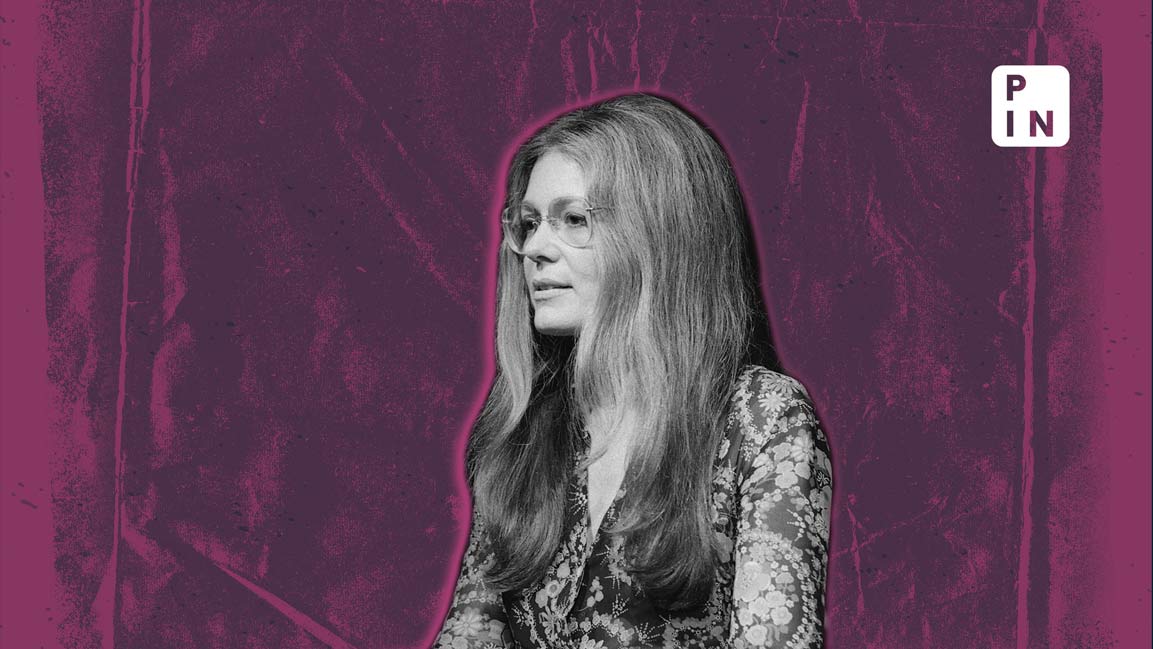


Gloria Steinem, the journalist and organizer who became one of the most recognizable figures in the modern women’s movement, died at her home in New York City on Wednesday, 2 September.
She was 92.
Steinem died peacefully, surrounded by people who loved her, according to a statement from Gloria’s Foundation. The foundation announced her death on Thursday. It did not disclose a cause, although the Associated Press reported that her health had been declining.
“Gloria’s greatest gift was her ability to listen to others, to make others feel seen and heard,” the foundation said.
Over more than six decades, Steinem moved between journalism, electoral politics and grassroots organizing. She co-founded Ms. magazine, helped establish organizations promoting women in politics and the media, and campaigned for reproductive freedom, racial equality, LGBTQ+ rights and an end to violence against women.
She became the best-known public face of a movement that considered itself leaderless. The visibility gave her influence but also attracted criticism from feminists who believed the media paid too much attention to one conventionally glamorous white woman.
Steinem repeatedly argued that movements depended on collective action. She credited Black women, labor organizers, indigenous activists and community campaigners whose contributions received less attention.
Her death came less than three weeks before the scheduled publication of her memoir An Unexpected Life on 22 September. Random House said the book revisits her childhood, her years in India and the progress and setbacks she witnessed during more than 60 years of activism.
A childhood shaped by instability
Gloria Marie Steinem was born in Toledo, Ohio, on 25 March 1934. She was the younger of two daughters of Ruth Nuneviller Steinem and Leo Steinem.
Her father was a traveling antiques dealer, and the family spent much of Steinem’s early childhood moving around in a trailer. The constant travel kept her from attending school regularly until about seventh grade.
Her parents separated when she was 10. Steinem remained in Toledo with her mother, a former journalist who lived with severe depression and had spent time in psychiatric hospitals. She assumed much of the responsibility for caring for her.
Steinem later connected her mother’s curtailed career, financial dependence and treatment by male doctors with the wider restrictions imposed on women. She also linked the experience of caring for her mother at a young age to her reluctance to assume another conventional caregiving role.
Steinem attended Smith College in Massachusetts, where she studied government. She graduated magna cum laude and Phi Beta Kappa in 1956.
At 22, while traveling through London on her way to India, she obtained an abortion before Britain’s 1967 law liberalized access to the procedure. She kept the experience secret for years. It later became central to her support for reproductive freedom.
India shaped her organizing
Steinem spent nearly two years in India on a Chester Bowles Asian Fellowship. She wrote for Indian publications and traveled across the country, spending time with followers of Mahatma Gandhi and organizers connected to Vinoba Bhave’s Bhoodan movement.
The movement sought voluntary transfers of land from landowners to people who had none. In villages in what is now Tamil Nadu, Steinem observed organizers working against caste and religious violence.
The experience taught her that lasting change had to grow from communities rather than being handed down by political leaders. Smith College’s account says she learned grassroots organizing from Gandhi’s followers.
“India taught me how to organize,” she said in a 2007 interview.
Steinem later applied those lessons in the US. She traveled with other activists, spoke in universities and community halls, and helped create organizations that could continue working after individual campaigns ended.
She maintained close ties with India throughout her life. She returned several times, worked with Indian activist Ruchira Gupta and became chair of the international advisory board of Apne Aap Women Worldwide, which campaigns against sex trafficking and intergenerational prostitution.
In 2014, Gupta edited As If Women Matter, a collection of Steinem’s writing on feminism, caste, class, violence and control over women’s bodies. They also traveled through India to meet activists and women living in communities vulnerable to exploitation.
Journalism opened the door
After returning to the US, Steinem struggled to obtain serious political assignments in a publishing industry dominated by men. Editors often directed female journalists toward fashion, food and lifestyle stories.
From the late 1950s into the early 1960s, she ran the Independent Research Service, a group secretly financed by the Central Intelligence Agency. It recruited American students to attend Soviet-organized World Youth Festivals in Vienna in 1959 and Helsinki in 1962.
Steinem knew that the CIA supplied the money and later defended her decision to accept it. She said the program allowed noncommunist American students to challenge Soviet propaganda at international gatherings. Critics within the feminist movement later used the connection to question her relationship with the political establishment. The New Yorker detailed the operation in a history of the CIA’s involvement with student organizations.
Her journalistic breakthrough came in 1963, when she went undercover as a waitress at the Playboy Club in New York. Her two-part investigation, generally known as A Bunny’s Tale, documented low pay, sexual harassment, invasive medical examinations and the humiliating rules imposed on the women working there.
The investigation attracted national attention but damaged her career in the short term. Steinem said editors subsequently treated her as a former Playboy Bunny rather than as the reporter who had exposed the club.
In 1968, she helped launch New York magazine and became a political columnist. The position allowed her to cover elections, social movements and questions that mainstream publications had often dismissed as women’s concerns.
A turning point came in 1969, when Steinem attended a public meeting at which women described their illegal abortions. She had not yet spoken openly about her own experience. She later called the gathering the beginning of her feminist activism.
That year, New York published her essay After Black Power, Women’s Liberation, which established her as a national feminist voice.
Steinem also began speaking publicly with Dorothy Pitman Hughes, a Black activist and child-welfare advocate. Their partnership challenged the perception that feminism concerned only affluent white women. A widely reproduced photograph showed them raising their fists together in the Black Power salute.
Turning a movement into institutions
In May 1970, Steinem testified before the US Senate in support of the Equal Rights Amendment (ERA). She described the professional, economic and legal discrimination she had experienced.
“We have all been silent for too long,” she told the committee. “But we won’t be silent anymore.” A transcript of her testimony records her argument that restrictions presented as protections for women often kept them in lower-paid jobs.
The amendment passed Congress in 1972, but it did not secure approval from three-quarters of the states before the ratification deadline expired. Virginia became the 38th state to approve it in 2020. However, the National Archives declined to certify it because the later approvals came after the deadline.
Former president Joe Biden declared in January 2025 that he considered the ERA part of the Constitution. The statement did not settle the continuing legal and procedural dispute.
In 1971, Steinem joined Bella Abzug, Shirley Chisholm, Betty Friedan, Fannie Lou Hamer and hundreds of other activists in forming the National Women’s Political Caucus. The organization sought to increase the number of women in elected and appointed office.
Her most influential media venture began that December, when Ms. appeared as a one-off insert in New York magazine. Its 300,000 copies sold out across the country in eight days. Within weeks, it had generated 26,000 subscription orders and more than 20,000 letters from readers, according to the magazine’s history.
The first regular issue appeared in July 1972. Steinem was one of several founders and remained an editor for 15 years. She later served as a consulting editor.
Ms. treated abortion, domestic violence, unequal pay, sexual harassment and political representation as major public issues. This distinguished it from magazines that largely addressed women through marriage, beauty, housekeeping and motherhood.
Steinem also helped create the Women’s Action Alliance, the Ms. Foundation for Women, Voters for Choice and the Women’s Media Center. Her work extended to migrant labor, civil rights, opposition to the Vietnam War and apartheid, and campaigns against female genital mutilation and sex trafficking.
“Women are not going to be equal outside the home until men are equal in it,” she often said.
Fame and criticism
Steinem’s center-parted hair, aviator glasses and calm television presence made her unusually recognizable for a political activist. The attention allowed her to carry feminist arguments into American homes, but it also encouraged the media to reduce a broad movement to one person.
Steinem found the attention to her appearance frustrating. She argued that it diminished the work behind her public role and obscured the contributions of less famous organizers.
She frequently credited Pitman Hughes, Florynce Kennedy, Fannie Lou Hamer, Pauli Murray and Shirley Chisholm with influencing her politics. She also said she had learned much of her feminism from Black women.
Some of her political judgments drew lasting criticism. In a 1998 New York Times article, Steinem defended then president Bill Clinton against sexual-harassment allegations by arguing that he had accepted rejection.
During the later reckoning over sexual misconduct, she said she would not write the same article again. However, she did not fully disavow her original argument.
The controversy illustrated a recurring tension in her career. Steinem brought feminist ideas into mainstream Democratic politics, but that proximity to the party establishment sometimes put her at odds with younger and more radical campaigners.
Writing marriage and recognition
Steinem’s books included Outrageous Acts and Everyday Rebellions, Marilyn: Norma Jeane, Revolution from Within, Moving Beyond Words and the 2015 memoir My Life on the Road.
Her life inspired the 2020 film The Glorias, directed by Julie Taymor, as well as documentaries and stage productions.
Doctors diagnosed Steinem with breast cancer in 1986 and trigeminal neuralgia, a chronic nerve condition, in the 1990s. She nevertheless continued traveling, writing and speaking well into her 80s.
After decades of criticizing marriage laws that restricted women’s independence, Steinem married environmental and animal-rights activist David Bale in 2000. She was 66.
Steinem said she had not abandoned her principles because the legal institution of marriage had changed. Bale, the father of actor Christian Bale, died of brain lymphoma in December 2003.
Steinem had no children and said she never regretted the decision. She presented marriage and motherhood as choices rather than obligations.
Former US president Barack Obama awarded her the Presidential Medal of Freedom, the highest US civilian honor, in 2013. She entered the National Women’s Hall of Fame in 1993 and received the Princess of Asturias Award for Communication and Humanities in 2021.
In later life, Steinem used her Manhattan brownstone, where she had lived since the 1960s, as a meeting place for activists and talking circles. She gave the property to Gloria’s Foundation so that it could continue serving as an organizing center.
The movement she represented achieved changes that once appeared improbable, but many of its central battles remained unresolved at her death. The US Supreme Court overturned the federal constitutional right to abortion in 2022, while inequalities in pay, political power and protection from violence persisted.
Steinem’s contribution cannot be reduced to one law, magazine or slogan. She connected personal experience with political action and helped build institutions capable of continuing the work after their founders were gone.
More Top Stories: