- | 3:00 pm
Tibet border lake overflows, halting Nepal flood rescue
A barrier lake that China warned could fail has breached upstream, sending river levels higher and forcing rescuers and residents to seek safer ground
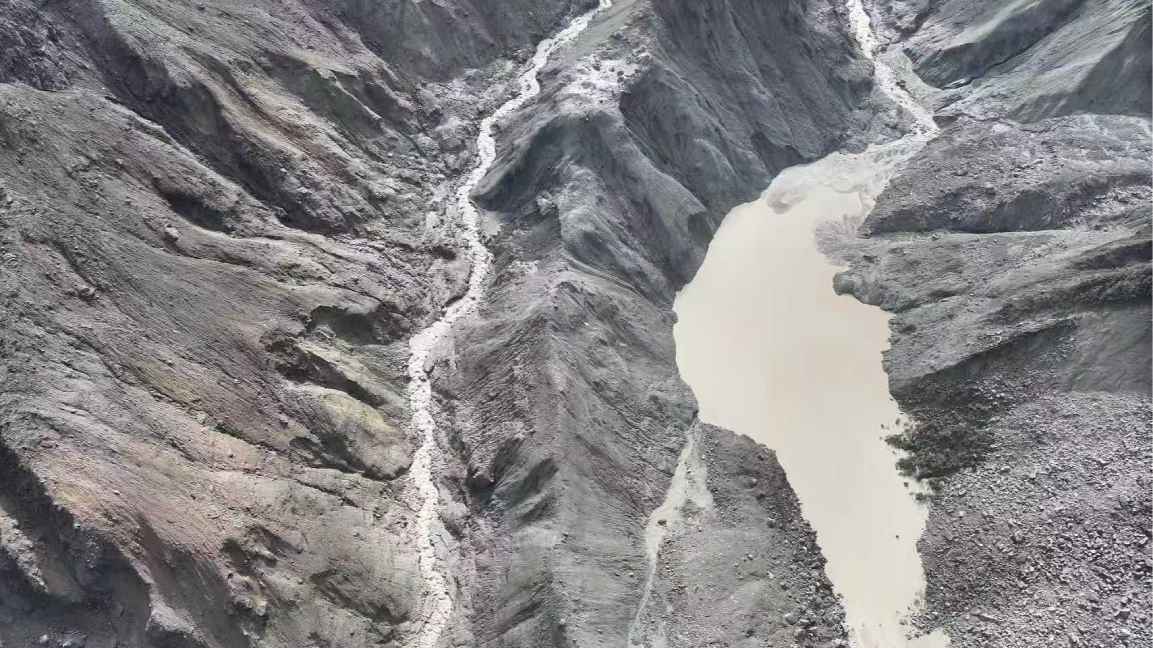


A barrier lake in Tibet that China warned could burst began overflowing on Friday, raising river levels in Nepal and briefly forcing authorities to suspend rescue operations in areas devastated by Wednesday’s flash flood.
“Information has been received that a water dam has burst again on the Tibetan side,” Nepal Police said on Friday, 28 August. It asked security personnel, rescue workers and residents to move immediately to safer ground.
Chinese state broadcaster CCTV said the lake upstream of the Gyirong border crossing had begun overflowing after its volume exceeded 2.5 million cu. m, raising the risk of another flash flood or mudslide.
“We have received a notice saying that the lake has broken its banks,” Narendra Pariyar, the senior government official in Nepal’s Rasuwa district, told Reuters. “We can see that the level of water in the river is rising.”
Helicopter operations in Rasuwa were suspended for 90 minutes as residents and rescue workers moved uphill. China also withdrew rescue personnel and vehicles from the danger zone because of the risk of further flooding, mountain collapses and avalanches.
Rescue operations later resumed on both sides of the border. CCTV said the risk from the lake had become manageable as water flowed out naturally at a faster rate than it was entering.
The lake’s level had fallen by about 10 meters from its early Thursday peak, CCTV said. Chinese authorities said the danger was “gradually decreasing,” although monitoring continued because of unstable terrain and the risk of further landslides.
The lake formed after ice, rock and debris blocked a mountain river during the collapse that triggered Wednesday’s disaster. Aerial footage showed brown water accumulating behind a natural barrier with no clear outlet.
China’s ministry of water resources had warned on Thursday that the lake could breach as millions of cubic meters of additional water flowed into it.
Its volume had risen above 2.5 million cu. m by Friday, from an earlier estimate of between 1.5 million and 2 million cu. m. China had forecast that another 3 million cu. m could enter the lake over three days, with peak inflows expected around 1 September.
Chinese engineers estimated that the lake was about 150 meters long and between 40 and 50 meters deep. It was located about 10 kilometers upstream from Gyirong Port and roughly 1,000 meters above the border crossing.
An eight-member engineering team had conducted aerial surveys and three-dimensional modeling to determine whether a drainage channel could be cut through the debris barrier. The operation was complicated by steep cliffs, unstable ground and continued rain, CCTV reported.
The overflow renewed the threat to communities along the Bhotekoshi and Trishuli river system, where Wednesday’s flood swept away settlements, roads, bridges, vehicles and hydropower infrastructure.
Wednesday’s disaster had killed 489 people in Nepal and five in Tibet by Friday, Reuters reported. Earlier figures from Nepal Police, reported by The Kathmandu Post, had put Nepal’s toll at 475.
Casualty and missing-person figures remained fluid as authorities reconciled lists from different districts, government agencies and tour operators. Reuters reported that almost 1,000 people remained missing across Nepal and Tibet, while earlier official tallies had placed the number above 1,400.
China said 558 people remained missing in Tibet as of Friday afternoon. The Nepal Tourism Board said on Thursday night that 667 tourists and travelers were unaccounted for in Nepal, including 127 Nepalis and 540 foreign nationals. The lists may overlap and cannot be added together to produce a definitive total.
India’s Ministry of External Affairs said on Thursday evening that 290 Indian nationals remained uncontactable. It stressed that the term did not necessarily mean they were missing or injured because communications had been severely disrupted.
Eighty-four Indians had been rescued, including 63 workers from the Trishuli I hydropower project and 21 pilgrims from Tamil Nadu. About 200 Indians on the Tibet side had also sought help with evacuation.
Indian authorities separately recovered seven unidentified bodies from rivers in Uttar Pradesh that they believe may have been carried downstream from Nepal.
Four bodies were found in Maharajganj and three in Kushinagar. “We think they have been swept into India from Nepal following flash floods there,” Maharajganj District Magistrate Gaurav Singh Sogarwal told AFP. The bodies had not been included in Nepal’s official toll and were awaiting identification.
India has delivered 47.5 metric tons of emergency supplies, medicines and food to Nepal in two consignments, according to the Indian Embassy in Kathmandu.
Nepal has said it does not currently require foreign search teams, despite offers from India, China and several other countries. Its foreign ministry said Nepali security agencies were managing the operation, although the government continued to accept relief supplies and humanitarian assistance.
China’s Politburo, chaired by President Xi Jinping, called on authorities to make every effort to find missing Chinese and foreign nationals. It also ordered closer monitoring of glacial lakes, landslides and barrier lakes and greater disaster cooperation with Nepal.
The precise cause and sequence of Wednesday’s initial collapse remain under investigation. Preliminary assessments indicate that an ice and rock avalanche blocked a river before the temporary barrier failed, releasing a destructive torrent of water, mud and debris.
The Indian Embassy’s emergency numbers for people seeking information about affected Indian nationals are +977 985 131 6807, +977 970 910 7500 and +977 981 032 6117. The numbers can also be contacted through WhatsApp.
More Top Stories: