- | 3:40 pm
Capital floodgates open as India AI Summit turns into a $200 billion bet
IT minister Vaishnaw outlines massive compute expansion as venture funds and chip majors line up billions for India’s AI buildout



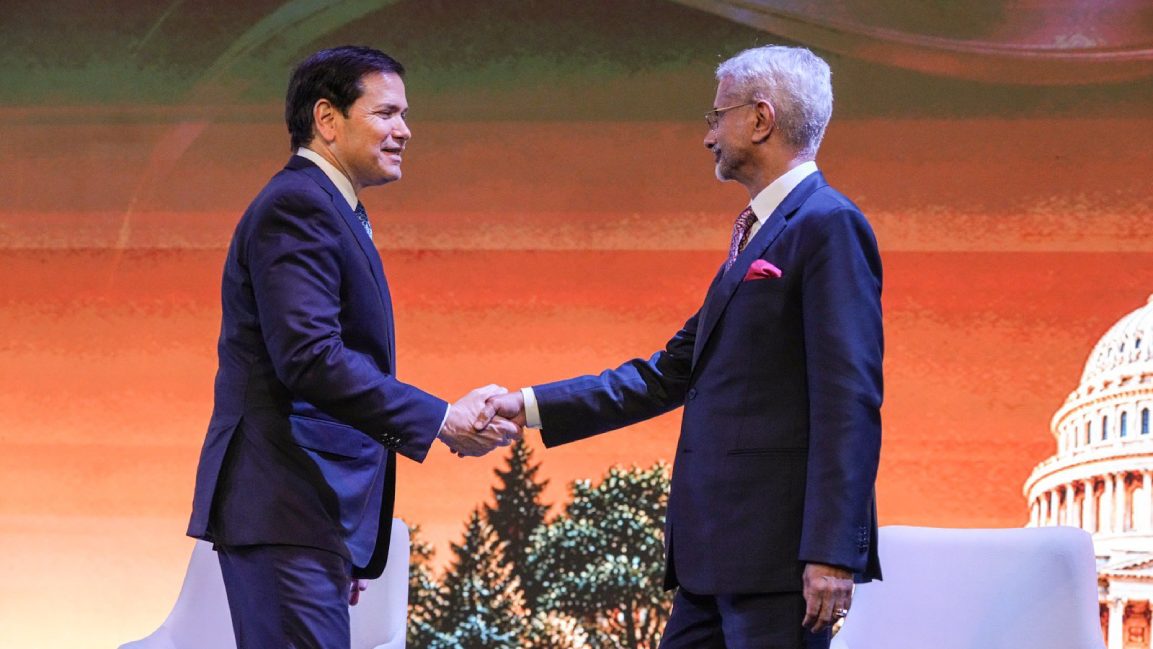
A wave of investment promises on Tuesday, the second day of the India AI Impact Summit 2026, reframed the New Delhi gathering as a financing and infrastructure story, after organizers drew flak for overcrowding and logistical glitches on the opening day.
Union IT minister Ashwini Vaishnaw said Indian private startups were projecting up to $200 billion of investment into AI infrastructure over the next two years, alongside $17 billion earmarked for deep tech research and development and application layer work.
“As we go forward, the confidence that the world has on India is going to grow. The Big Tech firms are looking at India as a trusted destination for engineering solutions and engineering innovation,” Vaishnaw said.
Vaishnaw tied the investment narrative to a public push to expand national compute capacity, saying India would add 20,000 GPUs beyond the 38,000 already “onboarded”, with procurement orders expected within a week and deployment over the next six months.
The government has been positioning compute as a shared utility rather than a closed asset, with Vaishnaw arguing that India is trying to broaden access to AI infrastructure compared with markets where capacity is concentrated among a handful of firms.
Alongside the minister’s remarks, venture investors and industry groups used the summit to announce coordinated funding pools.
The India Deep Tech Alliance (IDTA) said its members had collectively committed more than $2.5 billion over five years, with $1 billion earmarked for AI over three years, as it added corporate strategic partners including Applied Materials, Lam Research, Micron Technology, Larsen and Toubro, and CG Power, building out a network that blends capital with semiconductor and manufacturing expertise.
“India’s AI and deeptech breakout is now measurable,” Arun Kumar, IDTA chair and India managing partner at Celesta Capital, said. “Within IDTA members’ more than $2.5 billion in commitments, we’re concentrating firepower: $1 billion specifically for AI, to help Indian companies commercialize breakthrough IP and compete globally across every layer of the stack.”
At the summit’s Impact AI PitchFest, Peak XV announced ₹120 crore of investment across five early stage AI firms, naming Companion Labs, Kello, Memfold AI, Roundd, and Zoop, without disclosing per company allocations.
A consortium of 16 venture capital firms under the Indian Venture and Alternate Capital Association (IVACA) pledged ₹500 crore to back 31 made-in-India AI startups showcased at the PitchFest, in one of the largest coordinated bets focused on domestic AI companies, Business Standard reported.
Rajan Anandan, managing director of Peak XV, said India’s edge would come from broad deployment rather than frontier model bragging rights.
“India’s AI opportunity will not be defined by who builds the biggest models, but by who builds products that work at population scale,” Anandan said.
“With over 900 million Indians online, the real opportunity lies in solving real needs, helping people find jobs, grow income, and build businesses using AI,” he added.
Vinod Khosla, founder of Khosla Ventures and an early investor in OpenAI, urged private capital to treat some foundational AI work as quasi public interest spending.
“Private investors must approach foundational AI projects from the lens of philanthropy, and developing AI use cases for social causes in healthcare and education will give India a foundational spate of technologies to take to the rest of the world,” Khosla said.
The announcements also exposed the gap between headline figures and delivery risk.
Even as Vaishnaw described a five-layer focus across applications, models, semiconductors, infrastructure, and energy, the government’s most concrete near term lever remains compute procurement and deployment.
More Top Stories: