- | 10:30 am
Fitch sees dent in growth as India braces for steepest US tariff barrier in Asia
Tariff shock from Washington threatens to squeeze pharma, auto and energy firms, raising the risk of ripple effects across India’s economy


India Inc., especially pharmaceutical, auto‑component and energy firms, may soon begin to feel the pinch, Fitch Ratings said in a recent report amid expectations that the full impact of the new 50% US duties will extend beyond direct exposure to sectors previously considered safe.
Most Indian companies currently have minimal direct exposure to US tariffs. Nevertheless, “sectors that are currently unaffected, including pharmaceuticals, could be hit by further US tariff announcements, Fitch warned in the report.
That caveat comes as the risk of indirect or “second‑order” effects grows stronger.
Since 7 August, the US has imposed a 25% “reciprocal” tariff on Indian goods. This was swiftly followed—but effective 27 August—by an additional 25% levy tied to India’s continuing imports of heavily discounted Russian crude.
At 50%, India now faces the steepest tariff barrier among Asian exporters to the US.
Fitch said India’s growth outlook could weaken if tariffs stay. The agency sees “moderate downside risk” to its 6.5% GDP forecast for FY26. Earlier this month, Fitch had already cut its projection to 6.3% from 6.4%, even while noting that most Indian companies face only limited direct impact.
Pharmaceuticals face notable risk. India remains the world’s largest supplier of generic drugs to the US, and firms like Biocon Biologics derive about 40% of their revenue from the American market.
Though no broad drug tariff has yet been announced, Fitch warned that tariffs on finished products or active pharmaceutical ingredients could erode margins, as pressure mounts on companies to absorb costs rather than pass them on.
In the auto components sector, Samvardhana Motherson International is already seeing consequences. Around 20% of its sales relate to the US, much of which benefits from North American supply‑chain rules.
Uncertainty tied to tariffs, combined with a sluggish global auto sector, forced Fitch to downgrade the company’s outlook from Positive to Stable.
Energy and oil marketing companies (OMCs) such as IOC, BPCL and HPCL rely on deep-discount Russian crude, which makes up 30–40% of their imports.
Fitch estimates that halting those supplies could slash their Ebitda, a measure of profitability, by up to 10%. While state-owned OMCs may survive on fiscal backing, private players such as HPCL-Mittal may face greater credit strain.
Fitch also pointed to chemicals firms such as UPL Ltd—10–12% of whose revenues come from the US, warning that tariffs could erode their edge against Chinese rivals unless they accelerate global diversification
The ratings firm also saw IT, construction, telecom, and domestic‑oriented infrastructure firms with little export exposure as mostly shielded from immediate tariff risks. But it noted that sustained US tariffs could slow India’s overall growth trajectory, undermining domestic demand and investment.
Beyond Fitch, India’s central bank has flagged risks to growth. The Reserve Bank’s Monetary Policy Committee retained the key repo rate at 5.50% in its August meeting, noting that the US tariffs pose a significant threat to external demand and economic expansion.
RBI governor Sanjay Malhotra emphasized that while headline inflation remains benign, “core inflation remains sticky and above the 4% target.” Growth is still pegged at 6.5% for now though risks are rising.
Meanwhile, business leaders are urging government action. In an interview with the Financial Times, banking tycoon Uday Kotak called on Prime Minister Narendra Modi to step up support for SMEs, ramp up infrastructure, and help exporters open new markets.
He warned the tariffs represent a “major shock” and could shave 0.5 percentage points off growth unless India responds with productivity and competitiveness reforms.
Fitch‑owned CreditSights also suggested the economy could see ripple effects beyond trade, including slower credit growth as banks re‑assess risk amid sectoral stress.
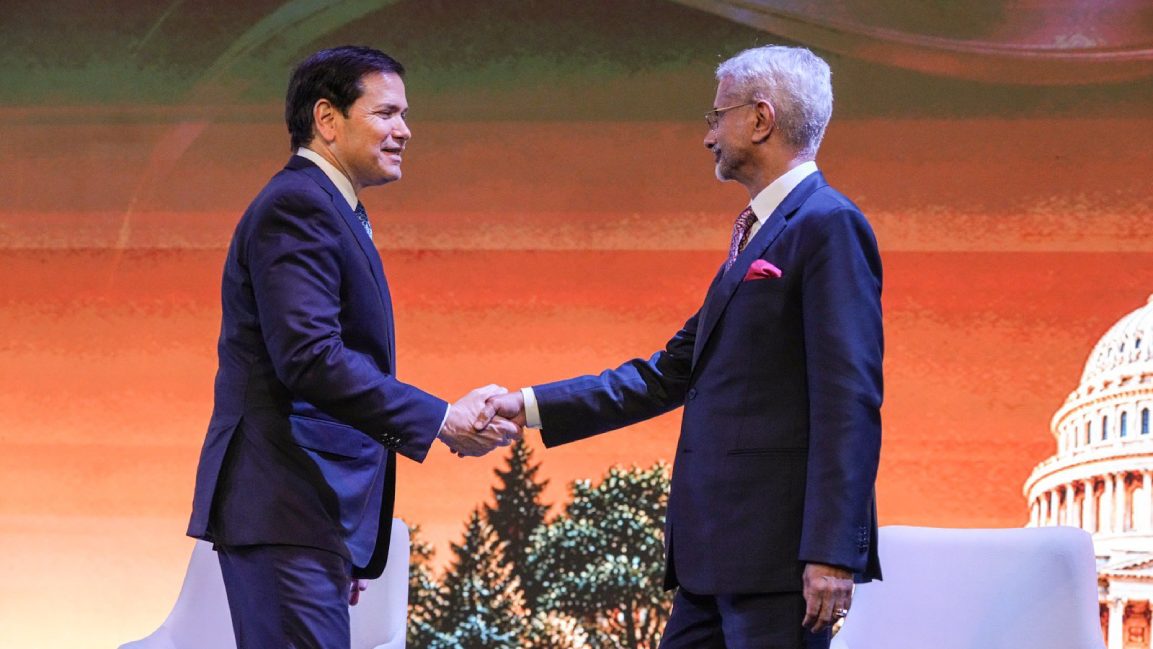
Fitch noted that a successful US‑India trade agreement could mitigate much of the fallout. Countries able to clinch such a deal may see lower tariffs and reduced uncertainty. For now, however, talks scheduled for late August have been cancelled, leaving the US‑India trade outlook in limbo.
More Top Stories: