- | 9:00 am
Former Indian envoy to US Taranjit Singh Sandhu is Delhi’s L-G
The 1988-batch Indian Foreign Service officer takes charge in the national capital as the government announces wide-ranging changes across Raj Bhavans
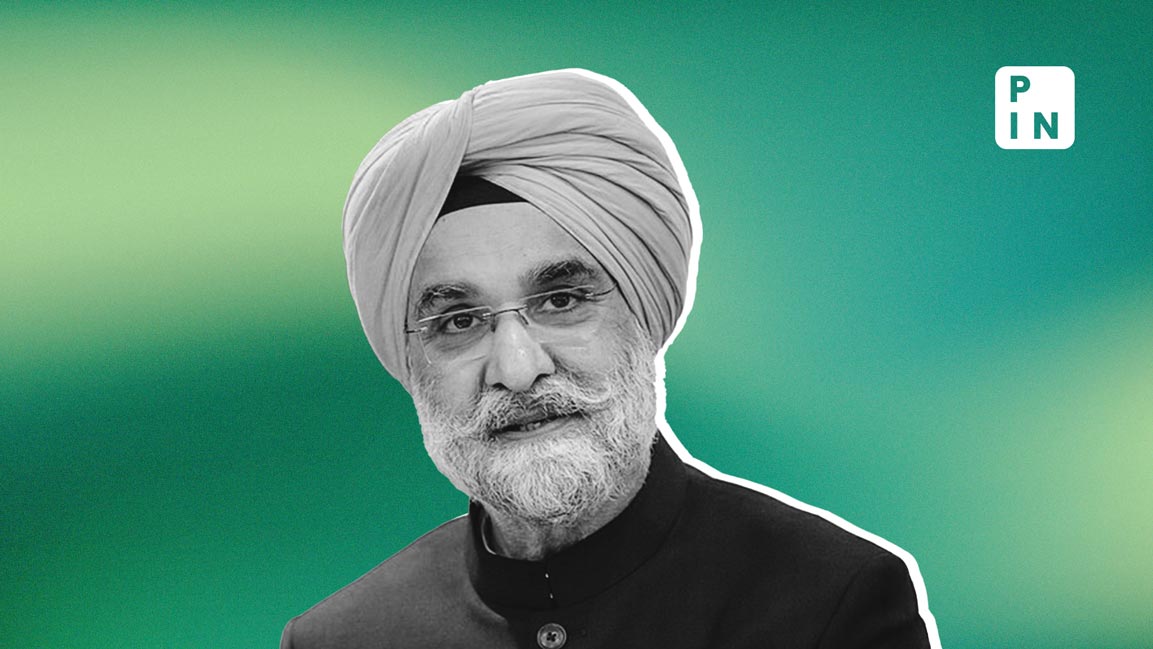


The government has appointed former Indian ambassador to the US Taranjit Singh Sandhu as the new lieutenant governor (L-G) of Delhi in a sweeping reshuffle of governors and lieutenant governors across several states announced late Wednesday.
The appointment was announced in a press communiqué issued by the President’s Secretariat, which said President Droupadi Murmu had approved a series of gubernatorial changes affecting multiple states and union territories.
Sandhu replaces Vinai Kumar Saxena, who has been appointed lieutenant governor of Ladakh.
The announcement forms part of one of the most extensive gubernatorial reshuffles in recent years, covering Telangana, Maharashtra, Nagaland, Bihar, West Bengal, Himachal Pradesh and Ladakh.
A 1988-batch Indian Foreign Service (IFS) officer, Sandhu served as India’s ambassador to the US from 2020 to 2024 during a period when bilateral ties between Washington and New Delhi deepened significantly across defense, technology and economic cooperation.
Before his posting in Washington, Sandhu held a number of senior diplomatic assignments including serving as India’s high commissioner to Sri Lanka and deputy chief of mission at the Indian embassy in Washington.
He has also worked in key positions within the Ministry of External Affairs dealing with the US and strategic affairs.
During his tenure as ambassador in Washington, India and the US expanded cooperation in areas such as defense technology, semiconductor supply chains, critical minerals and Indo-Pacific security.
He was closely involved in diplomatic engagements surrounding the Quad partnership and in facilitating multiple high-level visits between leaders of the two countries.
His latest appointment signals the Centre’s preference for a seasoned administrator with international and strategic experience to oversee governance in the national capital.
The position of L-G in Delhi remains one of the most politically sensitive constitutional posts in India because of the capital’s unusual administrative structure.
Unlike most states, Delhi operates under a hybrid governance system in which powers are divided between the elected Delhi government and the L-G, who represents the central government.
The arrangement has historically produced institutional friction between the two offices, particularly during the decade when the Aam Aadmi Party governed Delhi.
Disputes during the period frequently centered on control of civil services, the scope of the Delhi government’s executive authority, and the role of the L-G in approving administrative decisions.
The Supreme Court intervened several times to clarify the constitutional balance of powers between the two sides, issuing rulings on matters including bureaucratic appointments and the scope of the elected government’s authority.
The political landscape shifted after the 2025 Delhi assembly elections, when the Bharatiya Janata Party (BJP) returned to power in the national capital after nearly three decades, winning a majority in the 70-member assembly. Rekha Gupta, a first-time legislator from Shalimar Bagh, was sworn in as chief minister in February 2025.
The change in government has reduced the prospect of the kind of institutional standoffs that marked earlier years, but the L-Gs office continues to play a key role in the governance of the national capital.
Sandhu takes charge at a time when Delhi faces multiple policy and urban governance challenges including severe air pollution, pressure on infrastructure, expanding population density and coordination between municipal authorities and the state government.
The capital also requires close coordination between the Union government and the Delhi administration on issues ranging from urban transport and environmental management to public services and metropolitan planning.
Other reshuffles across states
As part of the reshuffle, outgoing Delhi L-G Vinai Kumar Saxena has been appointed lieutenant governor of Ladakh.
Saxena had served as Delhi’s lieutenant governor since 2022 and was involved in several high-profile policy and administrative decisions during his tenure.
His transfer to Ladakh comes at a time when the strategically sensitive Himalayan union territory remains a focus of infrastructure development and governance reforms following its creation in 2019.
The President’s communiqué also announced several other gubernatorial appointments across the country.
Shiv Pratap Shukla, currently governor of Himachal Pradesh, has been appointed governor of Telangana. In turn, Jishnu Dev Varma, the outgoing governor of Telangana, has been appointed governor of Maharashtra.
Nand Kishore Yadav has been appointed governor of Nagaland, while retired Lieutenant General Syed Ata Hasnain has been appointed governor of Bihar.
Hasnain, a former senior Indian Army commander known for his leadership roles in Jammu and Kashmir, brings extensive military and strategic experience to the constitutional office.
Another notable move in the reshuffle is the appointment of R. N. Ravi, currently governor of Tamil Nadu, as governor of West Bengal.
Rajendra Vishwanath Arlekar, the governor of Kerala, will discharge the functions of governor of Tamil Nadu following Ravi’s transfer.
Kavinder Gupta, L-G of Ladakh, has been appointed governor of Himachal Pradesh.
The President’s Secretariat said all appointments will take effect from the dates on which the respective officials assume charge of their offices.
More Top Stories: