- | 9:00 am
IMF slashes global growth forecasts, flags risks from trade war
For India, the growth outlook is relatively more stable at 6.2% this year, backed by private consumption, particularly in rural areas
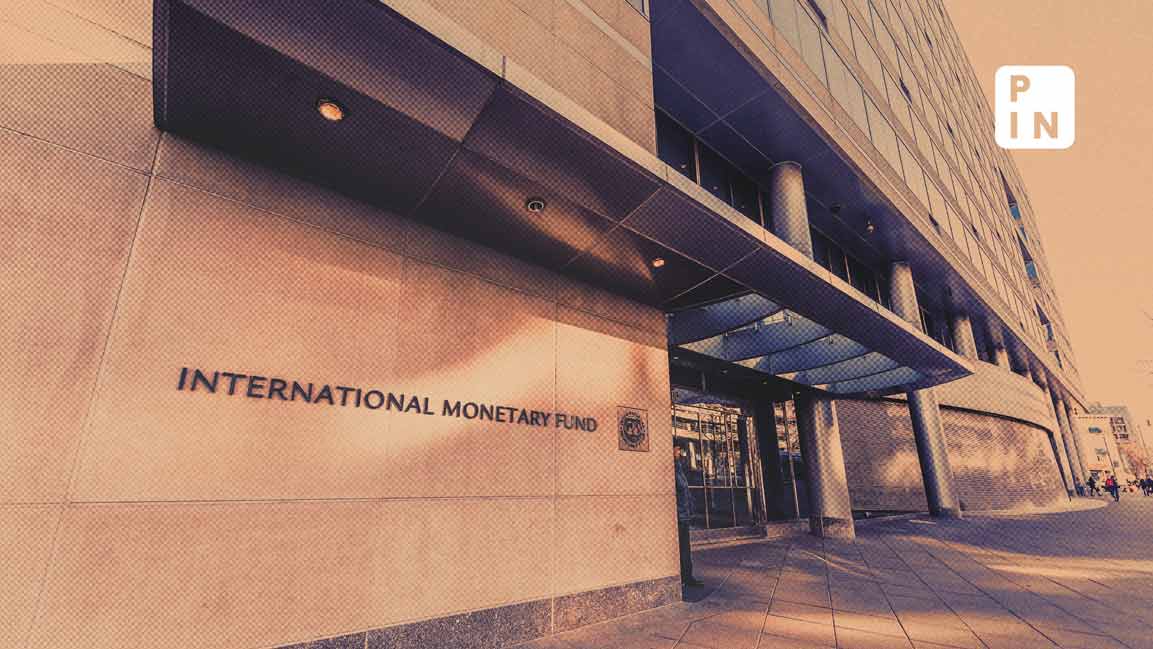


The International Monetary Fund (IMF) has sharply cut its forecast for global growth for this year and the next as US President Donald Trump’s tariffs spark a global trade war.
In its updated World Economic Outlook released on Tuesday, the IMF said it sees the global economy expanding at 2.8% this year, lower than its January forecast of 3.3%.
Global economic growth this year would be the slowest expansion of gross domestic product (GDP) since the covid-19 pandemic in 2020, and also the second-worst figure since 2009.
The fund reduced its estimate for next year to 3%, a drop of 0.3 percentage points.
“After enduring a prolonged and unprecedented series of shocks, the global economy appeared to have stabilized, with steady yet underwhelming growth rates. However, the landscape has changed as governments around the world reorder policy priorities and uncertainties have climbed to new highs,” the IMF said.
“Forecasts for global growth have been revised markedly down compared with the January 2025 World Economic Outlook (WEO) Update, reflecting effective tariff rates to levels not seen in a century and a highly unpredictable environment. Global headline inflation is expected to decline at a slightly slower pace than what was expected in January,” it added.
For the US, the new tariffs will drive up prices and weigh on productivity, the IMF said, adding that for trading partners, the higher duties will hit output and prices.
Effective tariff rates in the US have jumped to levels not seen in a century, the IMF said, adding that while the US may avoid a recession this year, the possibility has been raised to 40% from 27% in October.
“We are entering a new era,” IMF chief economist Pierre-Olivier Gourinchas said in a briefing with reporters. “The global economic system that has operated for the last 80 years is being reset.”
The US and China saw among the biggest IMF downgrades.
While the US is forecast to grow 1.8% this year and 1.7% in the next, a cut of 0.9 and 0.4 percentage points, respectively, the IMF increased its forecast for US inflation this year by roughly one percentage point to 3%.
China may grow at 4% this year and the next, down by 0.6 and 0.5 percentage points, with its fiscal policy going some way to ease the impact of tariffs, Gourinchas said.
“Intensifying downside risks dominate the outlook, amid escalating trade tensions and financial market adjustments. Divergent and swiftly changing policy positions or deteriorating sentiment could lead to even tighter global financial conditions,” the IMF said.
“Ratcheting up a trade war and heightened trade policy uncertainty may further hinder both short-term and long-term growth prospects. Scaling back international cooperation could jeopardize progress toward a more resilient global economy,” it added.
The world’s growth outlook will improve immediately if trade tensions calmed and long-standing complaints about non-tariff barriers and trade-distorting measures by some countries were addressed, it added.
The IMF said near-term risk is of further trade-war escalation with knock on consequences for growth, while cutting its forecast for global trade growth this year by 1.5 percentage points.
“The risks to the global economy have increased and are firmly to the downside,” Gourinchas said.
At this critical juncture, countries should work constructively to promote a stable and predictable trade environment and to facilitate international cooperation, while addressing policy gaps and structural imbalances at home, the IMF suggested.
This will help secure both internal and external economic stability. To stimulate growth and ease fiscal pressures, policies that promote healthy aging and enhance labor force participation among older individuals and women could be implemented. Additionally, productivity growth can be fostered with better integration of migrants and refugees and mitigation of skill mismatches, it added.
More Top Stories: