
- | 11:30 am
India-bound fertilizer cargoes clear Hormuz amid supply concerns
Fifteen India-bound fertilizer vessels carrying urea, DAP and sulphur have safely crossed the Strait of Hormuz, easing near-term supply concerns after Middle East tensions disrupted a key maritime route for agricultural inputs.
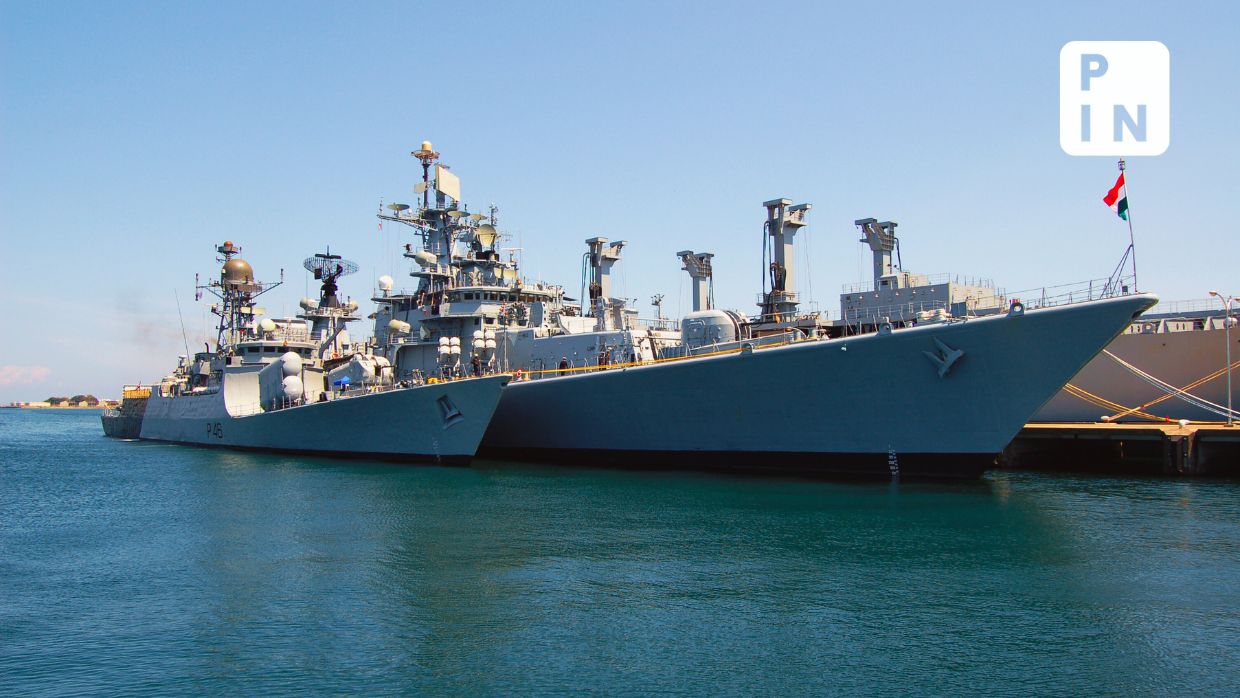


Fifteen India-bound fertilizer vessels carrying urea, DAP and sulphur have safely crossed the Strait of Hormuz, the government said on Sunday, 5 July, easing near-term supply concerns for Indian farmers after Middle East tensions disrupted a key maritime route for agricultural inputs.
The Ministry of Chemicals and Fertilizers said the vessels are moving toward Indian ports as scheduled and will add to domestic fertilizer stocks ahead of upcoming agricultural demand.
The shipments include eight vessels carrying 332,000 metric tons of urea, four vessels carrying 257,000 metric tons of di-ammonium phosphate (DAP) and three vessels carrying 111,000 metric tons of sulphur.
The latest movement marks a significant improvement from mid-June, when India-bound fertilizer ships had been stranded in and around the Strait of Hormuz amid maritime disruptions linked to the conflict in the Middle East.
The Strait of Hormuz is one of the world’s most important maritime chokepoints. While it is usually discussed in the context of oil and gas flows, the recent disruption also exposed the vulnerability of fertilizer supply chains.
Reuters reported earlier that the waterway handles around one-third of globally traded urea and nearly half of seaborne sulphur, both critical to global farm input supply.
India had earlier said four cargo ships carrying urea, DAP and sulphur had crossed the strait and were headed to Krishnapatnam, Kakinada, Paradeep and Mundra ports.
The 5 July update shows that a larger set of India-bound fertilizer cargoes has now cleared the route.
The government said five more vessels are scheduled for India. Of these, one is carrying 25,000 metric tons of ammonia and another is carrying 45,000 metric tons of urea. Two more vessels are being loaded with urea, while one vessel is being loaded with sulphur.
The improvement gives New Delhi some breathing room at a sensitive point in the agricultural calendar. Fertilizer availability is closely watched during the kharif season, when sowing activity drives demand across major crop-growing states.
Union minister for chemicals and fertilizers J.P. Nadda said the Middle East conflict had severely disrupted global supply chains, pushed up fertilizer prices and increased shipment transit times. India, he said, responded by stepping up alternative imports and diplomatic coordination.
“Efforts to import fertilizers through alternative routes were intensified,” Nadda said, adding that Indian missions abroad had helped the Department of Fertilizers establish contact with potential global producers and suppliers.
The government said 28 Indian missions played a role in securing supplies. Urea has been arranged from Oman, Malaysia, Vietnam, Georgia, Nigeria, Russia, Finland, Egypt, Algeria, Türkiye and the Netherlands.
DAP and NPK supplies have been secured through the Red Sea maritime route from Russia, Morocco, Egypt, the US, Jordan, South Korea, Tunisia and Saudi Arabia.
That diversification matters because India remains exposed to imported fertilizers and raw materials.
DAP, sulphur, ammonia and natural gas are tied to global supply chains, leaving domestic availability vulnerable to shipping disruptions, price shocks and geopolitical risk.
The government is also trying to offset external supply pressure through higher domestic production. Natural gas supply to fertilizer plants, which had temporarily fallen to nearly 65%, has been restored to 100%, allowing urea plants to operate at full capacity.
Urea production exceeded targets for three straight months in the first quarter of FY27. India produced 2.10 million metric tons of urea in April against a target of 2.03 million metric tons, 2.52 million metric tons in May against 2.25 million metric tons, and 2.54 million metric tons in June against 2.49 million metric tons.
Overall, urea production in April to June stood at 7.15 million metric tons, higher than the target of 6.78 million metric tons.
The Center said fertilizer stocks of 19.76 million metric tons have been secured against the annual requirement of 38.39 million metric tons assessed by the Department of Agriculture and Farmers Welfare. That is more than 51% of the annual requirement.
As of 2 July, available stocks included 6.91 million metric tons of urea, 1.66 million metric tons of DAP, 890,000 metric tons of muriate of potash, 4.56 million metric tons of NPK and 2.31 million metric tons of single super phosphate.
For India, the safe passage of the Hormuz shipments lowers the immediate risk of a fertilizer squeeze, but it does not remove the structural vulnerability.
The episode shows how quickly a geopolitical disruption in the Middle East can spill into India’s farm economy, where input availability has direct consequences for sowing, crop costs and food inflation.
The government’s message is that stocks are adequate and supply lines are being managed. The larger lesson is less comfortable. India’s fertilizer security still depends not only on procurement and domestic production, but also on open sea lanes, stable suppliers and crises abroad not turning into blockades at exactly the wrong point in the crop cycle.
More Top Stories: