- | 6:30 pm
India calls out UN’s inertia, flags double standards on terror
At the UN@80 event in New Delhi, Jaishankar said the organisation risks irrelevance if it fails to reflect global priorities and protect victims of terrorism


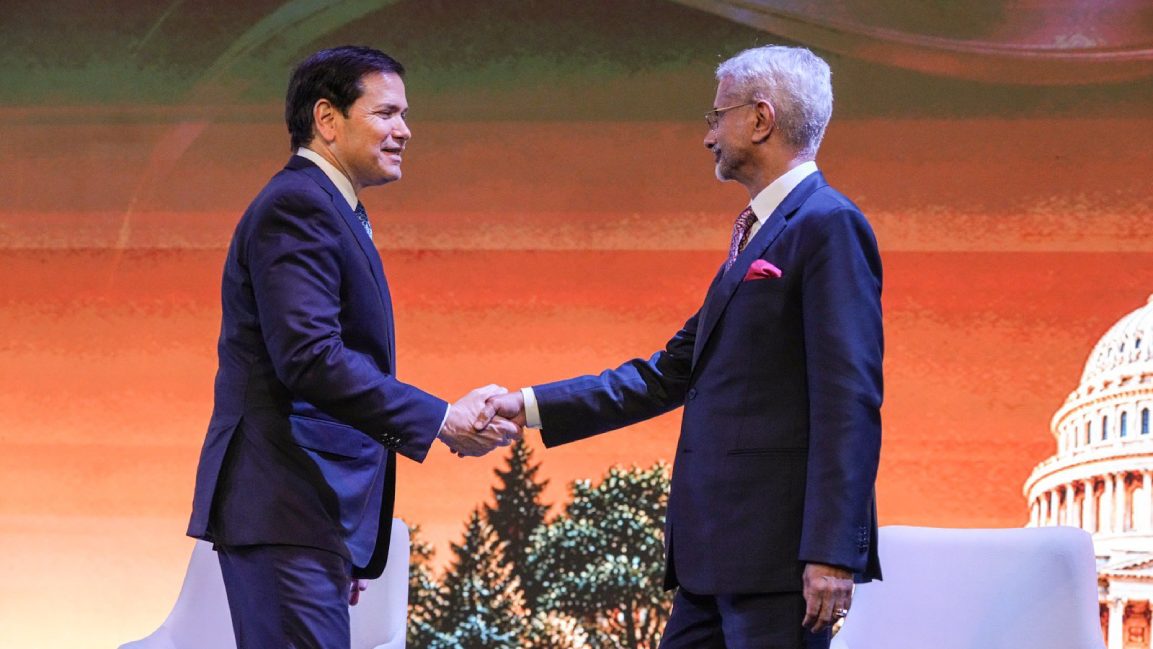
India used the 80th anniversary of the United Nations to issue a pointed call for reform and accountability across the multilateral system, with external affairs minister S. Jaishankar warning in New Delhi that the UN’s relevance was at risk.
“Its decision‑making neither reflects its membership nor addresses global priorities. Its debates have become increasingly polarised and its working visibly grid‑locked,” he said.
Jaishankar’s remarks came during the UN@80 celebrations in New Delhi on Friday, 24 October , where he reaffirmed India’s commitment to the organization even as he voiced frustration with its performance.
“India has always been and will continue to be a strong votary of the United Nations, and indeed, of multilateralism,” he noted, while simultaneously acknowledging that “all is not well with the United Nations.”
He pointed to the particular strain borne by the Global South. “The Global South in particular has felt this pain even as the more developed insulated themselves from consequences,” he said.
On terrorism, he asked: “When a sitting Security Council member openly protects the very organization that claims responsibility for a barbaric terror attack such as at Pahalgam, what does it do to the credibility of multilateralism?”
He added: “If victims and perpetrators of terrorism are equated in the name of global strategy, how much more cynical can the world get?”
Though Jaishankar did not name the country he was referring to, India’s invocation of the Pahalgam attack at a high‑profile multilateral event signals a shift from bilateral diplomacy to a focus on multilateral accountability, analysts said.
In emphasizing the need for reform, Jaishankar argued that “any meaningful reform is obstructed using the reform process itself,” noting also that the United Nations now faces serious financial constraints.
Despite his critique, his message remained rooted in reaffirmation: “However difficult, the commitment to multilateralism must remain strong. However flawed, the United Nations must be supported in this time of crisis. Our faith in international cooperation must be reiterated and indeed renewed.”
For New Delhi, putting the Pahalgam attack into UN rhetoric reinforces the idea that terrorism, especially when enabled across borders, can no longer be treated purely as a bilateral security matter but must be addressed through global institutions.
For the United Nations, India’s critique underscores growing frustration in the Global South where many feel the system no longer mirrors their realities, from trade and supply‑chain dependencies to emerging security threats.
Diplomats said Jaishankar’s speech marks a recalibration of India’s role: moving from participant in the system to reform‑agent of global governance. Whether the United Nations can respond remains to be seen.
More Top Stories: