


- | 6:30 pm
India deepens engagement with Taliban amid uneasy optics
Afghan foreign minister Amir Khan Muttaqi’s India visit saw aid pledges and an embassy upgrade overshadowed by a press controversy and a cancelled Taj Mahal stop.
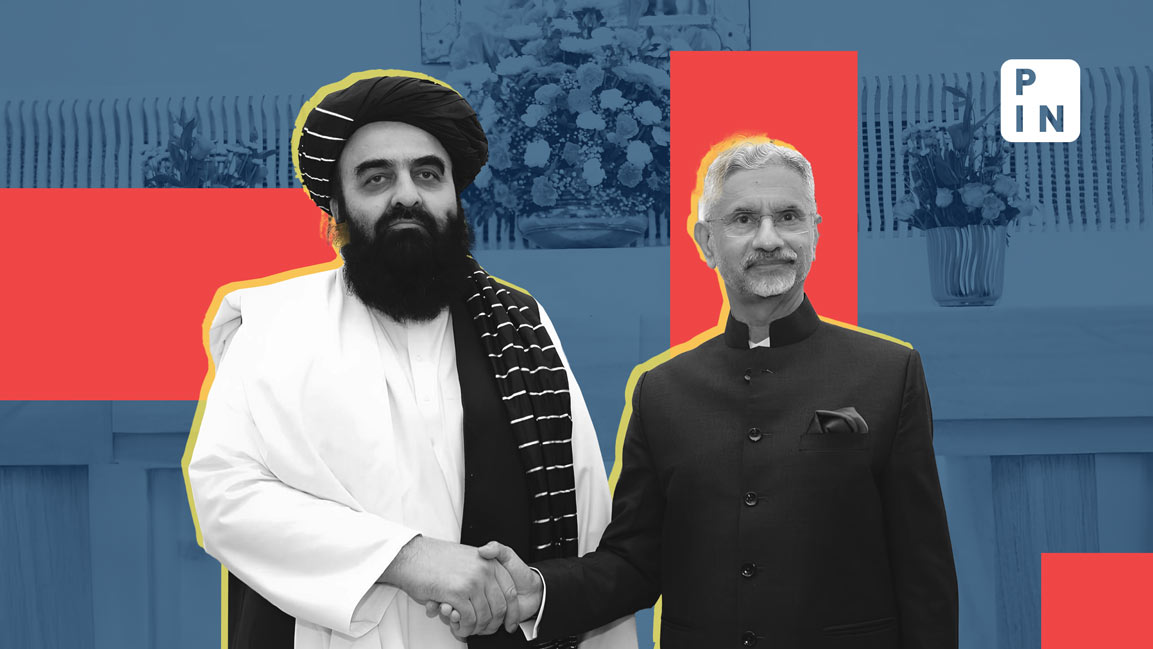


Afghanistan’s Taliban foreign minister Amir Khan Muttaqi concluded a closely watched visit to India on Monday that saw both diplomatic progress and controversy, reflecting New Delhi’s balancing act as it deepens engagement with Kabul’s de facto rulers without offering formal recognition.
Muttaqi’s five-day trip, his first since the Taliban returned to power in 2021, included high-level talks, aid commitments, and a symbolic religious stop, though a planned cultural visit to the Taj Mahal was cancelled at short notice.
The visit came under sharp scrutiny after the Afghan Embassy in New Delhi barred women journalists from attending a press conference on Friday.
The exclusion triggered widespread criticism from Indian press bodies and political leaders.
On Sunday, the embassy held a second press conference that included women reporters.
Speaking at the event, Muttaqi said the original list of invitees had been prepared hastily and the omission was “not deliberate.”
India’s Ministry of External Affairs said it had no involvement in organizing the media interaction.
Despite the diplomatic fallout, the trip marked a significant step in India’s engagement with the Taliban regime.
Following his meeting with External Affairs Minister S. Jaishankar, India announced it would upgrade its Technical Mission in Kabul, operating since mid-2022, to a full-fledged embassy, signaling a deepening of ties.
India had shuttered its embassy in Kabul in August 2021 after the Taliban took power, citing security concerns.
India also offered a fresh tranche of humanitarian and medical aid.
Officials said five ambulances were handed over during Muttaqi’s visit, part of a larger pledge of 20 vehicles.
New Delhi also committed to providing MRI and CT scan machines, cancer medicines, and vaccines. The two sides discussed maintenance of Indian-funded infrastructure projects in Afghanistan and reaffirmed support for the country’s health sector, particularly through post-pandemic recovery initiatives.
India also pledged continued support for Afghanistan’s drug rehabilitation programs via the UN Office on Drugs and Crime.
But the visit was not without its disruptions.
On Saturday, Muttaqi was scheduled to visit Agra to see the Taj Mahal and attend a lunch hosted near the eastern gate.
Local police confirmed that the stop was cancelled abruptly, reportedly on instructions from Delhi. No official reason was provided, though the decision attracted speculation given the symbolic weight of such a visit.
Muttaqi did travel to Darul Uloom Deoband in Uttar Pradesh, one of the most influential Islamic seminaries in South Asia.
The stop, described by officials as personal, carried historical resonance. The seminary has long-standing theological links to religious schools in Afghanistan, particularly among Taliban ranks.
India has not officially recognized the Taliban government, but has increasingly prioritized practical engagement to safeguard its economic and strategic interests in the region.
Afghanistan is also a key arena of regional rivalry, particularly with Pakistan and China. Indian officials have maintained that their outreach is driven by humanitarian concerns and regional stability, not endorsement.
The Taliban’s foreign ministry described Muttaqi’s meetings in India as focused on strengthening political ties, promoting economic cooperation, and exchanging views on regional developments.
His visit follows a stop in Russia for the Moscow Format Dialogue, where Taliban officials met with representatives from China, Pakistan, Iran, and Central Asian countries.
The visit took place under a United Nations travel waiver, which permits certain Taliban officials, including Muttaqi, to travel abroad for diplomatic purposes despite UN Security Council sanctions.
The waiver has drawn criticism from rights groups who argue that such access risks legitimizing a regime that continues to enforce widespread restrictions on women and dissent.
India was among the first nations to dispatch relief supplies following the recent earthquake in Afghanistan’s eastern Kunar province, which killed over 2,000 people.
New Delhi’s swift humanitarian response was noted in the Indian readout of the Jaishankar-Muttaqi meeting, which emphasized India’s willingness to stand by the Afghan people regardless of political recognition.
The Taliban government, facing economic isolation and limited international legitimacy, has sought deeper engagement with regional powers.
India, which had invested over $3 billion in Afghanistan over the past two decades, remains a critical player. However, any formal recognition of the Taliban remains unlikely in the near term, Indian officials have indicated.
Muttaqi’s visit also came amid rising tensions between Afghanistan and Pakistan.
In August, the Taliban accused Pakistan of carrying out cross-border airstrikes in Nangarhar and Khost provinces that killed civilians.
Afghanistan lodged a formal protest. India has not commented on the incident, but analysts said regional instability may accelerate India’s efforts to secure its own lines of engagement with the Taliban.
More Top Stories:










