
- | 3:00 pm
India expands nuclear arsenal as China widens Asia gap
SIPRI estimates India’s arsenal at 190 warheads, above Pakistan’s 170, while China’s stockpile has climbed to about 620.
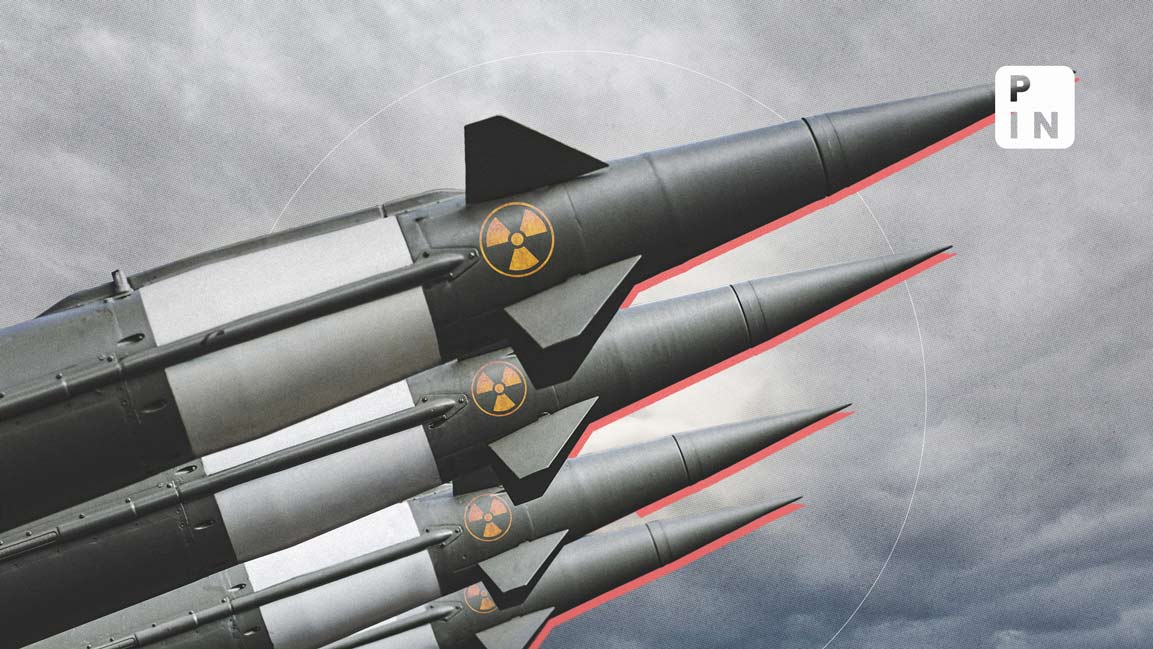


India expanded its nuclear arsenal in 2025 and widened its lead over Pakistan, even as China’s far larger stockpile grew at the fastest pace among nuclear-armed states, according to the Stockholm International Peace Research Institute (SIPRI).
India had an estimated 190 nuclear warheads in January, up from 180 a year ago, SIPRI data show. Pakistan’s arsenal was unchanged at 170, while China’s rose to about 620, more than three times India’s count and central to New Delhi’s shift toward longer-range deterrence.
The latest assessment places India’s nuclear build-up within a broader return of nuclear weapons to national security planning.
The nine nuclear-armed states, the US, Russia, the UK, France, China, India, Pakistan, North Korea and Israel, continued to modernize and improve their arsenals in 2025, with most deploying new nuclear-armed or nuclear-capable systems during the year, SIPRI said.
For India, the numbers point to gradual expansion rather than a sudden surge. SIPRI said India “slightly expanded” its nuclear arsenal in 2025 and continued developing new types of nuclear delivery systems.
The institute said India’s modernization program is increasingly focused on long-range weapons capable of reaching targets across China, while planning remains shaped by its long-standing rivalry with Pakistan.
China is becoming the larger strategic benchmark for India’s nuclear posture.
SIPRI estimates that China now has about 620 nuclear warheads and is expanding its arsenal faster than any other country. By January, China had loaded hundreds of missiles into three large missile silo fields in the country’s north and was working to complete 30 silos in three mountainous areas in the east, the institute said.
SIPRI said China could have at least as many intercontinental ballistic missiles as either Russia or the US by the end of the decade, depending on how it structures its forces. Even if China surpasses 1,000 warheads by 2030, that would still be about a quarter of each of the current Russian and US nuclear stockpiles, the institute said.
The India-Pakistan equation remains volatile. Pakistan continued to develop new delivery systems and accumulate fissile material in 2025, suggesting its arsenal could expand over the coming decade, SIPRI said.
The brief armed conflict between India and Pakistan in May 2025 saw India attack Pakistani air and missile bases that are likely to have nuclear-related roles, though both sides took steps to avoid escalation, according to the institute.
India’s estimated arsenal has moved further above Pakistan’s in SIPRI’s count, while China’s expansion is reshaping the upper end of Asia’s nuclear balance. For New Delhi, that creates a two-front deterrence problem: Pakistan remains the immediate rival, while China is the larger and faster-growing nuclear power.
SIPRI also said China and India may now occasionally deploy a small number of warheads mounted on missiles during peacetime, a shift from the practice traditionally associated with keeping warheads separate from delivery systems.
That would suggest a more ready posture, though SIPRI’s estimates are based on open sources and nuclear inventories remain highly opaque.
Globally, SIPRI estimated the total nuclear inventory at 12,187 warheads in January 2026, including about 9,745 in military stockpiles for potential use. About 4,012 warheads were deployed with missiles and aircraft, while between 2,100 and 2,200 deployed warheads were kept on high operational alert on ballistic missiles. Nearly all of those high-alert warheads belonged to Russia and the US, and to a lesser extent France and the UK.
SIPRI Director Karim Haggag warned that the growing role of nuclear weapons in security policy could “significantly increase nuclear risks.” He said advances in weapons technology, the breakdown of arms control and heightened geopolitical tensions were adding to the dangers.
Hans M. Kristensen, associate senior fellow with SIPRI’s weapons of mass destruction program and director of the Nuclear Information Project at the Federation of American Scientists, said nuclear-armed states were moving away from disarmament commitments and “fueling arms-race dynamics.”
The report also points to a weakening arms-control order. The 2026 review conference of the Nuclear Non-Proliferation Treaty ended on 22 May without a final outcome document, the third straight review conference to close without one, SIPRI said. India and Pakistan are outside the treaty, but the erosion of the wider non-proliferation framework adds to concerns over transparency, crisis management and escalation.
More Top Stories: