
- | 9:10 am
India nudges China for fairer market access as trade deficit tops $100 billion
Jaishankar told Wang Yi that improving ties would require more balanced trade, predictable supply chains and continued calm along the disputed border
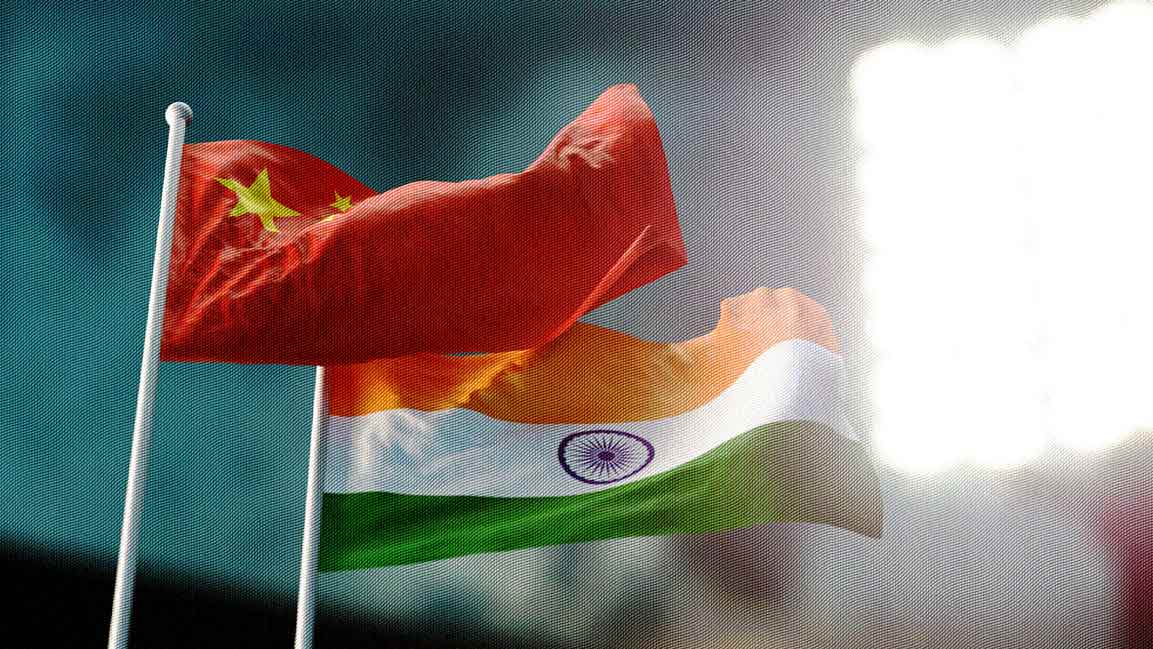


India has urged China to provide fairer market access to Indian exporters and address a trade imbalance that exceeded $100 billion last year, raising economic concerns even as the two countries work to improve strained relations.
External affairs minister S. Jaishankar raised the issues during talks with Chinese foreign minister Wang Yi in Manila on Wednesday, 22 July, on the sidelines of regional meetings in the Philippine capital.
Jaishankar said the two sides needed to address fair market access, balanced trade and the predictability of supply chains, according to remarks he posted after the meeting.
A wide ranging discussion with Politburo member and Foreign Minister Wang Yi of China in Manila #Philippines.
Text of my opening remarks as below:
Excellency, I am glad to meet you again. Our participation in the EAS and the ASEAN Regional Forum not only provides an occasion to… pic.twitter.com/cE5jymVou4
— Dr. S. Jaishankar (@DrSJaishankar) July 22, 2026
“There are also concerns about predictability of supply chains,” Jaishankar said, adding that India and China should agree on meetings under their various bilateral mechanisms according to their mutual priorities.
My opening remarks in the meeting with Politburo member and Foreign Minister Wang Yi of China today in Manila. pic.twitter.com/eBgUZU4N57
— Dr. S. Jaishankar (@DrSJaishankar) July 22, 2026
The comments reflect New Delhi’s concern that the recent improvement in political ties has yet to produce a more balanced economic relationship.
India imported goods worth about $132 billion from China in the fiscal year ended March 2026, while total bilateral trade reached about $151.1 billion. That left India with a trade deficit of more than $100 billion, trade data showed. China remained India’s largest source of merchandise imports.
India relies heavily on China for machinery, electronics, pharmaceutical ingredients, chemicals, solar equipment and other inputs used by domestic manufacturers. Indian officials have repeatedly sought greater access for exports including pharmaceuticals, agricultural products and information-technology services.
Jaishankar also reiterated that calm along the disputed Himalayan border was necessary for normal relations.
“Peace and tranquility in the border areas is obviously the prerequisite for normal ties,” he said. “Since October 2024, both sides have engaged to ensure that important objective. This will continue to need our constant attention.”
Relations began to improve after Prime Minister Narendra Modi and Chinese President Xi Jinping met in October 2024, following several years of tension triggered by the 2020 border clash in the Galwan Valley.
India and China have since taken steps to restore exchanges disrupted during the dispute. Direct flights have resumed, India has streamlined business visas for some Chinese professionals and the two countries are preparing to reopen border trade after a six-year suspension.
China presented the talks in more positive terms. Its foreign ministry said Wang welcomed the gradual restoration of institutional exchanges and noted that bilateral trade had reached a record.
#China stands ready to work with #India to implement the important common understandings reached by the leaders of the two countries, maintain close high-level exchanges, strengthen cooperation in areas including economy and trade, media, and people-to-people and cultural… pic.twitter.com/ZiG2CyUqWM
— Global Times (@globaltimesnews) July 23, 2026
Wang said China was willing to increase high-level exchanges and expand economic, trade and media cooperation, according to the ministry’s account.
Jaishankar said stable India-China relations would support a multipolar Asia and a multipolar world, but indicated that progress would require the two governments to deal directly with unresolved trade and border concerns.
More Top Stories: