- | 6:40 pm
India’s Supreme Court says state can’t seize all private property for public good
The landmark ruling by a nine-member Constitution bench of the Supreme Court has implications on a citizen's right to own property


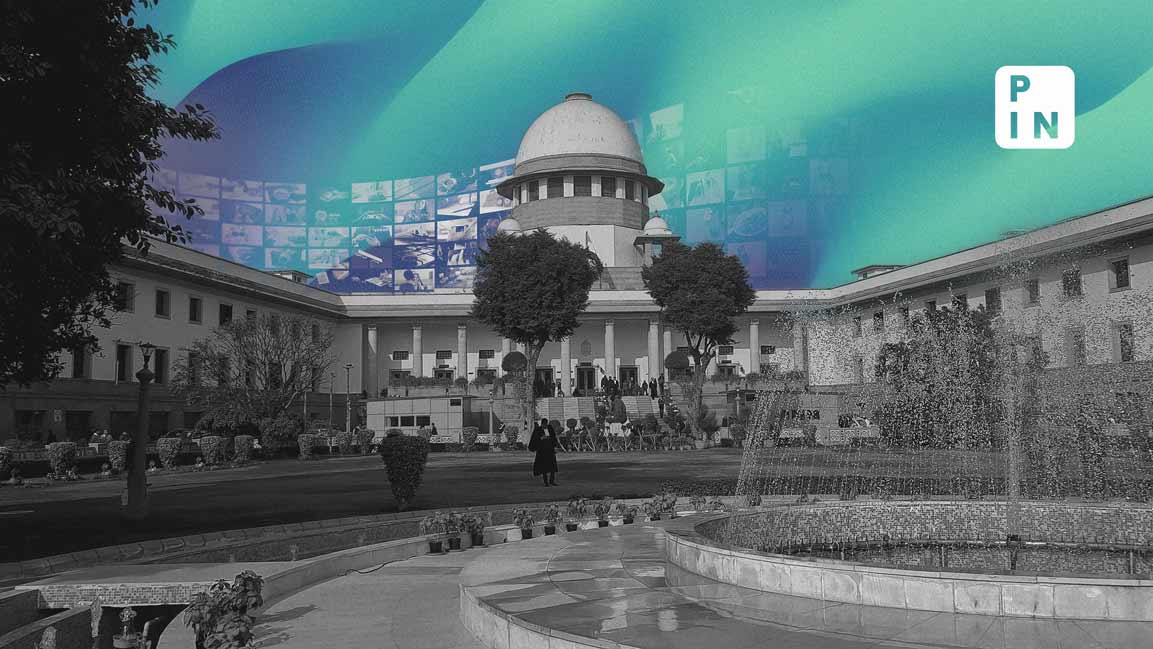
India’s Supreme Court has ruled that not all private property qualifies as “material resource of the community,” which the state can seize for public purposes.
The landmark ruling by a nine-member Constitution bench of the Supreme Court has implications on citizen’s right to own property.
The apex court’s 8:1 majority decision, authored and read out by Chief Justice of India D.Y. Chandrachud, said the directive principles of state policy under Article 39(b) that mandates the state distribution of resources equitably cannot be applied to all private properties.
The phrase “material resource” in Article 39(b) of the Constitution “may include privately owned resources….but not all privately owned resources fall within the ambit of the phrase,” the court said.
“Not every resource owned by an individual can be considered a material resource of the community merely because it meets the qualifier of material needs,” the chief justice said.
While chief justice Chandrachud and justices Hrishikesh Roy, J.B. Pardiwala, Manoj Misra, Rajesh Bindal, S.C. Sharma, and Augustine George Masih backed the ruling, justice B.V. Nagarathna partially disagreed with the majority judgement, while justice Sudhanshu DHulia was the only dissenting member.
Justice V.R. Krishna Iyer had in a ruling in a 1977 case held that both public and private resources were within the ambit of material resources of the community under Article 39(b).
A five-judge constitution bench ruling in 1982 that was authored by Justice O. Chinnappa Reddy had upheld Justice Iyer’s minority view.
The latest Supreme Court ruling has overturned these judgements that leaned toward socialist ideals, allowing states to acquire all private properties for common good.
Justice Iyer “cast the net wide, holding that all resources which meet material needs are covered by the phrase and any attempts by the government to nationalize these resources would be within the scope of Article 39(b),” the latest ruling said.
“To declare that Article 39(b) includes the distribution of all private resources amounts to endorsing a particular economic ideology and structure for our economy. Justice Krishna Iyer’s judgment…was influenced by a particular school of economic thought,” CJI Chandrachud said.
In their respective judgements in the case, justices Nagarathna and Dhulia expressed objections to the remarks against the Justice Iyer doctrine. While justice Nagarathna called the comments “unwarranted and unjustified”, justice Dhulia said the criticism was “harsh”, which “could have been avoided.”
Known for his humanism, former Supreme Court judge Justice Iyer had coined the phrase “bail is the rule, jail is the exception,” a maxim frequently cited in Supreme Court rulings.
The apex court’s decision concludes a long-standing case that was initially filed in 1992 and referred to a nine-member bench in 2002, aimed at clarifying if privately owned resources could be included under “material resources of the community” for equitable distribution.
More Top Stories: